
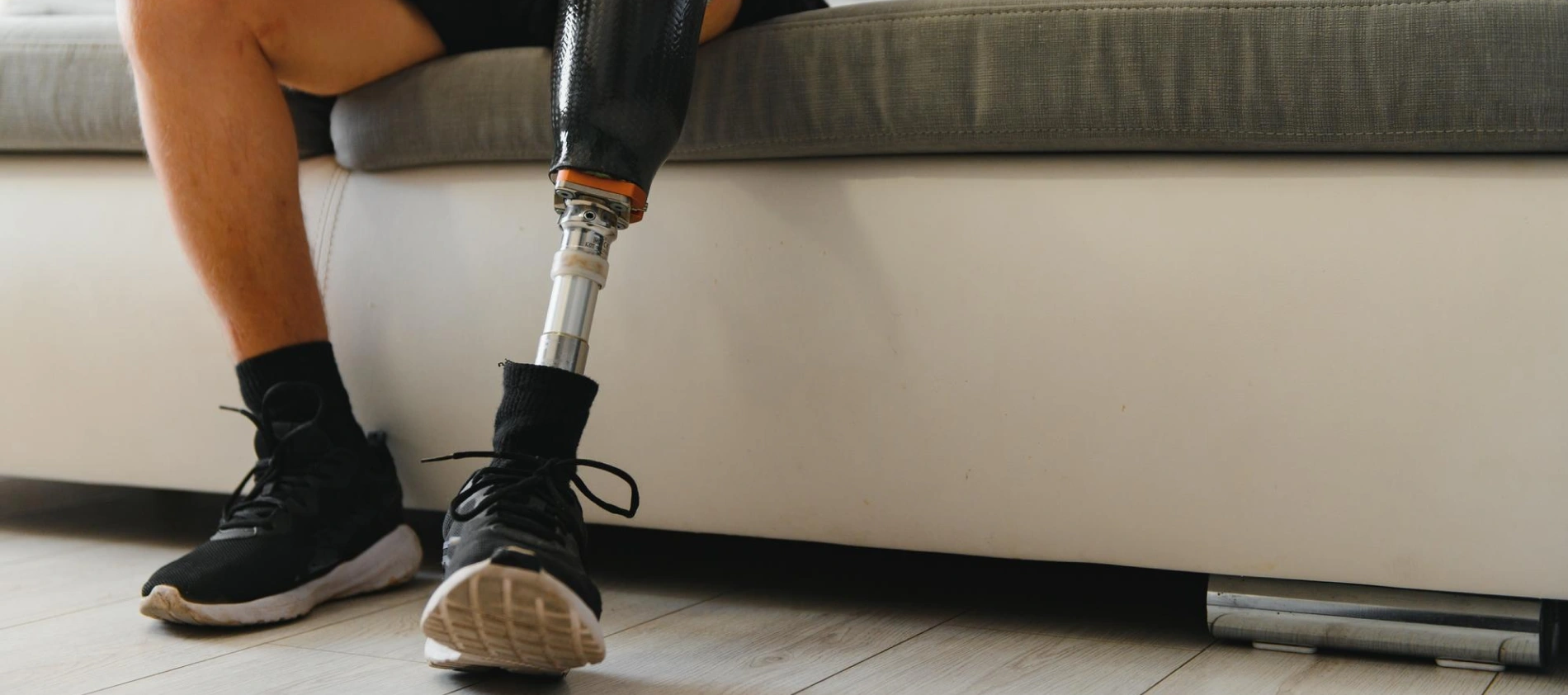
Amputation support in Highfields, QLD
It only takes one minute and it's free.
Compare local providers and the support types that usually matter for amputation. Skip the generic directory listings, get a real shortlist.
Support after limb loss in Highfields
- 1 providers matched by condition evidence in Highfields
- Matched to the support types that fit amputation
- Free. One request, providers contact you.
Is amputation covered by the NDIS?
NDIS access is assessed individually. You must meet the age and residence requirements and the disability or early intervention requirements. A diagnosis alone does not establish eligibility, a funded support or a particular budget. Ask your treating practitioner for evidence of permanence, functional impact and the support you need. The NDIA decides access and funding.
Read the full funding pathway or use the eligibility checker.
Amputation support providers near me
1 registered provider in Highfields, no recorded Amputation enquiry activity·How we chose these

MET Phys
NDIS registered Serves Highfields
- Funding accepted
- NDIS · all plan types (NDIS self-managed, NDIS plan-managed, NDIS agency-managed)DVAPrivate
- Team includes
- Exercise Physiologist, Occupational Therapist
About MET Phys
MET Phys is an NDIS registered provider in Highfields, Queensland and lists exercise physiologists and occupational therapists among its professions.
How this listing is sourced
- Registered for with the NDIS Quality & Safeguards Commission
Exercise Physiology and Physical Wellbeing Activities · Therapeutic Supports
- Business address on file
Not finding the right match?
Leave your details and we'll connect you with Amputation Support providers in Highfields. Ask each provider about current availability.
No login. No spam. We text or email when a match is ready.
Families never pay Carevo. Providers pay a subscription to connect with families, with no commission or paid ranking. How Carevo works
How we rank providers
Rankings in Highfields use directory relevance and observable activity on Carevo: service match, distance, register-sourced status fields, whether an enquiry can reach the provider, and recent response and connection activity. Rankings are recalculated daily. They do not assess care quality or recommend a provider.
- How this list is built. Providers shown here either list amputation as a capability or have connected on a Carevo enquiry associated with it; therapy, allied health, physiotherapy, occupational therapy, psychology, personal care, and support work are used only as supporting service-match signals. Relevant enquiry activity ranks above self-declaration. A connection records willingness to make contact, not proof that support started, was completed, or went well.
- Activity on Carevo. We measure recent actions such as connecting on an enquiry, opening its contact details, responding, and an inquirer reporting whether a connection helped. These are platform activity signals, not an assessment of the support delivered.
- Condition-specific activity. Providers who have connected on enquiries associated with amputation rank above providers who only list it as a capability. A connection is not proof of experience, quality, or a completed service.
- Service match. Providers are ranked by how closely their registered services and capabilities match what you are searching for.
- Register-sourced status. NDIS registration fields come from the NDIS Commission provider register. Aged care approval fields come from the My Aged Care register. These statuses are ranking inputs, not Carevo endorsements, and you should confirm the current register entry before choosing a provider.
- Carevo enquiries. Providers who have paused requests from us are moved down among providers with the same relevance. They stay visible and are marked as not receiving Carevo enquiries.
- Recent activity. Providers active on Carevo recently (a connection, a login, or a profile update) get a small boost, the same signal shown as "Active this week" on their card. It is deliberately small: stronger relevance and condition evidence outweigh a recent login.
- Local presence. Providers confirmed in Highfields rank above those covering only the broader region.
What the enquiries status means
It answers one question: would a request sent through Carevo today actually reach them? It is not a rating, it is not about the provider's books, and it is not a statement about their capacity, their waiting list, or the quality of their care.
- Receiving
- At least one contact on their account is set up to receive new requests from us, and someone has signed in recently enough for us to say a person is there.
- Not receiving
- Every contact on the account has unsubscribed or paused, so we have no way to pass an enquiry on.
- No status shown
- We cannot tell either way, so we say nothing rather than label the provider. The account is set to receive enquiries, but nobody has signed in recently, or there are no contact details on file. It is not a negative mark, and most listings sit here.
A provider who is not receiving our enquiries may well be taking new clients directly. Providers set this themselves and can turn it back on at any time from their Carevo account or from any email we send them. Providers not receiving our enquiries are moved down the list and never hidden. It is refreshed daily, so a provider who resumes, or signs in, reappears within a day.
What the Carevo activity rating means
The Strong activity rating describes how a provider behaves on Carevo, not the care they deliver.
- Where it starts
- Every provider starts at a baseline of 50.
- What moves it
- Enquiries from the last 90 days. The strongest positive is a care seeker naming that provider as the one who helped them. The clearest negative is connecting on an enquiry and never opening the contact details.
- How it is kept honest
- Recalculated daily from scratch, shown only above the baseline and only with at least two scored signals, and removed automatically when either stops being true. It cannot be purchased.
It is not an endorsement, a recommendation, or an assessment of care quality, and we do not screen providers for complaints. Complaints are handled by the NDIS Commission and the Aged Care Quality and Safety Commission. See the full activity rating methodology.
1
matched providers in Highfields
What people with Amputation in Highfields usually need help with
Amputation involves the surgical or traumatic removal of a limb or part of a limb, which can significantly affect mobility, daily function, and wellbeing. NDIS participants with limb loss can access prosthetic assessment, physiotherapy, occupational therapy, and personal care to rebuild independence and confidence. Psychological support is also an important part of adapting to limb loss, particularly in the period after amputation.
For physical and mobility conditions, the best starting point is usually identifying the main needs (therapy, personal care, equipment, home mods), then comparing local providers whose staff have the right manual handling training and condition-specific experience.
What people usually compare locally
- • Whether support workers are trained in safe transfers, hoists, and mobility equipment
- • Access to local physiotherapy, OT, and assistive technology assessment services
- • Morning and evening routine availability and staff reliability in the area
- • Experience with the specific physical condition, not just general physical support
Services and providers to compare first in Highfields
For physical and mobility conditions, physiotherapy, assistive technology, and personal care are usually the first services to compare. Focus on providers with experience in your specific condition rather than general disability support. Use the service links below to pressure-test provider fit, not just to browse every option in the area.
The Amputation provider network on Carevo
43 providers on Carevo have engaged with enquiries associated with amputation.41 are registered NDIS providers. Enquiry activity ranks above self-described condition claims, but it does not prove that support started, was completed, or went well.
Supports they provide
- • Personal care
- • Support workers
- • Allied health
- • Therapy
- • physiotherapy
Where providers are
Providers with amputation enquiry activity are listed in more than 40 suburbs across New South Wales, Victoria, Western Australia, South Australia, and other states.
Often supported alongside
The same providers have also engaged with enquiries associated with Hearing Impairment, Dementia, Autism, ADHD, and Psychosocial Disability.
About Highfields, QLD
Population
8,131
Local government area
Toowoomba (Regional Council)
Providers listed
1
Highfields sits within the Toowoomba (Regional Council) local government area in QLD. Providers serving this area often cover surrounding suburbs in the same LGA, so it is worth checking neighbouring areas if you cannot find an exact match.
How to check a provider's credentials
Carevo shows register-sourced status fields and links you to the official Australian registers so you can confirm the current entry yourself. Here is what each listing shows and where to check it. A listing on Carevo is not an endorsement.
NDIS registration
Listings show whether a provider reports being NDIS registered. You can confirm a provider's current registration and approved support types yourself on the NDIS Commission's public provider register.
Source: NDIS Quality and Safeguards CommissionAged care approval
The aged care approval label is sourced from the Australian Government's My Aged Care provider register. Confirm the current entry and the services listed there before choosing a provider.
Source: My Aged Care (Department of Health and Aged Care)ABN you can check
Most listings include the provider's Australian Business Number, shown on the profile. You can look it up on the Australian Business Register to confirm the business is registered and active.
Source: Australian Business RegisterComplaints process
If you have a concern about any provider, you can lodge a complaint with the NDIS Commission or the Aged Care Quality and Safety Commission at any time. We also accept complaints via our own channel.
Source: NDIS Commission / Aged Care CommissionCare services available in Highfields
How many providers cover each type of support in Highfields.
* Services commonly accessed for this condition
What happens after you request support in Highfields
Map physical support needs
Work out whether the main priorities are therapy, personal care, equipment and home modifications, or a combination that needs coordinating across providers.
Compare condition-specific providers
Look for providers whose therapists and support workers have experience with the specific physical condition, not just general mobility support. Compare equipment capability and manual handling training.
Confirm practical logistics
Ask about morning/evening routine availability, how transfers and personal care are handled, equipment maintenance, and whether the provider can cover weekends or overnight if needed.
For NDIS participants with physical conditions, confirm whether the provider can coordinate across therapy, personal care, and assistive technology, and whether support workers are trained in the manual handling and equipment relevant to your condition.
Frequently Asked Questions
Is amputation covered by the NDIS?
NDIS access is assessed individually. You must meet the age and residence requirements and the disability or early intervention requirements. A diagnosis alone does not establish eligibility, a funded support or a particular budget. Ask your treating practitioner for evidence of permanence, functional impact and the support you need. The NDIA decides access and funding.
What NDIS funding is available after an amputation in Highfields?
NDIS participants with amputation in Highfields can access physiotherapy, occupational therapy, prosthetic services, assistive technology, personal care, and psychology through their NDIS plan. Carevo lists relevant service providers; confirm their condition-specific experience, credentials and local availability directly.
Does the NDIS fund prosthetics for amputation in Highfields?
Yes, the NDIS can fund prosthetics for eligible participants with amputation in Highfields where the prosthetic is considered reasonable and necessary. A physiotherapist or prosthetist report supporting your functional need is required. Carevo lists assistive technology and allied health providers in Ipswich & Toowoomba who can assist with prosthetic assessments.
What rehabilitation supports are available after amputation in Highfields?
Post-amputation rehabilitation in Highfields through the NDIS can include physiotherapy for gait retraining and strength, OT for daily living adaptations, exercise physiology, and phantom limb pain management. Carevo lists relevant service providers; confirm their condition-specific experience, credentials and local availability directly.
Can I access psychological support for amputation through the NDIS in Highfields?
Yes. Adjusting to limb loss can involve grief, anxiety, and changes to identity and body image. NDIS-funded psychologists and counsellors in Highfields can provide support during this process. Carevo lists psychology and counselling providers in Ipswich & Toowoomba who work with people with physical disability and acquired limb loss.
What home modifications can the NDIS fund for amputation in Highfields?
NDIS participants with amputation in Highfields may be eligible for home modifications such as bathroom grab rails, ramps, and widened doorways to support mobility and safety. An OT assessment is usually required to specify what modifications are needed. Carevo connects you with OT and home modification providers in Ipswich & Toowoomba.
Understanding Amputation and Limb Loss
Amputation and limb loss affect thousands of Australians, with diabetes-related vascular disease the leading cause (around 5,400 hospitalisations for lower limb amputation linked to type 2 diabetes in 2017-18, AIHW), alongside trauma, cancer, and congenital limb deficiency. The most common amputations are below-knee and above-knee, though upper limb amputation and multiple limb loss also occur. The functional impact depends on the level and number of amputations, the person's age and overall health, and whether a prosthesis can be fitted and used effectively. Beyond the physical changes, limb loss often involves significant psychological adjustment, including grief, phantom limb pain, body image challenges, and identity shifts. With the right prosthetic, rehabilitation, and support, many amputees return to work, sport, and full community participation. The NDIS funds prosthetics, physiotherapy, psychology, and practical support for people whose amputation causes significant and permanent functional impairment.
How amputation affects daily life
Limb loss changes how a person moves, balances, carries objects, drives, and performs daily tasks. Lower limb amputation affects walking, standing, and balance. Upper limb amputation affects grip, carrying, dressing, cooking, and typing. Phantom limb pain (pain felt in the missing limb) is common and can be severe. Stump care requires daily attention to prevent skin breakdown and infection. Energy expenditure for walking with a prosthesis is significantly higher than normal walking, which causes fatigue. Prosthetic fitting and adjustment is an ongoing process, not a one-off event. Many amputees also manage the underlying condition that caused the amputation, such as diabetes or vascular disease.
What to look for in a provider
Good limb loss providers combine physical rehabilitation with psychological support and practical daily living training. Ask whether their physiotherapists have prosthetic rehabilitation experience, whether they work with a prosthetist, and how they address phantom pain. Red flags include providers who focus only on the physical aspects without addressing grief, body image, and mental health, or who have no experience with prosthetic training. Peer support from other amputees is also highly valuable and worth asking about. Providers who coordinate with prosthetists and rehabilitation physicians tend to deliver better outcomes than those working in isolation.
How to access funding
NDIS access is assessed individually. You must meet the age and residence requirements and the disability or early intervention requirements. A diagnosis alone does not establish eligibility, a funded support or a particular budget. Ask your treating practitioner for evidence of permanence, functional impact and the support you need. The NDIA decides access and funding. Plan duration and reassessment dates vary; request a change if your circumstances or support needs change.
Sources: AIHW, lower limb amputation among people with type 2 diabetes · NDIS, Eligibility and medical conditions FAQ (List A / List B) · NDIS eligibility requirements · NDIS pricing arrangements
Need help with NDIS for Amputation? A support coordinator can help you find the right providers and get the most from your plan. Find support coordinators in Highfields
Funding and costs for amputation support in Highfields
Funding is assessed individually. A diagnosis does not determine a standard budget.
There is no standard plan budget for this diagnosis. Obtain a written quote for the services, time, travel and cancellation terms you need, then check the applicable support item and your available funding. Published NDIS prices are limits for applicable managed supports, not an estimate of individual entitlement. Self-managed participants can negotiate rates under their funding rules.
Check the linked government sources and obtain a quote before committing funds.
Funding Pathway Guide
Answer four questions to see which funding pathway usually applies, and what to do next. This is a guide, not an eligibility assessment.
Need help comparing providers in Highfields?
We can help you narrow the right service types, compare provider fit in Ipswich & Toowoomba, and avoid spending weeks contacting the wrong services.