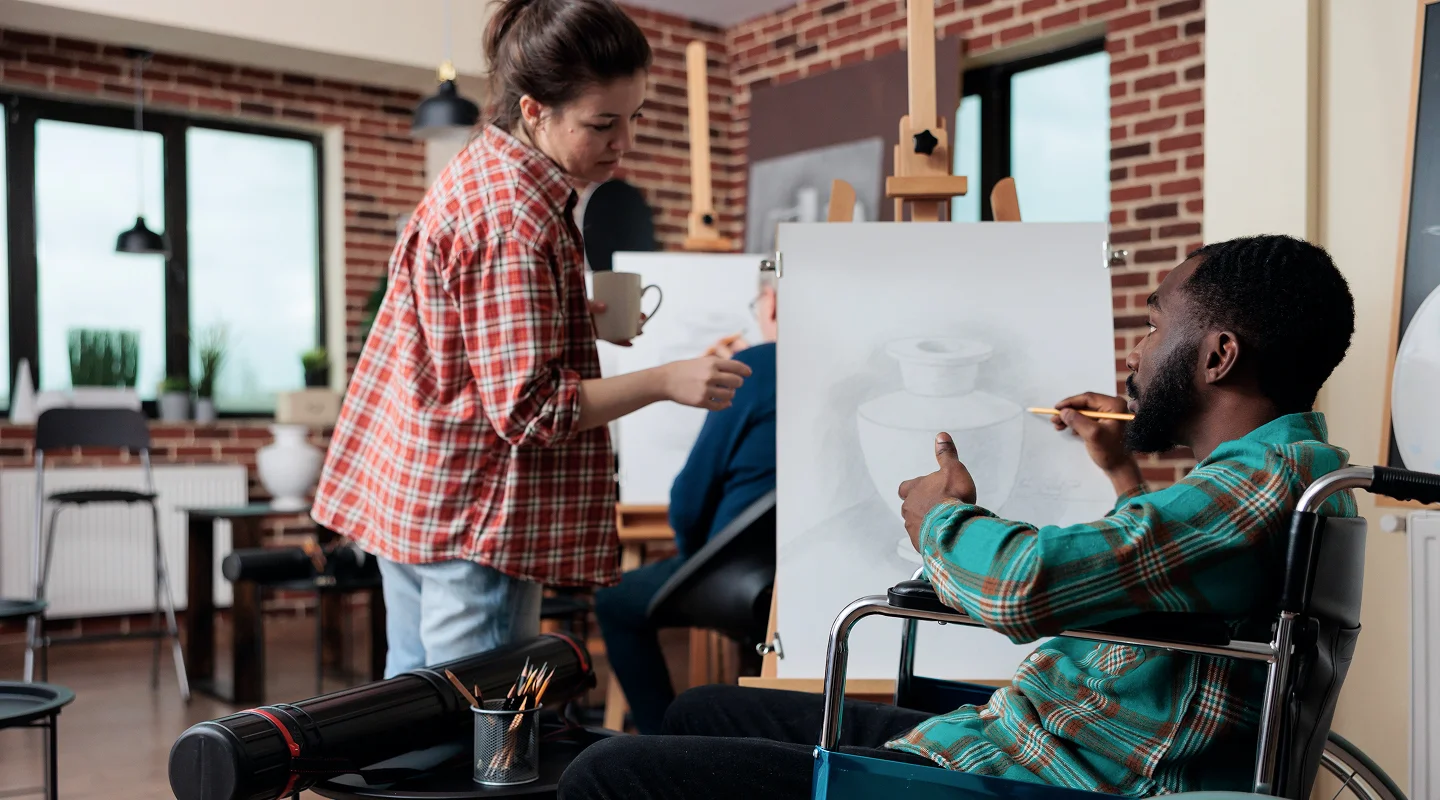
Art and Music Therapy Under the NDIS: What's Covered in 2026
You can use NDIS funds for art and music therapy if these services help you reach the goals in your plan and meet the “reasonable and necessary” criteria. Most participants pay for these sessions through the Capacity Building budget, specifically under the “Improved Daily Living” category.
What is Art and Music Therapy under NDIS?
Art and music therapy are allied health services that use creative activities to help people improve their well-being. These are not just hobbies or fun classes; they are clinical ways to work on mental health, social skills, and physical movement. A qualified therapist leads the sessions to help you reach specific goals, like talking more clearly or feeling less anxious.
Can I use NDIS funds for art therapy sessions? Yes, as long as the therapist is a professional who can show how the work helps you. Many people ask if music therapy is covered under Capacity Building or Core. While Core funds can sometimes pay for social groups, Capacity Building is the best way to fund one-on-one therapy. This is because it focuses on building your skills and independence over time.
When you look for a therapist, you want someone who understands the NDIS system. According to Carevo directory data (2026-08-26), there are 11,847 providers in the network that offer therapy and allied health services. This makes up 34.2% of all providers, giving you many options to find the right fit for your needs.
How These Therapies Help
- Art therapy helps you express feelings that are hard to put into words.
- Music therapy can improve your speech, memory, and how you move your body.
- Both ways of working help you feel more confident in social settings.
- Therapists provide regular reports to help you keep your funding during plan reviews.
How NDIS Funding for Creative Therapies Works
To get these therapies in your plan, you need to show they are a practical way to reach your goals. For example, if your goal is to make more friends, music therapy groups can help you practice social cues. If your goal is to manage stress, art therapy offers a safe way to process emotions.
How are you guys getting music therapy approved in your NDIS plans these days? The secret is in the evidence and reports you give to your NDIS planner. You need a letter from a doctor or a report from a therapist that explains why this specific therapy is the best way to help you. If you are self-managed, you might not need a formal GP letter for every small thing, but having one makes the process much smoother.
What is the best way to justify art therapy to a plan manager who is being difficult? Focus on the outcomes and skills you are learning. Instead of saying you “like painting,” explain that you are “improving fine motor skills and emotional regulation.” This shift in language helps plan managers see the service as a necessary health support rather than a leisure activity.
Funding Categories and Rules
- Capacity Building: This is the most common way to pay for therapy. It covers “Improved Daily Living” and pays for the therapist’s time.
- Core Supports: You might use this for group art sessions if the focus is on “Social and Community Participation.”
- Assistive Technology: People often ask, “Does NDIS actually pay for music therapy instruments?” Usually, the answer is no. They pay for the service, not the tools, unless an instrument is specially modified for a disability.
What art and music therapy cost in 2026-27
The NDIA set a national price limit of $156.16 per hour for art therapy and music therapy from 24 November 2025, matching the counselling rate. That limit carries into 2026-27 in the NDIS price guide, officially the NDIS Pricing Schedule 2026-27. Remote and very remote loadings apply on top ($218.62 and $234.24 per hour respectively).
That figure followed an independent review led by Dr Stephen Duckett, which confirmed the NDIS should keep funding art and music therapy where there is evidence it helps people with similar disability-related needs and goals, and where a qualified therapist delivers it. To claim the rate, art therapists must be registered with ANZACATA and music therapists with the Australian Music Therapy Association (NDIS, “Duckett review confirms art and music therapy to continue”, 2025).
Two things to keep in mind about that number. It is a maximum, not a set fee: registered providers cannot charge agency-managed or plan-managed participants more than the limit, but you can always agree a lower price. And if you are self-managed you have more room to negotiate what you pay.
By the Numbers: Therapy Providers in Australia
Finding the right help depends on where you live and what funding you have. The Carevo network provides a clear look at the current market for care and support services across the country.
| Statistic | Data Point |
|---|---|
| Total active providers in network | 34,600 |
| Number of Australian suburbs covered | 8,722 |
| NDIS-registered providers | 30,936 (89.4%) |
| Providers offering therapy & allied health | 11,847 (34.2%) |
| Therapy providers accepting HCP funding | 823 |
| Therapy providers accepting CHSP funding | 625 |
| Most requested service by careseekers | Personal care (1,593 requests) |
| Most common funding type for inquiries | NDIS (1,746 inquiries) |
Source: Carevo directory data (2026-08-26).
As the data shows, a huge majority of the network, 89.4%, is NDIS-registered. This is great news if you are looking for a “good NDIS-registered art therapist lately.” Most of these providers are located in major hubs. For therapy and allied health specifically, NSW has the most providers (4,328), followed by VIC (3,022) and QLD (2,146).
Finding and Choosing the Right Provider
I’m struggling to find NDIS providers for art therapy, any tips on where to look? Start by searching for “allied health” or “therapeutic supports” rather than just “art.” Many clinics have therapists who use creative ways to work but list themselves under broader categories. Using a tool like Carevo can help you filter through thousands of claimed profiles to find someone in your suburb.
When you find a provider, check if their profile is claimed. In the Carevo network, 18,376 provider profiles (53.1%) have been claimed by the businesses themselves. This gives you extra peace of mind that their contact details and services are up to date.
Questions to Ask a New Therapist
- Are you registered with the NDIS or do I need to be self-managed?
- How does your work help me reach my specific plan goals?
- Can you provide the reports I need for my NDIS plan review?
- What is your hourly rate, and how does it compare with the $156.16 per hour limit in the NDIS price guide?
Has anyone switched from art to music therapy and seen better results for their goals? This happens often! Some people find the rhythm of music more helpful for physical goals, while others prefer the visual nature of art. Because 20.2% of the Carevo network offers therapy, you have the freedom to try different approaches to see what works best for you.
How to Set Up Art and Music Therapy in Your NDIS Plan
Getting creative therapy into your plan starts with matching your goals to the right support. You first need to look at your current NDIS plan to see if you have funds in the Capacity Building - Improved Daily Living category. This is where most therapy happens. If you are preparing for a plan meeting, you should tell your coordinator exactly how art or music therapy will help you do more things on your own.
To make the process simple, follow these steps to get your therapy started:
- Check your goals: Ensure your plan has a goal related to social skills, mental health, or physical movement.
- Gather evidence: Get a letter from a doctor or a past therapist saying why this therapy is reasonable and necessary.
- Find a provider: Use a service like Carevo to search through the 30,936 NDIS-registered providers to find a specialist in your area.
- Sign a service agreement: This document explains what you will do in sessions and how much it will cost.
- Set up a trial: Many people ask, “How are you guys getting music therapy approved?” A good way is to start with a short trial and then use the therapist’s report to ask for more funding later.
One common challenge is making sure you have enough money left in your budget. Since NDIS is the most common funding type among the 9,483 inquiries sent to Carevo, many providers are very used to managing these budgets. They can help you track your spending so you don’t run out of funds before your next review. Boldly state your needs to your therapist early on so they can write their reports to match what the NDIS wants to see.
Real Results: What to Expect from Creative Therapy
The main reason people use art and music therapy is to see real changes in their daily lives. These therapies are great for improving emotional regulation, which helps you stay calm in stressful spots. Music therapy is often used to help people with speech delays or those who need to improve their balance and walking. Art therapy is a top choice for building fine motor skills and finding new ways to talk about feelings without using words.
When you look at the results, think about these common outcomes:
- Better communication: Using songs or art to express needs reduces frustration.
- Social growth: Group sessions help you practice making friends and taking turns.
- Physical gains: Playing instruments can make hands and arms stronger.
- Confidence: Learning a new skill like painting builds a sense of pride.
If you are wondering about the success of these programs, look at how many people are seeking help. In the Carevo network, therapy and allied health make up 34.2% of all providers, with 11,847 specialists available. This high number shows that more people are choosing these services because they work. Whether you are in NSW, which has 4,328 therapy providers, or VIC with 3,022, there are plenty of experts who can help you reach your goals.
Essential Tools and Resources for Your Therapy Journey
To succeed with art and music therapy, you need more than just a therapist; you need the right paperwork and tools. The most important resource is a clear service agreement. This keeps everyone on the same page about costs and goals. You also need a therapist who writes strong progress reports. These reports are the “proof” the NDIS needs to keep your funding active year after year.
What kind of evidence or reports are you guys submitting to make sure music therapy stays in the plan? You should ask your therapist for a report that uses functional language. This means they shouldn’t just say you enjoyed the music. They should say, “The participant used music to improve their ability to follow two-step instructions by 40%.” This kind of detail makes it very hard for a plan manager to say no.
Regarding the tools themselves, remember that the NDIS usually pays for the expert’s time, not the supplies. If you need specific items, here is how they are usually handled:
- Instruments: NDIS rarely pays for standard instruments, but they might pay for adapted tools if you have a physical disability.
- Art supplies: These are often seen as everyday costs, but some “consumables” funding might cover them if they are vital for therapy.
- Apps and Software: Special music or art apps used for communication can sometimes be funded under Assistive Technology.
Finding these resources is easier when you use a directory like Carevo. With 18,376 provider profiles (53.1%) claimed by the businesses themselves on Carevo, you can quickly find out which therapists have the right tools and experience to support your specific needs.
Solving Common Funding and Provider Problems
Many people hit a wall when they try to get creative therapies funded. A common issue is a difficult plan manager who thinks art therapy is just a hobby. The best way to fix this is to show them the NDIS price guide, officially the NDIS Pricing Schedule 2026-27, which lists art therapy and music therapy as priced supports at $156.16 per hour. Remind them that these sessions are led by university-trained health professionals registered with ANZACATA or AMTA, not by art teachers.
If you are struggling to find NDIS providers for art therapy, you are not alone. While there are 34,600 providers in the Carevo network, they are spread across 8,722 suburbs. If your local area is quiet, try looking for telehealth options. Many art and music therapists now offer sessions over video calls, which can be just as helpful and much easier to fit into your schedule.
Here are some quick fixes for other common problems:
- Funding is tight: Ask if you can join a group session instead of one-on-one. This is often cheaper and uses less of your budget.
- Therapist isn’t a fit: Don’t be afraid to switch. With 11.8% of providers also accepting private funding, you can sometimes pay for a trial session yourself before committing your NDIS funds.
- Waitlists are long: Look for providers in nearby states or larger hubs. For example, QLD has 2,146 therapy providers, and many offer remote services to rural areas.
If you’ve ever thought about switching from art to music therapy, now might be the time. People often find that one style works better for their current goals than the other. Since 96.3% of providers in the Carevo network accept NDIS funding, you have the flexibility to move your budget to a different type of therapy if your needs change. Always keep your plan manager in the loop so they can update your records.
Step-by-Step: Setting Up Your Therapy Business for NDIS Success
If you are a provider looking to offer art or music therapy, setting up your business correctly is the first step to helping more people. The NDIS market is large, but it requires a clear business setup to handle the billing and reporting. According to Carevo directory data (2026-08-26), 89.4% of providers in the network are NDIS-registered. This shows that being registered is the standard way to reach the most careseekers.
To get your practice ready, follow these simple steps:
- Choose your registration group: Most art and music therapists register under “Therapeutic Supports” (Registration Group 128).
- Check your credentials: Ensure you are a member of professional bodies like ANZACATA (for art) or AMTA (for music).
- Set up your pricing: Art therapy and music therapy have their own national price limit of $156.16 per hour in the NDIS Pricing Schedule 2026-27, with higher limits in remote and very remote areas. You can charge less than the limit, but not more when billing agency-managed or plan-managed participants.
- Create a Service Agreement template: This is a legal requirement. It should clearly state your fees, cancellation policy, and how you will help the participant reach their goals.
- Claim your digital profile: In the Carevo network, 48.1% of providers have already claimed their profiles. Doing this helps you show up in searches when families look for “good NDIS-registered art therapists.”
Boldly focus on outcomes when you talk to new clients. Instead of just offering “music lessons,” offer “communication skill-building through music.” This shift makes it much easier for participants to get their funding approved because it matches how the NDIS describes therapeutic supports.
Measuring the Results: Why Creative Therapy is a Smart Choice
For both families and providers, the “ROI” or return on investment of therapy is seen in improved independence. When a participant gains the skills to manage their own emotions or speak more clearly, they may need fewer “Core” support hours in the long run. This is the main goal of the NDIS: building capacity so people can live more full, independent lives.
The benefits are often seen in small, daily wins. For example, a child who uses music therapy to improve their rhythm might find it easier to walk or coordinate their movements. An adult using art therapy might find a way to process trauma that previously kept them from joining community groups. These results are why therapy and allied health are so popular, making up 20.2% of all providers in the Carevo network.
Expected Outcomes and Timelines
- Short-term (1-3 months): Improved mood, better engagement in sessions, and a clear baseline for goals.
- Medium-term (6-12 months): Noticeable growth in specific skills, like better fine motor control or social confidence.
- Long-term (1 year+): Significant changes in independence, often leading to a reduced need for high-intensity daily support.
By tracking these results, you make it easy to justify art therapy to a plan manager. When you can show that 12 months of therapy led to a 50% increase in social participation, the funding is much more likely to stay in the plan.
Essential Checklists for NDIS Therapy Management
To keep things running smoothly, you need a few simple tools in your kit. Whether you are a therapist or a participant, these resources help you stay organized and ensure the NDIS keeps paying for the services you need.
For Participants: The “Stay Funded” Checklist
- Goal Alignment: Does your plan specifically mention “building social skills” or “improving communication”?
- Provider Search: Have you checked the Carevo network to find one of the 11,847 therapy providers near you?
- Progress Reports: Do you have a report ready at least 6 weeks before your plan review?
- Funding Check: Are you tracking your “Improved Daily Living” budget monthly?
For Providers: The “Easy Billing” Checklist
- Service Bookings: Are your bookings set up in the NDIS portal before you start work?
- Case Notes: Are you writing notes after every session that link back to the participant’s goals?
- Claimed listing: Is your business profile claimed on platforms like Carevo so careseekers can find your contact details easily?
- DVA and HCP: Have you considered accepting other funding? In the Carevo network, 3,562 providers accept DVA funding, and 5,622 accept Home Care Packages (HCP). This helps you grow your business beyond just NDIS.
Related guides
- NDIS Capacity Building Supports 2026-27: All 9 Types
- NDIS Improved Daily Living (CB Daily Activity) Guide 2026-27
- Occupational Therapy Under NDIS: Complete Guide (2026)
- NDIS Speech Therapy: Costs & Funding
- Positive Behaviour Support (PBS) Under the NDIS
- What Are Reasonable and Necessary NDIS Supports?
Frequently Asked Questions
Can I use NDIS funds for art therapy sessions? Yes, you can use your funds if the therapy is “reasonable and necessary” and helps you reach a goal in your plan. Most people use their Capacity Building budget for this.
Is music therapy covered under Capacity Building or Core? It is usually covered under Capacity Building (Improved Daily Living). However, if you are attending a group music session for social reasons, you might be able to use your Core budget under “Social and Community Participation.”
Anyone found a good NDIS-registered art therapist lately? Finding the right person can be tough, but you aren’t alone. With 34,600 providers across 8,722 suburbs in the Carevo network, the best way to find one is to search by your specific suburb and filter for “NDIS registered.”
Does NDIS actually pay for music therapy instruments? Generally, no. The NDIS pays for the professional service of the therapist. They see instruments as a “lifestyle” cost that any person might have. The only exception is if you need a highly specialised, modified instrument because of your disability.
How are you guys getting music therapy approved in your NDIS plans these days? The best way is to have a functional assessment from an Occupational Therapist or a GP. This report should state that music therapy is the most effective way to reach your specific goals, such as improving speech or motor skills.
What’s the best way to justify art therapy to a plan manager who’s being difficult? Use the therapist’s professional title. Call it “Allied Health Therapy” or “Therapeutic Support” rather than “art class.” Focus on the clinical outcomes, like “improving emotional regulation” or “developing fine motor skills for daily tasks.”
Has anyone switched from art to music therapy and seen better results for their goals? Many people switch therapies as their needs change. For example, you might start with art therapy to work on anxiety, then move to music therapy to help with physical coordination. Since 20.2% of the Carevo network offers therapy, you have many specialists to choose from if you decide to make a change.
I’m struggling to find NDIS providers for art therapy, any tips on where to look? Try looking in larger hubs if your local suburb is empty. For instance, NSW has 4,328 therapy providers, while VIC has 3,022. Many of these providers offer telehealth, which means you can get expert art therapy from home, no matter where you live.
If I’m self-managed, do I still need a formal letter from a GP to get art therapy covered? While self-managed participants have more freedom, it is still highly recommended to have a letter or report. This protects you if the NDIS ever audits your spending. It proves the therapy was a clinical choice, not just a hobby.
What kind of evidence or reports are you guys submitting to make sure music therapy stays in the plan? Submit a “Progress Report” that shows how far you’ve come. Use numbers where possible, for example, “The participant can now stay focused for 20 minutes, up from 5 minutes last year.” This data makes it easy for the NDIS to see the value.
Final Thoughts on Creative Therapies
Art and music therapy are powerful tools that help thousands of Australians live better lives. By focusing on goals and evidence, you can make these services a permanent part of your NDIS plan. Whether you are a provider looking to grow your practice or a careseeker looking for help, the key is to use the right data and tools to find the best fit.
With over 34,600 active providers listed in the Carevo network, help is closer than you think. By choosing registered providers who have claimed their listing, you ensure that every dollar of your NDIS funding goes toward making a real difference in your daily life. Start by checking your goals, gathering your evidence, and reaching out to a specialist who can help you find your creative path to independence.
Sources
Co-founder & CEO · Updated
Andre is the co-founder and CEO of Carevo. He holds a Bachelor of Commerce, majoring in Marketing, and a Bachelor of Arts from UNSW Sydney, where his majors were International Relations, Politics, Information Systems, and Media and Communications, graduating in 2014, and went through the UNSW 10x Founders accelerator in 2023.