Registered vs Unregistered NDIS Providers: Which Can You Use?

A registered NDIS provider is a business that has been audited and approved by the government to meet high safety and quality standards. An unregistered NDIS provider is a business that follows the NDIS Code of Conduct but has not gone through the formal audit process, meaning they can only work with people who self-manage or use a plan manager. Some supports are off limits either way: registration is required for Specialist Disability Accommodation, regulated restrictive practices and behaviour support plans, and since 1 July 2026 for Supported Independent Living and platform providers.
Choosing between the two depends on how you manage your NDIS plan and what kind of support you need. While registered providers offer more government oversight, unregistered providers often provide more flexibility and lower costs for simple daily tasks.
NDIS Providers: By the Numbers
To understand the current state of care in Australia, we looked at our own marketplace statistics. These figures show how many businesses are ready to help and what kind of funding they accept.
Carevo directory data (2026-08-26):
| Category | Statistic |
|---|---|
| Total Active Providers | 34,600 across 8,722 suburbs |
| NDIS-Registered Providers | 30,936 (89.4% of network) |
| Providers Accepting NDIS Funding | 28,426 (82.2% of network) |
| Claimed provider profiles | 18,376 (53.1% of network) |
| Personal Care Providers | 19,385 (56.0% of network) |
| Domestic Assistance Providers | 19,320 (55.8% of network) |
| Therapy & Allied Health Providers | 11,847 (34.2% of network) |
According to Carevo directory data (2026-08-26), the majority of the network is already registered. However, there is still a large group of providers who offer vital services without the formal registration badge. For example, 19,385 providers offer personal care, and 19,320 offer domestic assistance or cleaning. Most of these providers are found in NSW, VIC, and QLD, where the need for daily support is highest.
Core Definition Section
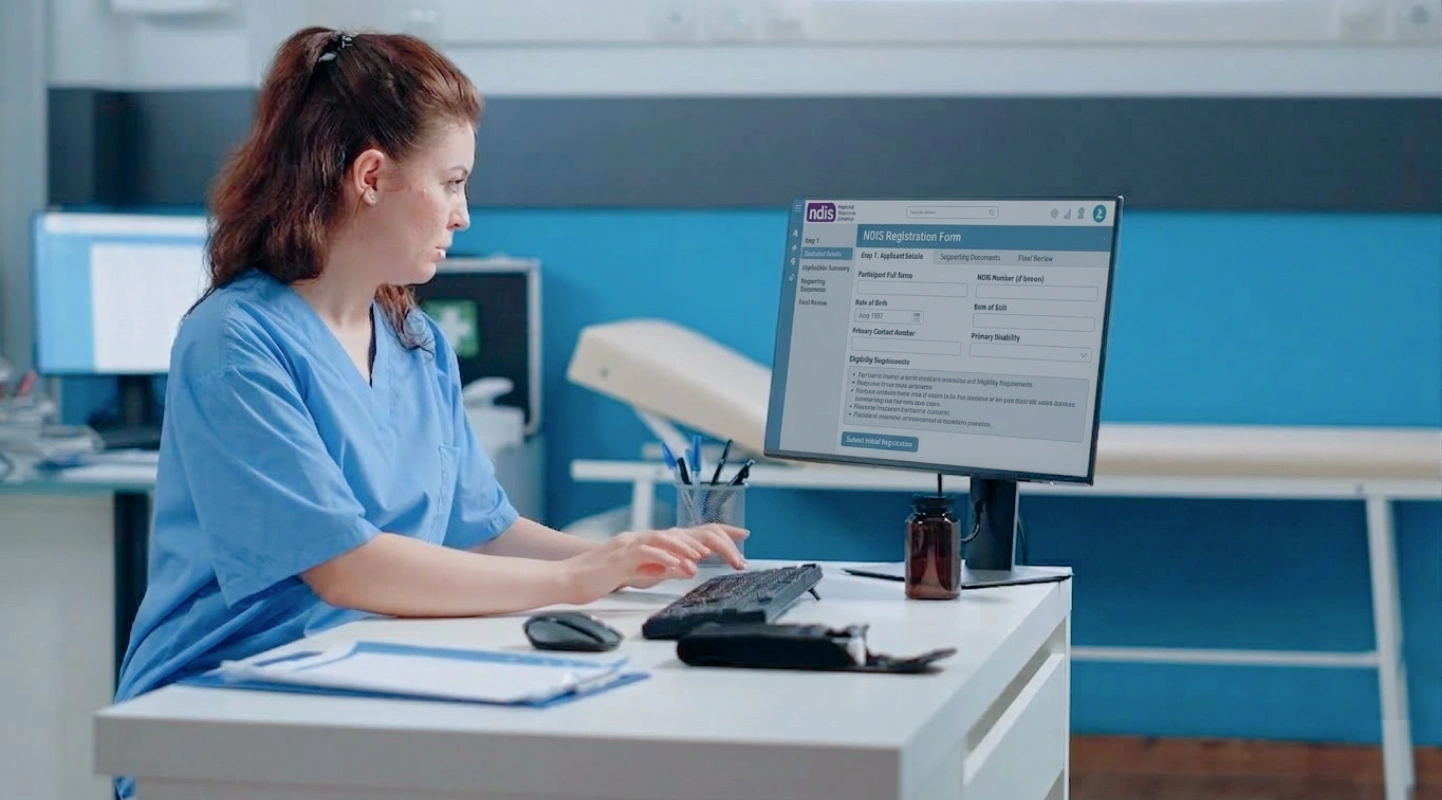
A registered provider has gone through a strict process with the NDIS Quality and Safeguards Commission. They must pass a quality audit and show they meet the NDIS Practice Standards. This process is often long and costs money, which is why some smaller businesses choose to stay unregistered. If your plan is NDIA-managed (also called Agency-managed), you must use registered providers. This is because the government pays the provider directly and wants to ensure they have passed all safety checks.
An unregistered provider has not gone through the audit but must still follow the NDIS Code of Conduct. They can work with participants who are self-managed or plan-managed. Many people ask, “Why pick an unregistered provider over a registered one?” Often, it comes down to choice and cost. Unregistered providers might be smaller, local businesses or independent contractors who offer a more personal touch. They also usually have lower overheads, which can help your budget last longer.
Is it worth going with a registered NDIS provider? For many, the answer is yes because of the extra layer of safety. Registered providers must have complaint systems, incident management plans, and worker screening in place. However, if you are looking for simple help like house cleaning or gardening, an unregistered provider might be just as good. In the Carevo network, 96.3% of providers accept NDIS funding, but only 92.7% are registered. This shows that many businesses are still able to help NDIS participants even without the official registration.
How It Works Section
The way you use your NDIS funding determines which providers you can hire. If you are self-managed, you have the most freedom. You can hire any provider, registered or not, as long as the service helps you reach your goals. People often ask: “Registered vs unregistered: which one’s better for self-managed plans?” For self-managed participants, unregistered providers are often a great way to save money or find niche services that larger companies don’t offer.
If you use a plan manager, you also have the choice to use unregistered providers. The consensus on using unregistered providers if you’re plan-managed is that it offers a good balance. You get the flexibility of choice, but your plan manager handles the paperwork and ensures the provider is paid correctly. However, if your plan is Agency-managed, your choices are limited to the 30,936 registered providers found in the Carevo directory data (2026-08-26).
The process for a provider to become registered involves several steps:
- Application: The business tells the NDIS Commission what services they offer.
- Audit: An outside person checks the business to make sure they follow the rules.
- Suitability: The Commission checks if the business owners are fit to run the service.
- Approval: If everything is right, they become a registered provider.
Does the extra paperwork for registered providers actually lead to better safety outcomes? Most experts say yes. The paperwork ensures that there is a clear trail if something goes wrong. It forces businesses to have a plan for emergencies and to check the backgrounds of their staff. For daily support, some people haven’t noticed a big difference in quality between registered and unregistered providers. The quality often depends more on the individual worker than the registration status of the company.
When you use Carevo to find support, you can see whether a business has claimed its listing. Currently, 18,376 provider profiles (53.1%) have been claimed by the businesses themselves. Claiming helps you feel more confident that the information you see is correct and up to date. Whether you need personal care in NSW (where there are 6,233 providers) or domestic assistance in VIC (where there are 5,917 providers), knowing the registration status helps you make a better choice for your plan.
Implementation Section
Deciding whether to work with a registered or unregistered business is a big step for any plan. If you are a provider, you might wonder: “Can someone explain why a provider would choose to stay unregistered even if they’ve been in the NDIS space for years? Is it just the audit costs?” While audit costs are a major factor, many small businesses stay unregistered to avoid the heavy admin work that comes with government reporting. This allows them to focus more on the actual care and less on the paperwork.
If you are a participant looking to set up a new service, here is a simple way to get started:
- Check your plan management: Look at your NDIS plan to see if you are self-managed, plan-managed, or Agency-managed. This tells you if you can even look at unregistered options.
- Identify your needs: Do you need specialised therapy or simple help around the house? Carevo directory data (2026-08-26), shows that 19,320 providers offer domestic assistance, making it the most common service available.
- Search the network: Use a tool like Carevo to find providers in your specific suburb. With 8,722 suburbs covered, you can find local help quickly.
- Ask for proof of insurance: Even if a provider is unregistered, they should still have public liability insurance.
- Check worker screening: Ask if their staff have a valid NDIS Worker Screening Check. This is a key way to stay safe when using unregistered help.
If I switch from a registered to an unregistered provider to save on my budget, what are the specific compliance things I need to watch out for? The main thing is record keeping. You must keep all your invoices and receipts for five years. You also need to make sure the service you are buying directly relates to your disability and is “reasonable and necessary”. According to Carevo directory data (2026-08-26), there are 6,963 providers who accept private or self-funded payments, which is often how unregistered providers operate with self-managed participants.
Benefits & Results Section
Choosing the right provider type can lead to better budget use and more tailored support. Many people ask, “I’m struggling to see the actual benefits of paying more for registered NDIS providers, what am I missing?” The main benefit is peace of mind. Registered providers are forced to follow strict safety rules. If something goes wrong, the NDIS Commission has more power to step in and fix the problem.
For business owners, becoming registered opens up more funding pools. While 28,426 providers in the network accept NDIS funding, many also tap into other government programs. Carevo directory data (2026-08-26), reveals:
- 3,916 providers accept CHSP funding.
- 5,622 providers accept Home Care Package (HCP) funding.
- 3,562 providers accept DVA funding.
Being registered often makes it easier to work across these different systems. For a participant, the “result” of using a registered provider is often a more structured experience. You get formal service agreements and clear complaint paths. On the other hand, the benefit of an unregistered provider is often cost-efficiency. Because they don’t pay for expensive audits, they might charge less than the price limit in the NDIS price guide, officially the NDIS Pricing Schedule 2026-27. This can help your budget stretch further, especially for daily tasks like cleaning or gardening.
In the Carevo network, 19,385 providers offer personal care. Of these, 3,905 accept HCP funding and 2,965 accept CHSP funding. This shows that many businesses are “multi-funded,” which usually means they have a higher level of experience with government rules. If you find a provider that handles both NDIS and Aged Care, they are likely very good at managing the compliance side of things.
Tools & Resources Section
Finding the right help doesn’t have to be hard if you use the right tools. A major resource is the Carevo marketplace, which helps you filter through 34,600 active providers. This is helpful because you can see exactly who maintains their own listing. Currently, 18,376 provider profiles (53.1%) have been claimed by the businesses themselves. This means the provider has checked their own details to make sure they are right.
When evaluating a provider, look for these three things:
- Claimed listing: A claimed profile on Carevo shows the business is active and engaged.
- Funding Types: Check if they accept your specific funding. For example, if you have a Home Care Package, you’ll want one of the 5,622 providers that accept HCP.
- Service Location: With providers spread across 8,722 suburbs, you should be able to find someone close to home.
For those needing allied health or therapy, there are 11,847 providers in the Carevo network (34.2% of the total). These services often require specific qualifications. Even if a therapist is unregistered with the NDIS, they must still be registered with their own professional body, like AHPRA. This is a vital safety check you can do yourself.
If you are looking for domestic assistance, the data shows where the most help is located. NSW leads with 6,385 providers, followed by VIC with 5,917 and QLD with 3,133. Using these state-specific numbers helps you understand how much choice you really have in your local area.
Common Challenges Section
One of the biggest worries for families is safety. People often ask: “Any major risks using unregistered NDIS providers lately?” The biggest risk is the lack of oversight. If an unregistered provider does a poor job or acts unprofessionally, the NDIS Commission has fewer ways to punish them compared to a registered business. You are essentially acting as your own “quality controller.”
Another challenge is the quality of support. Has anyone noticed a big difference in quality between registered and unregistered providers for daily support? In many cases, the quality is the same. A cleaner or a gardener doesn’t necessarily work better just because their company passed an NDIS audit. However, for high-risk tasks like PEG feeding or manual lifting, the extra training required for registration is very important.
Common problems and how to fix them:
- Problem: An unregistered provider doesn’t provide a proper invoice.
- Solution: Always set up a service agreement first that states exactly how and when you will be invoiced.
- Problem: You are Agency-managed but want to use a local unregistered business.
- Solution: You cannot do this directly. You would need to request a plan review to switch to self-management or plan-management.
- Problem: Finding a provider who understands your specific funding.
- Solution: Use the filters on Carevo to find businesses that specifically list your funding type, such as the 3,562 providers who accept DVA funding.
Budgeting is also a frequent pain point. While 82.2% of providers in the Carevo network accept NDIS funding, their prices can vary. Registered providers almost always charge the maximum NDIS rate. Unregistered providers might be open to negotiation, but you must ensure they are still paying their workers a fair wage under the relevant Award. If a price seems too low, it might be a sign that the business is cutting corners on insurance or training.
Choosing the Right Support by Service Type
When you look at the 34,600 active providers in the Carevo network, you see a wide range of help available. The choice between a registered or unregistered business often depends on the type of service you need. For example, 19,320 providers (55.8% of the network) offer domestic assistance and cleaning. This is a service where many people feel comfortable using unregistered providers. Because cleaning is a lower-risk task, the strict audits required for registration might not feel as necessary for every household.
On the other hand, 19,385 providers offer personal care, which involves more direct physical support. According to Carevo directory data (2026-08-26), 3,905 of these personal care providers accept Home Care Package (HCP) funding, and 2,965 accept CHSP funding. When a provider handles multiple types of government funding, they often have stronger systems in place. If you need help with showering, dressing, or medication, you might feel safer with one of the 30,936 registered providers who have passed a formal quality audit.
For specialised needs, the network includes 11,847 providers offering therapy and allied health. This makes up 34.2% of all providers. When hiring a therapist, their registration with the NDIS is one thing, but their professional accreditation (like with AHPRA) is the most important safety check. Many therapists stay unregistered with the NDIS to keep their fees lower for participants, as they are already regulated by their own professional boards.
State-by-State Support Availability
Where you live also changes your options. The Carevo directory data (2026-08-26), shows that support is most available in the major states. If you are looking for domestic assistance, here is how the numbers look:
- NSW: 6,385 providers
- VIC: 5,917 providers
- QLD: 3,133 providers
For personal care, the numbers are similar:
- NSW: 6,233 providers
- VIC: 5,932 providers
- QLD: 3,267 providers
With 8,722 suburbs covered, Carevo makes it easy to see who is working in your local area. If you live in a smaller suburb, you might find that only unregistered providers are willing to travel to you. This is a common reason why people pick an unregistered provider over a registered one, local availability often beats a big company’s registration status.
The Budget Impact: Registered vs Unregistered Costs
A major question for many is: “I’m struggling to see the actual benefits of paying more for registered NDIS providers, what am I missing?” The truth is that registered providers often charge the full NDIS price limit in the NDIS Pricing Schedule 2026-27. This is because their costs are higher. They have to pay for audits, complex insurance, and dedicated compliance staff. Remember that the limit is a ceiling rather than a set fee, and any provider can agree a lower price with you.
One thing to keep straight: if your plan is plan-managed, the price limits still apply to price-limited supports even when the provider is unregistered. It is self-managed participants who have real room to negotiate outside them.
Unregistered providers, however, can often be more flexible with their rates. If you are self-managed, you can negotiate a lower hourly rate with an unregistered cleaner or gardener. This can make a huge difference in how long your budget lasts. For example, if you save $10 an hour by using a local unregistered helper, that could mean an extra two hours of support every month.
However, you must be careful. If you switch from a registered to an unregistered provider to save money, you must watch out for compliance. You are responsible for making sure the provider is actually doing the work and that they have their own insurance. In the Carevo network, 6,963 providers accept private or self-funded payments. These businesses are often very used to working with self-managed participants who want to get the most value out of every dollar.
Safety and Compliance: A Deeper Look
Does the extra paperwork for registered providers actually lead to better safety outcomes? For high-risk services, the answer is usually yes. Registered providers must follow the NDIS Practice Standards, which include:
- Incident Management: A clear way to report and fix things when they go wrong.
- Complaints Management: A formal process for you to speak up if you aren’t happy.
- Worker Screening: Ensuring every staff member has a clean criminal record and is cleared to work with vulnerable people.
Any major risks using unregistered NDIS providers lately? The main risk is that the burden of checking falls on you. You have to ask for their insurance papers. You have to check their references. You have to make sure they follow the NDIS Code of Conduct. If you use Carevo, you can look for claimed profiles to help with this. Currently, 18,376 provider profiles (53.1%) are claimed, which gives you a head start on your research.
Related guides
- What Is an NDIS Service Provider? How to Choose the Right One (2026)
- NDIS Plan Management Options: Which Is Best?
- Your Consumer Rights Under the NDIS
- NDIS Provider Insurance Requirements 2026
- NDIS Worker Screening Check: Cost, How to Apply & State Guide 2026
- What Are Reasonable and Necessary NDIS Supports?
Frequently Asked Questions
Registered vs unregistered: which one’s better for self-managed plans?
For self-managed plans, there is no “better” option, only what fits your needs. Unregistered providers offer more flexibility and lower costs, which is great for daily tasks. Registered providers offer more oversight, which is better for complex health needs. Most self-managed participants use a mix of both.
Why would a provider stay unregistered for years?
It is often not about the quality of care, but the cost of the audit. A full NDIS audit can cost thousands of dollars and take months of work. Many small businesses or solo workers choose to stay unregistered so they can keep their prices low and focus on their clients rather than government forms.
Is there a big difference in quality for daily support?
Most participants have not noticed a big difference in quality between registered and unregistered providers for things like cleaning or gardening. The quality of daily support usually depends on the individual person doing the work. A registered company can still have poor workers, and an unregistered solo worker can be excellent.
What’s the consensus on using unregistered providers if you’re plan-managed?
The consensus is that plan-management offers the best of both worlds. You can use unregistered providers, but your plan manager handles the payments and makes sure the invoices are correct. This gives you the freedom of choice without the stress of managing the money yourself.
Is it worth going with a registered NDIS provider?
It is worth it if you value government protection. If a registered provider fails to meet standards, the NDIS Commission can take strong action against them. For many families, this extra layer of safety is worth the higher price.
What funding types do most providers accept?
According to Carevo directory data (2026-08-26), 82.2% of the network accepts NDIS funding. However, many also accept other types:
- HCP: 14.7% (5,622 providers)
- CHSP: 12.5% (3,916 providers)
- DVA: 10.3% (3,562 providers)
- Private: 20.1% (6,963 providers)
Conclusion
Choosing between a registered and unregistered NDIS provider is a personal decision that depends on your funding management and your comfort with risk. Registered providers offer a high level of safety and are a must for Agency-managed plans. Unregistered providers offer flexibility and can be a great way to make your budget go further if you are self-managed or plan-managed.
With 34,600 active providers across 8,722 suburbs, the Carevo network shows that there is no shortage of help available. Whether you need personal care in NSW or domestic assistance in VIC, the key is to do your research. Look for claimed profiles, ask about insurance, and make sure the provider understands your specific goals. By using tools like Carevo to filter through your options, you can find the right balance of safety, cost, and quality for your unique journey.
Sources
- Find a registered provider, NDIS Quality and Safeguards Commission
- About registration, NDIS Quality and Safeguards Commission
- Make a complaint, NDIS Quality and Safeguards Commission

Co-founder & CEO · Updated
Andre is the co-founder and CEO of Carevo. He holds a Bachelor of Commerce, majoring in Marketing, and a Bachelor of Arts from UNSW Sydney, where his majors were International Relations, Politics, Information Systems, and Media and Communications, graduating in 2014, and went through the UNSW 10x Founders accelerator in 2023.