NDIS Quote Template: Free Word Download for Providers

Download the NDIS quote template (Word DOCX). It is free, with no email or account needed.
A quote is not an invoice with the date moved forward. For the supports the NDIA prices by quote, it is the primary document a delegate reads when deciding whether to release funding. Written badly, it gets sent back, and a participant waits another six weeks for a shower chair.
The NDIA does not publish a quote form
It publishes requirements. For home modifications it is fairly specific about what a quote must contain. For assistive technology it says less about format and more about what evidence has to sit alongside the quote. In both cases the document itself is yours to write.
That gap is why “ndis quote template” gets searched. Providers know what the price is. They are less sure what else has to be on the page.
When a quote is actually needed
Assistive technology
Low-cost assistive technology, under $1,500, is treated as low risk. A participant can generally buy it from their plan without sending the NDIA a quote.
Above that threshold, written evidence is needed, and the NDIA accepts it as a letter, email or report. It has to be in writing so it can be kept on the record.
Over $15,000, the item is high-cost, and an assessment from an assistive technology assessor is needed as well as the quote.
One quote is usually enough. The NDIA may ask for a second where the price is higher than it expects, which is how it checks value for money. Delivery and installation charges by the supplier belong in the quote.
Home modifications
Minor home modifications are ones that do not change the structural parts of the home, or that cost no more than $20,000. Quotes usually do not need to be sent to the NDIA for these, but keep them. They matter for warranties, for audits, and for the moment someone asks how the figure was reached.
Complex home modifications need two itemised quotes. Itemised means the cost of each part of the work listed separately for each section, not one number for the bathroom. The NDIA will also accept a cost estimate from a qualified building cost estimator or quantity surveyor.
The assessment behind a home modification comes from an occupational therapist with suitable skills, qualifications and experience. The builder quoting the work needs the qualifications and insurance for that work, and must be licensed by the state or territory building authority.
Everything else
Any support with no published price limit is priced by quote. Check the current NDIS pricing arrangements and price limits for the support before you assume one way or the other, because the answer changes between releases.
What a quote has to contain
The NDIA’s guidance for builders and designers is the clearest published statement of this, and most of it generalises to assistive technology.
Who you are. Name, registered address, phone and email, ABN, registered practitioner number, and details of your insurances. Put these on the quote. A reader who has to email you to find out whether you are licensed is a reader who has already lost confidence in the document.
What the work is. The scope of works, plus any relevant drawings and specifications. For equipment, that means make, model and configuration, not a category name. “Power wheelchair” tells a delegate nothing. The model, the seating system and the reason each option was selected tells them everything.
What it costs, broken down. A price breakdown including the price, GST, any provisional sums and any prime cost items. Separate costing for each stage of the job, so demolition, plumbing and electrical work appear as their own lines. A description of any fixtures or items the builder supplies, including make, model and cost. An overall price for the job inclusive of GST where GST applies.
How it is accepted. A contract where one applies, or a signing and acceptance page where there is no contract.
Provisional sums and prime cost items deserve a note of their own. They are allowances, not fixed prices, and the final figure can move. Label them as such on the quote. A participant who reads an allowance as a price and then receives a higher final bill has a legitimate complaint, and it will be about your quote, not about the work.
Things that get a quote sent back
It is not itemised. One figure for a bathroom modification cannot be compared against a second quote, which is the entire reason two are required.
The scope does not match the report. The therapist recommended a ceiling hoist and a level-entry shower. The quote covers a hoist, a shower, a new vanity and a repaint. The extra work may be reasonable, but it is not what was assessed, and mixing the two slows down the part that was.
Stale participant details. A plan end date from the last plan is a common one. So is an old address for a participant who has moved, which for a home modification is not a small error.
No assessment identified. A quote that does not name the report it belongs to has to be matched by hand at the other end.
Nothing about timing. Lead times belong in the quote. If a custom item takes four months to build, that has to be known before approval, not discovered afterwards.
Repairs and maintenance folded into the total. These are often handled separately from the purchase. Show them separately and say which is which.
What is in the download
The Word template runs through twelve sections: quote identification and validity, provider details with licence and insurance fields, participant and plan management details, the assessment the quote relates to, what is being quoted, an itemised price breakdown, delivery and installation shown as their own lines, a home modification section with stage-by-stage costing and provisional sums, warranty and maintenance, timeframes, terms, and a signed declaration. It finishes with a submission record and an attachments checklist.
No support item numbers or prices are pre-filled. Those come from the current pricing arrangements at the time you quote, and a template that hardcodes them is a template that goes wrong in July.
Delete the home modification section for an assistive technology quote, and vice versa. It is a starting draft, not an approved form, and the NDIA and the NDIS Commission have not reviewed it. Check it against your own licensing, insurance and GST position before you send it.
Related reading
For which supports need a quote in the first place, read NDIS supports that need a quote. For the evidence that sits behind an equipment quote, see building evidence before an assistive technology purchase and the low-cost assistive technology guide. For the assessment side of a modification, see NDIS home modifications assessment. To sanity-check a figure before you write it down, use the assistive technology budget calculator.
Once the work is approved and done, the invoice template is the next document. Keep the quote, the scope and the invoice consistent, because the three get read together.
Browse all the free templates. Carevo is a connection platform: it does not deliver supports, supply equipment, or review the quotes providers send.
This is general information, not legal, financial or clinical advice. Obtain advice for pricing, GST or contractual questions outside the template’s scope.
For providers and independent support workers
Ready to find your next client?
Create your Carevo profile so people can learn about your services. Add where you work, what you do and your availability, then explore relevant care enquiries.
Sign up for CarevoUse your email, then choose provider or support worker. Already registered? Use the same link to log in. Check current enquiry access and plan terms in the app.
Carevo connects people with providers and workers. Registration does not guarantee clients or establish eligibility to deliver funded supports.
Co-founder & CEO
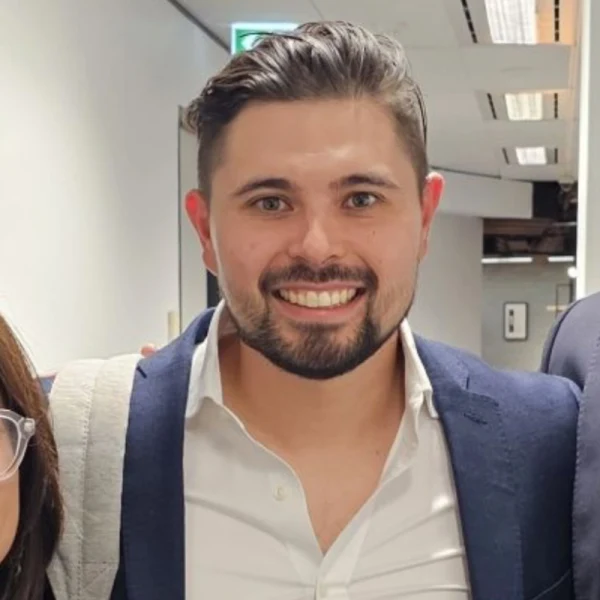
Andre is the co-founder and CEO of Carevo. He holds a Bachelor of Commerce, majoring in Marketing, and a Bachelor of Arts from UNSW Sydney, where his majors were International Relations, Politics, Information Systems, and Media and Communications, graduating in 2014, and went through the UNSW 10x Founders accelerator in 2023.