
Dyspraxia Support Pathway: OT, School Collaboration, and Daily Skills Development Services
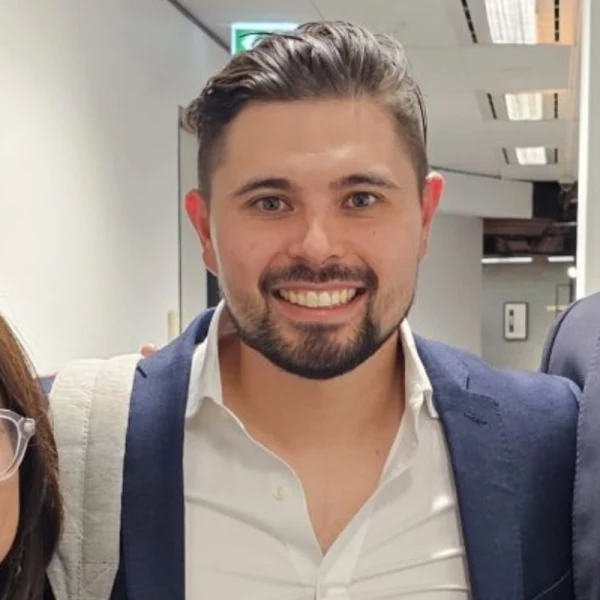
Andre Smith
Co-founder & CEO

Key Points
- Dyspraxia and developmental coordination disorder (DCD) are the same condition; DCD is the clinical term, dyspraxia is still widely used; it affects approximately 5 to 6% of school-age children
- A formal diagnosis is not required to access OT therapy; however, diagnosis is needed for NDIS access (over 7) and formal school adjustments; a paediatrician diagnoses with input from an OT standardised motor assessment
- The CO-OP (Cognitive Orientation to Daily Occupational Performance) approach has the strongest evidence base for DCD; ask potential OT providers whether they are trained in CO-OP
- School involvement is essential; request a Student Support Plan documenting handwriting alternatives, extended time, adapted PE, and teacher education about DCD
- Children under 7 can access funded OT through the NDIS Early Childhood Approach without a formal diagnosis; for school-age children, NDIS access depends on severity of functional impairment
- DCD does not resolve in adulthood; adults with DCD benefit from OT-based skill analysis and problem-solving strategies
Dyspraxia and the Path to Support
Dyspraxia, formally known as developmental coordination disorder (DCD), is a neurodevelopmental condition affecting the planning and execution of coordinated movements. It is among the most common conditions affecting school-age children, yet it is one of the least understood by schools, GPs, and even families. Children with DCD are often labelled as clumsy, lazy, or careless before anyone identifies that there is a neurological explanation for their difficulties.
The support pathway for dyspraxia in Australia involves occupational therapy as the primary intervention, school collaboration to address the academic and social impact of the condition, and NDIS funding for children with significant functional impairment. This guide covers each of these areas, including the questions that help families navigate the system and choose providers who genuinely understand DCD.
Recognising Dyspraxia
In Young Children (3 to 5 Years)
- Late or unusual achievement of motor milestones (walking, running, jumping)
- Difficulty with ride-on toys, tricycles, and later bicycles
- Reluctance to participate in physical play with other children
- Struggles with self-care tasks such as using utensils, dressing, and doing up buttons or zips
- Handwriting difficulties emerging as the child starts pre-school activities
- Sensitivity to certain textures in clothing or food (sensory processing differences often co-occur)
In School-Age Children (6 to 12 Years)
- Handwriting that is slow, effortful, poorly legible, and inconsistent
- Difficulty copying from the board
- Struggles with sports and coordinated physical activities; often last picked for teams
- Difficulty with scissors use, arts and craft activities
- Disorganised approach to tasks and belongings
- Fatigue from the extra effort required across the school day
- Avoidance of writing tasks, PE, and activities that expose the motor difficulties
In Teenagers and Adults
- Persistent handwriting difficulties; preference for keyboard use
- Difficulty with some aspects of driving (coordination, spatial judgment)
- Challenges with complex motor tasks in work or daily life
- Organisation and planning difficulties (DCD often co-occurs with ADHD which compounds this)
- Social confidence affected by lifelong experience of motor difficulty
The Assessment Process
GP Referral
The assessment process typically begins with a GP referral to a paediatrician. The GP may refer directly, or may suggest an OT assessment first to document the motor difficulties.
OT Motor Assessment
An occupational therapist administers a standardised motor assessment, most commonly the MABC-2 (Movement Assessment Battery for Children, second edition). This test measures:
- Manual dexterity (fine motor tasks: peg placement, drawing, threading)
- Ball skills (throwing, catching, aiming)
- Balance (static and dynamic)
Performance is compared to age norms and a percentile score is calculated. A score at or below the 5th percentile indicates significant motor difficulty supporting a DCD diagnosis; scores between the 5th and 15th percentile indicate at-risk status warranting monitoring and clinical judgment.
The OT assessment also includes:
- Functional assessment: observing the child performing daily tasks (drawing, cutting, writing, dressing)
- Parent and teacher questionnaires
- Sensory processing assessment if relevant
Paediatric Review and Diagnosis
The paediatrician reviews the OT assessment results, clinical history, and developmental information to make the DCD diagnosis. They also screen for co-occurring conditions (ADHD, autism, anxiety, learning difficulties) which are present in a significant proportion of children with DCD.
OT Treatment
Setting Goals with the Child
DCD treatment is most effective when goals are selected by the child and family, not imposed by the therapist. Goals should be:
- Functional activities the child wants to be able to do
- Meaningful in the child’s daily life (riding a bike, tying shoelaces, handwriting for school, doing up buttons)
- Achievable within a realistic timeframe
The CO-OP Approach
CO-OP is the most evidence-supported intervention for DCD and the approach most OTs with DCD expertise use. The framework:
Goal: What does the child want to learn to do? Plan: What strategy will we try? Do: Practise with the strategy Check: Did the strategy work? If not, what will we change?
The key distinction from traditional skill drilling is that CO-OP builds a meta-skill: the child learns how to analyse and solve motor challenges. This transfers to new skills the therapist has never directly addressed.
Session structure typically includes:
- Review of the previous session’s home practice
- Goal activity practice with strategy development
- Discussion and reflection (the child is an active problem-solver, not a passive participant)
- Agreement on home practice for the week
Parent Coaching
Parents learn to facilitate the child’s use of the GO-DO-CHECK cycle at home and in community settings. This extends the therapeutic work beyond the session into everyday life.
School Collaboration
Requesting a Student Support Plan
Parents have the right to request a formal Student Support Plan (or equivalent document in their state, such as an Individual Education Plan). The plan documents the specific adjustments the school will provide and should be reviewed and updated regularly.
Key School Adjustments for DCD
Handwriting alternatives: Access to a keyboard or tablet for written work is often the most significant adjustment for school-age children with DCD. Typing allows the child to demonstrate their learning without the barrier of poor handwriting. Note-taking software and dictation tools are also useful.
Extended time: DCD causes slower writing; extra time for assessments and tasks is a reasonable adjustment and removes the penalty for the motor difficulty.
Adapted physical education: Participation in modified activities that are accessible rather than exclusion or exemption from PE. A supportive PE teacher can create participation opportunities; a teacher who does not understand DCD may inadvertently exclude the child through team selection processes.
Classroom setup: Preferential seating close to the board (to reduce copying distance); sloped writing surfaces (improve pen grip and writing angle); adequate desk space.
Teacher education: Many teachers have never encountered the term DCD. A brief conversation or written summary from the OT explaining the condition and its impact on classroom participation significantly improves teacher understanding and responsiveness.
OT School Consultation
The child’s OT can visit the school, observe the child in the classroom, and provide specific recommendations to teachers and learning support staff. This is a funded NDIS activity and is one of the most effective interventions for school-aged children with DCD.
NDIS Access for DCD
Under 7 (Early Childhood Approach)
Contact the local ECA partner or call NDIS on 1800 800 110. No diagnosis required; the motor concern itself triggers the process.
7 and Over
A formal NDIS access request requires:
- OT assessment report documenting the extent of functional impairment
- Paediatrician diagnosis letter
- Evidence that the impairment substantially affects daily life
DCD alone may or may not meet NDIS access criteria at school age depending on severity. Co-occurring conditions that meet NDIS criteria independently strengthen the case.
If NDIS Is Not Available
- Medicare CDM plan: GP Chronic Disease Management plan provides up to 5 rebated OT sessions per year; useful as supplementary or bridge funding
- School funding: Schools have access to learning support and integration funding through state education departments; request that this is used to fund OT consultation or in-class support
- Private OT: Some families fund private OT directly; health insurance extras may partially cover OT
Provider Team
| Provider | Role | Funding |
|---|---|---|
| Paediatrician | Diagnosis, co-occurring condition screening | Medicare |
| Occupational therapist | Motor assessment, CO-OP intervention, school consultation, equipment | NDIS, Medicare CDM |
| Physiotherapist | Gross motor, balance, sport-specific goals | NDIS, Medicare CDM |
| Speech pathologist | If language or social communication co-occur | NDIS, Medicare CDM |
| Psychologist | Anxiety, self-esteem, adjustment | Medicare MHP, NDIS |
| School learning support team | Classroom adjustments, IEP coordination | Education system |
Key Resources
- Dyspraxia-DCD Australia - peer support and information for families and adults with DCD
- NDIS Early Childhood Approach - access for children under 7
- Occupational Therapy Australia - Find an OT with paediatric and DCD experience
- Raising Children Network - evidence-based information on DCD for families
Connecting with Dyspraxia Support Providers
Carevo connects children and adults with dyspraxia to NDIS-registered occupational therapists, physiotherapists, and support providers across Australia.
Find the right provider through Carevo
Answer a few quick questions and get matched with providers who fit your needs. Free, no obligation.
Need Support Workers?
Who is the care for?
Takes 30 seconds. Free, no obligation.
Co-founder & CEO
Andre is the co-founder and CEO of Carevo. He holds a Bachelor of Commerce, majoring in Marketing, and a Bachelor of Arts from UNSW Sydney, where his majors were International Relations, Politics, Information Systems, and Media and Communications, graduating in 2014, and went through the UNSW 10x Founders accelerator in 2023.