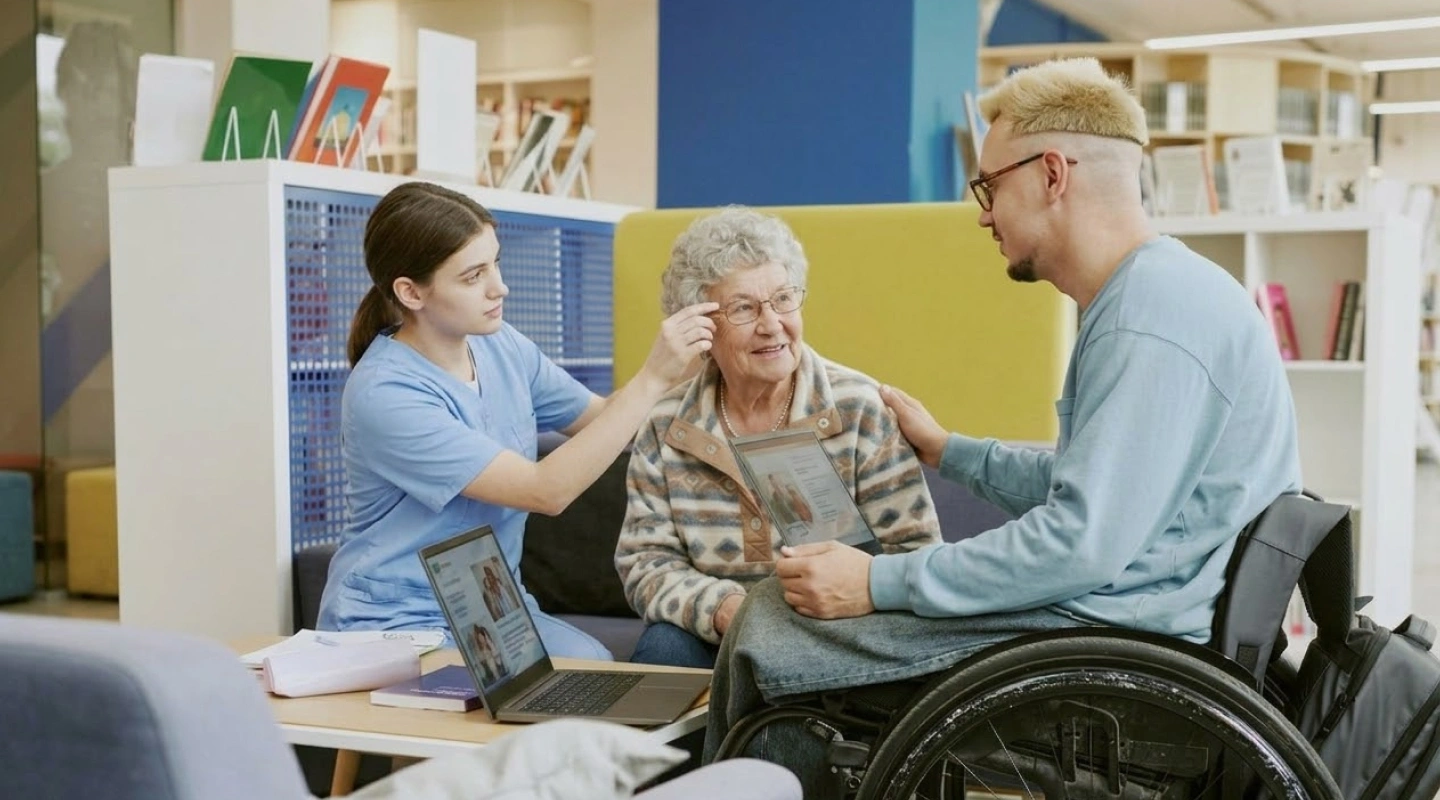
Muscular Dystrophy Home Care Pathway: Mobility Equipment, Therapy, and Overnight Support
Gemma Foxton
Customer Lead

Key Points
- Muscular dystrophy is on NDIS List A; a confirmed neurologist or geneticist diagnosis provides automatic access without requiring separate functional evidence
- Adults with advanced muscular dystrophy typically have NDIS plans exceeding $200,000; plans should be reviewed proactively as the progressive condition accelerates, not only at annual review
- Respiratory complications are the leading cause of death in most forms of muscular dystrophy; a respiratory physiotherapist and, where required, community nurse with ventilator management training are clinical priorities
- Power wheelchair assessment by an OT and rehabilitation engineer is complex and should be planned ahead of need; NDIS Capital funds wheelchairs ranging from approximately $15,000 to $50,000 or more
- Overnight support (SIL or sleepover) is needed for repositioning, ventilator management, and personal care; support workers must be trained in respiratory equipment by the relevant clinical team
- Muscular Dystrophy NSW and state affiliates provide peer support, NDIS navigation, and education for families and support workers
Muscular Dystrophy and Home Support
Muscular dystrophy refers to a group of inherited genetic conditions that cause progressive weakening and loss of muscle mass. There are more than 30 types of muscular dystrophy, differing in the muscles primarily affected, rate of progression, age of onset, and associated complications. The most common forms in Australia include Duchenne muscular dystrophy (the most severe, affecting primarily boys and young men), Becker muscular dystrophy, limb-girdle muscular dystrophy, facioscapulohumeral muscular dystrophy, and myotonic dystrophy.
Muscular dystrophy is progressive: support needs increase over time as muscle function declines. Home care planning must account for this trajectory, with providers selected who can adapt their approach as needs change rather than those focused only on current function.
This guide covers the provider team, equipment pathway, respiratory care priorities, overnight support, and the NDIS funding framework for muscular dystrophy.
NDIS Access and Plan Funding
Muscular dystrophy is on NDIS List A. A confirmed diagnosis from a neurologist or geneticist provides automatic access. Once access is confirmed, the planning process determines what supports are included.
Core Supports fund:
- Personal care and daily living support worker hours (personal care, showering, dressing, domestic tasks, community access)
- Supported Independent Living (SIL) for those with high overnight support needs
- Transport
Capital Supports fund:
- Powered wheelchairs and seating systems
- Respiratory equipment (CPAP, BiPAP, mechanical insufflation-exsufflation devices)
- Home modifications (ramps, accessible bathroom, ceiling hoists)
- Communication technology
Capacity Building Supports fund:
- Physiotherapy and OT
- Speech pathology (for communication and swallowing where affected)
- Psychology
- Support coordination
For advanced muscular dystrophy, plans frequently exceed $200,000 annually. The progressive nature of the condition means plan reviews (formally annual, but available earlier if needs change) are a routine part of management.
The Home Care Provider Team
Neurophysiotherapist
A neurophysiotherapist with neuromuscular disease experience is the core therapy provider in muscular dystrophy. Their work covers:
Range of motion maintenance: As muscles weaken, joints are at risk of contractures (fixed loss of movement) that accelerate functional decline and complicate care. Regular passive stretching and positioning strategies prevent or delay contractures.
Respiratory physiotherapy: Monitoring respiratory function (peak cough flow, spirometry), teaching and supervising airway clearance techniques, and providing cough assist training. As respiratory muscle strength declines, the physiotherapist recommends when to introduce assisted cough techniques and when to refer for sleep study and potential nocturnal ventilation.
Positioning and seating: Advising on supportive seating, positioning in bed, and posture management to reduce fatigue and secondary musculoskeletal complications.
Manual handling: Training support workers and family carers in safe transfer and handling techniques that protect both the person and the carer.
Community exercise: Guiding appropriate community exercise within the limits of muscle capacity.
Occupational Therapist
The OT in muscular dystrophy focuses on maintaining function and independence through equipment and environmental modification as physical capacity changes.
Power wheelchair assessment: One of the most significant OT roles in muscular dystrophy. The assessment is complex, covering postural support, tilt and recline requirements, head support, driving controls, AAC integration, transport, and home and community environment access. The assessment should anticipate likely changes over the next two to three years, as wheelchair prescriptions should provide for future needs as well as current ones.
Home modifications: Progressive home modifications as function changes, including wet area accessible bathrooms, ceiling hoist installation, doorway widening, and ramp access.
Upper limb function: Prescribing arm supports, assistive technology, and ergonomic adaptations to maximise upper limb use as shoulder and arm strength declines.
Daily living equipment: Prescribing aids for dressing, grooming, eating, and other self-care tasks.
Respiratory Physiotherapist and Community Nurse
Respiratory management is a clinical safety priority in muscular dystrophy. The team includes:
Respiratory physiotherapist: Regular spirometry and peak cough flow monitoring, airway clearance education and supervision, training the person and support workers in mechanical insufflation-exsufflation (cough assist) devices.
Community nurse: For people on overnight ventilation (CPAP, BiPAP), regular clinical assessment, monitoring of equipment settings and adherence, and liaison with the hospital respiratory team. Support workers must receive clinical training from the nurse before managing respiratory equipment.
Hospital specialist outpatient: Respiratory physician or neurologist at a hospital-based neuromuscular clinic provides annual review and responds to clinical changes.
Support Workers
Support workers provide personal care, domestic assistance, and community access. For muscular dystrophy, particularly in advanced stages, support workers need specific training in:
- Safe manual handling and transfer techniques
- Operation and troubleshooting of powered wheelchair controls
- Respiratory equipment management (under delegation from the nurse)
- Overnight repositioning protocols
- Communication systems (AAC if applicable)
Support workers should receive this training from the relevant clinical team before working independently with the person.
Equipment Pathway
Power Wheelchair
A power wheelchair is typically the first major equipment item for many people with muscular dystrophy, transitioning from a manual wheelchair as upper limb strength or endurance declines. The assessment and prescription process takes several months; planning should begin well before the power wheelchair becomes urgently needed.
The OT assessment determines:
- Seating and postural support requirements (tilt-in-space, recline, lateral supports)
- Drive controls (joystick, head array, switch array, eye gaze)
- Standing function integration (if a standing frame is incorporated)
- Transport requirements (compatible with family vehicle)
- Home and community access
NDIS funds the wheelchair as Capital Assistive Technology. Costs range from approximately $15,000 for a basic power wheelchair to $50,000 or more for high-specification complex rehabilitation chairs.
Ceiling Hoist
Ceiling hoists (track-mounted lifts) allow safe transfers between bed, wheelchair, shower, and other locations without manual lifting by support workers. They are prescribed by the OT and require home modification for installation (a structural engineer assessment is needed before tracks are installed in older homes). NDIS funds ceiling hoist installation as a Capital Home Modification.
Respiratory Equipment
As respiratory muscle weakness progresses, equipment is introduced in stages:
- Mechanical insufflation-exsufflation (cough assist) device for airway clearance
- Overnight non-invasive ventilation (CPAP or BiPAP) when nocturnal hypoventilation develops
- Daytime ventilatory support for higher-level needs
Each stage requires clinical assessment and training before introduction.
Overnight Support
As muscular dystrophy progresses, overnight support becomes necessary for safety, comfort, and clinical monitoring.
Repositioning: Without regular turning overnight, people with advanced muscular dystrophy are at high risk of pressure injuries and discomfort. Support workers follow a documented repositioning schedule.
Ventilator management: For people on overnight ventilation, support workers must check equipment function, respond to alarms, manage mask fit, and escalate concerns.
SIL vs. Sleepover:
- Active overnight (SIL): A support worker is awake and active throughout the night, providing regular care. Appropriate for complex overnight needs.
- Sleepover (passive overnight): A support worker sleeps at the home and can be woken if needed. Appropriate for people who may need occasional overnight assistance.
The level required depends on the frequency and complexity of overnight needs. The OT and physiotherapist document overnight support requirements for NDIS funding.
Planning for Progression
Muscular dystrophy progresses at varying rates by subtype. Duchenne muscular dystrophy typically follows a well-described trajectory: loss of ambulation in early teens, increasing upper limb weakness in the late teens, and respiratory complications in the 20s. Becker muscular dystrophy has a slower trajectory but a similar direction.
Effective NDIS plans anticipate the next stage of the trajectory and include equipment and services to support the person through it, rather than responding reactively once function has already declined. A proactive support coordinator and OT can build forward-looking plans that avoid crisis-driven equipment requests, which typically take three to six months to process.
Key Resources
- Muscular Dystrophy NSW (MDNSW) - peer support, education, and NDIS navigation
- Muscular Dystrophy Australia - national information and resources
- Neuromuscular Alliance Australia - patient community and advocacy
- NDIS Assistive Technology guidance - official NDIS equipment funding information
Connecting with Home Care Providers
Carevo connects people with muscular dystrophy to neurophysiotherapists, respiratory nurses, OTs, power wheelchair assessors, and NDIS-registered overnight support providers across Australia.
Need support at home?
Find the right provider for you or your loved ones through Carevo.
About the author
Back to Blog Customer Lead
Gemma is Carevo's Customer Lead. She spent several years working as a support worker before moving into concierge and partnerships roles, so she writes from the frontline of care.