Parkinson's Disease at Home: Selecting Providers for Mobility, Speech, and Daily Living

Gemma Foxton
Customer Lead
Key Points
- Parkinson’s disease qualifies for NDIS for people under 65 as a neurological condition; people 65 and over at diagnosis access the aged care system
- LSVT BIG (physiotherapy or OT) and LSVT LOUD (speech pathology) are intensive, evidence-based programs specifically developed for Parkinson’s and are among the strongest interventions available
- Dysphagia affects up to 80% of people with Parkinson’s at some point; a speech pathologist’s swallowing assessment is a safety priority as the condition progresses, and support workers should be trained in safe feeding
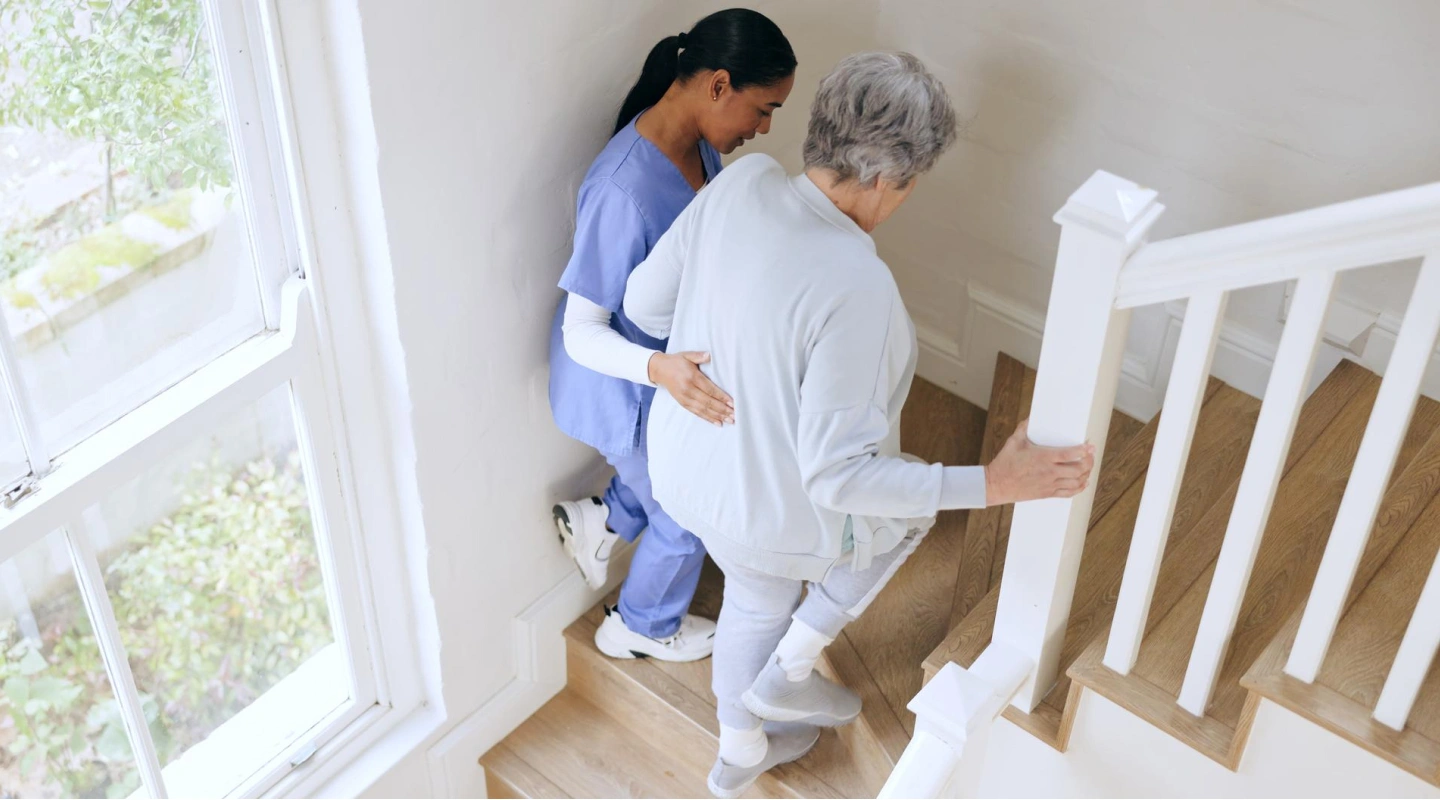
- Falls prevention requires a physiotherapist-directed balance program, gait strategy training for freezing of gait, and home hazard modifications
- Regular exercise supervised by an exercise physiologist with Parkinson’s experience is one of the most evidence-supported long-term interventions for slowing motor decline
- Depression and anxiety affect 40 to 50% of people with Parkinson’s and are neurological features, not simply emotional reactions; psychology and appropriate medication management are important components of care
Parkinson’s Disease at Home
Parkinson’s disease is a progressive neurological condition caused by the loss of dopamine-producing neurons in the substantia nigra, a region of the brain involved in movement control. Motor symptoms (tremor, rigidity, bradykinesia, and postural instability) are the most recognised features, but Parkinson’s also involves significant non-motor symptoms: fatigue, sleep disturbance, depression, anxiety, cognitive changes, autonomic dysfunction, and swallowing difficulties.
In Australia, over 100,000 people live with Parkinson’s disease, making it the second most common neurodegenerative condition after Alzheimer’s disease. The average age of diagnosis is 65, though younger-onset Parkinson’s (before age 50) occurs in approximately 10 to 20% of cases.
Most people with Parkinson’s live at home for the majority of their lives with appropriate support. The provider team and the nature of support need to evolve as the condition progresses.
NDIS and Aged Care for Parkinson’s Disease
NDIS (under 65 at diagnosis): Parkinson’s disease is on the NDIS eligibility list (List B) as a neurological condition. A neurologist report confirming diagnosis and functional impact supports the access request. NDIS funds allied health therapy, support worker hours, assistive technology, and home modifications.
Aged care (65 and over at diagnosis): The Support at Home program (launched November 2025) is the pathway for people with Parkinson’s who are 65 and over. Entry via My Aged Care (1800 200 422) and ACAT assessment for complex needs.
Medicare supplements: All people with Parkinson’s can access five allied health sessions per year via a GP Chronic Disease Management plan (physiotherapy, OT, speech pathology, exercise physiology) and up to 10 psychology sessions per year via a GP Mental Health Care Plan. These complement NDIS or aged care funding.
The Parkinson’s Home Provider Team
Physiotherapist with Parkinson’s Experience
Physiotherapy is central to Parkinson’s management and should begin early, before significant motor decline occurs.
Key physiotherapy interventions:
LSVT BIG: A four-week intensive program (four sessions per week) training the person to make larger, more calibrated movements to counteract the movement reduction of Parkinson’s. Shown in randomised controlled trials to improve gait speed, balance, and upper limb function.
Gait training: Teaching visual cues (looking at floor markers), rhythmic auditory cues (a metronome beat or music), and attentional strategies to manage freezing of gait.
Balance training: Progressive standing balance, reactive balance, and perturbation training to reduce falls risk.
Tango and other dance-based exercise: Strong evidence base for improving balance, gait, and dual-task performance in Parkinson’s.
Look for physiotherapists who are familiar with Parkinson’s-specific exercises and who have completed Parkinson’s-specific training programs such as PD Warrior or LSVT BIG certification.
Speech Pathologist
Speech and swallowing are affected in most people with Parkinson’s. Early involvement of a speech pathologist, before communication becomes significantly impaired, provides the most benefit.
Communication:
LSVT LOUD: A four-week intensive program training the person to produce speech at a consistently louder, more sustained volume. Shown to improve voice volume, clarity, and naturalness in Parkinson’s. The most evidence-supported speech intervention for Parkinson’s.
Dysarthria management: Strategies for reducing dysarthria (slurred or unclear speech) and training communication partners in effective listening strategies.
Swallowing:
A swallowing assessment by a speech pathologist is a safety priority. Dysphagia assessment includes clinical examination and where indicated videofluoroscopy (modified barium swallow). The speech pathologist recommends diet texture and fluid consistency modifications using the IDDSI (International Dysphagia Diet Standardisation Initiative) framework.
Support workers and family carers assisting with meals should receive training in recognising swallowing difficulties (coughing, choking, wet voice after eating, food remaining in the mouth) and in safe feeding positioning.
Occupational Therapist
An OT addresses the functional impacts of Parkinson’s on daily living and independence.
‘On’ and ‘off’ period planning: Working with the person and their neurologist to map activity scheduling to medication timing, so demanding tasks occur during ‘on’ periods.
Home modifications: Grab rails, non-slip flooring, bathroom modifications, stair rails, raised toilet seat, removal of trip hazards.
Assistive equipment: Walking aids (prescribed after physiotherapy assessment), kitchen and domestic aids that compensate for tremor and rigidity, clothing adaptations (magnetic buttons, elastic waistbands), writing aids.
Driving assessment: As Parkinson’s progresses, driving safety is reviewed. An OT with driving assessment qualifications conducts the assessment.
Fine motor adaptations: Equipment and techniques for eating, writing, dressing, and grooming that accommodate tremor and reduced dexterity.
Exercise Physiologist
Regular aerobic and resistance exercise is one of the most evidence-supported interventions in Parkinson’s disease. An exercise physiologist designs an ongoing community exercise program that complements formal physiotherapy.
Evidence-supported exercise types include:
- High-intensity interval training (potential neuroprotective effects)
- Tango dancing (balance and gait)
- Tai chi (balance and coordination)
- Resistance training (combating muscle weakness)
- Cycling (particularly forced cycling, which has evidence for improving motor function)
Exercise programs should account for medication timing (scheduling sessions during ‘on’ periods), fatigue patterns, and cardiovascular health.
Psychologist
Depression and anxiety are neurological features of Parkinson’s disease, not simply reactions to a difficult diagnosis. They should be treated, not normalised.
A psychologist provides CBT and other evidence-based approaches for depression, anxiety, and adjustment difficulties. For people with cognitive changes, therapy approaches may need modification. NDIS funds psychology as a Capacity Building support.
Community Nurse
Community nursing is appropriate for:
- Complex medication management (Parkinson’s medications require precise timing)
- Continence assessment and management
- Skin integrity monitoring
- Liaison with the hospital team for people who are frequently hospitalised
For hospital admissions, a nurse letter explaining Parkinson’s-specific medication protocols (medications must be given at precise times, not rounded to hospital medication rounds) can prevent avoidable deterioration during hospitalisation. Parkinson’s Australia provides templates for this communication.
Managing the Home Environment
The home environment for a person with Parkinson’s should minimise fall risks and maximise ease of movement.
Priority Modifications
- Flooring: Remove loose rugs and mats (major fall hazard for people with freezing of gait). Non-slip surfaces in wet areas.
- Lighting: Adequate lighting throughout the home, particularly in corridors and on stairs. Night lights for nocturnal movement.
- Bathroom: Grab rails, non-slip bath mat, shower chair or bench, raised toilet seat.
- Bedroom: Bed height adjusted for easy transfer, bed rails where appropriate, clock radio or light to help with nocturnal orientation.
- Thresholds: Door thresholds and floor level changes (even small ones) are freezing triggers; marking them with coloured tape provides a visual cue that can reduce freezing.
Visual cues such as floor markers, coloured tape on stairs, and contrasting colours for key objects can significantly reduce freezing episodes and falls.
Key Resources
- Parkinson’s Australia - national information, step-by-step NDIS guide, and helpline
- Parkinson’s NSW - state-specific support coordination and peer services
- Fight Parkinson’s (Victoria) - allied health referrals and community programs
- PD Warrior - evidence-based Parkinson’s exercise program directory
Connecting with Parkinson’s Support Providers
Carevo connects people with Parkinson’s disease to physiotherapists, speech pathologists, OTs, exercise physiologists, and NDIS-registered home support providers with Parkinson’s experience across Australia.
Need support at home?
Find the right provider for you or your loved ones through Carevo.
About the author
Back to Blog Customer Lead
Gemma is Carevo's Customer Lead. She spent several years working as a support worker before moving into concierge and partnerships roles, so she writes from the frontline of care.