Stroke Recovery Services in Australia: Comparing Community Nursing, Rehab, and Home Support Options
Gemma Foxton
Customer Lead
Key Points
- Stroke recovery services include inpatient rehabilitation, early supported discharge, community rehabilitation, exercise physiology, community nursing, and home support; most survivors use a combination of these
- Rehabilitation and home support are complementary, not interchangeable; rehabilitation improves what the person can do; home support assists with what they currently cannot
- Age determines funding pathway: NDIS for under 65; My Aged Care (Support at Home) for 65 and over; Medicare funds allied health sessions for all
- Post-stroke fatigue is neurological, not motivational; energy conservation (OT) and graduated exercise (exercise physiology) are the evidence-based approaches; support workers must not interpret fatigue as poor effort
- CIMT (constraint-induced movement therapy) is an intensive evidence-based option for upper limb recovery; available through specialist neurorehabilitation services in Australia
- Stroke Foundation’s StrokeLine (1800 787 653) and EnableMe community provide free support and information for stroke survivors and families across Australia
Navigating Stroke Recovery Services
Stroke recovery in Australia involves a complex set of services delivered by different providers, funded through different systems, and optimally delivered in a coordinated sequence. Understanding what is available, who provides it, how to access it, and how the pieces fit together is genuinely difficult for stroke survivors and their families at a time when they are dealing with significant stress and uncertainty.
This guide compares the main types of stroke recovery services available in Australia, explains when each is most appropriate, covers the funding pathways, and provides a framework for building a longer-term recovery plan.
The Stroke Recovery Service Landscape
Inpatient Rehabilitation
Inpatient rehabilitation at a rehabilitation hospital or rehabilitation unit is indicated for stroke survivors with significant disability who require:
- Intensive multidisciplinary therapy (typically 3 or more hours per day)
- Medical supervision during the recovery period
- 24-hour nursing support
Not every stroke survivor requires inpatient rehabilitation; people with mild deficits may be appropriate for early supported discharge and community rehabilitation. The stroke team makes the recommendation based on the severity of the stroke, the person’s rehabilitation potential, and the home environment.
Inpatient rehabilitation is typically funded through the public hospital system or private health insurance. Waiting times for public inpatient rehabilitation vary by location.
Early Supported Discharge (ESD)
ESD is an evidence-based model where stroke survivors who are medically stable but not yet fully recovered are discharged earlier than standard, with intensive community-based rehabilitation delivered in their own home by a specialist stroke team.
Multiple randomised controlled trials show ESD produces equivalent or better outcomes than longer inpatient stays for appropriate patients, with greater patient and carer satisfaction and faster community reintegration.
ESD typically includes:
- Pre-discharge home assessment
- Intensive home-based physiotherapy, OT, and speech pathology (5 days per week initially)
- Medical monitoring via community liaison
- Gradual reduction in intensity as the person progresses
ESD services exist in metropolitan areas of most states through public hospital stroke services. Regional access is more limited. Ask the hospital social worker or discharge coordinator whether ESD is available and appropriate.
Community Rehabilitation
Community rehabilitation provides ongoing therapy after the intensive acute phase (whether from inpatient rehabilitation or ESD) has concluded. Options include:
Outpatient rehabilitation: The person attends a hospital or health service outpatient clinic for therapy. This is less intensive than inpatient rehabilitation but provides access to multidisciplinary team support.
Home-based community therapy: Allied health therapists visit the person at home. More convenient for people with transport limitations or significant mobility impairment; allows therapy to occur in the actual environment where skills need to be applied.
Private community therapy: Physiotherapists, OTs, and speech pathologists in private practice provide community rehabilitation sessions. Funded through NDIS (Capacity Building), Medicare CDM plan (up to 5 sessions per year), or private payment.
Comparing Service Types: What Each Offers
| Service | Best For | Intensity | Duration | Access |
|---|---|---|---|---|
| Inpatient rehabilitation | Significant disability, medical monitoring needed | High (3+ hours/day) | Weeks to months | Public hospital or private health insurance |
| Early supported discharge | Medically stable, home environment suitable | High initially, reducing | 6 to 12 weeks | Public hospital stroke service |
| Community outpatient | Moderate deficits, transport available | Moderate | Ongoing | GP referral or NDIS |
| Home-based therapy | Transport limitations, prefer home setting | Flexible | Ongoing | NDIS, Medicare CDM, private |
| Exercise physiology | Long-term fitness and maintenance | Moderate | Ongoing | NDIS, Medicare CDM, private |
| Community nursing | Medical and nursing needs post-discharge | Clinical visits | As needed | GP referral, NDIS, aged care |
| Home support workers | Personal care, domestic assistance | Daily | Ongoing | NDIS Core, My Aged Care |
Community Nursing After Stroke
Community nursing provides the clinical monitoring and nursing care that bridges the gap between hospital discharge and full independence or stabilisation.
When Community Nursing Is Needed
- Wounds or skin integrity issues
- Catheter management
- Complex medication regimes requiring clinical oversight
- Continence management and assessment
- Monitoring for deterioration or complications in the early post-discharge period
- Training family carers in nursing procedures
- Liaising with the GP and specialist team when concerns arise
Accessing Community Nursing
Community nursing after stroke can be arranged through:
- The hospital discharge team (hospital-in-the-home or post-acute community nursing)
- GP referral to community nursing services
- NDIS Capacity Building (nursing as a support)
- My Aged Care (Home nursing as part of Support at Home)
Frequency and duration depend on needs; typically most intensive in the first weeks after discharge and reducing as the person stabilises.
Physiotherapy: The Motor Recovery Specialist
Physiotherapy is central to motor recovery after stroke. Physiotherapists address:
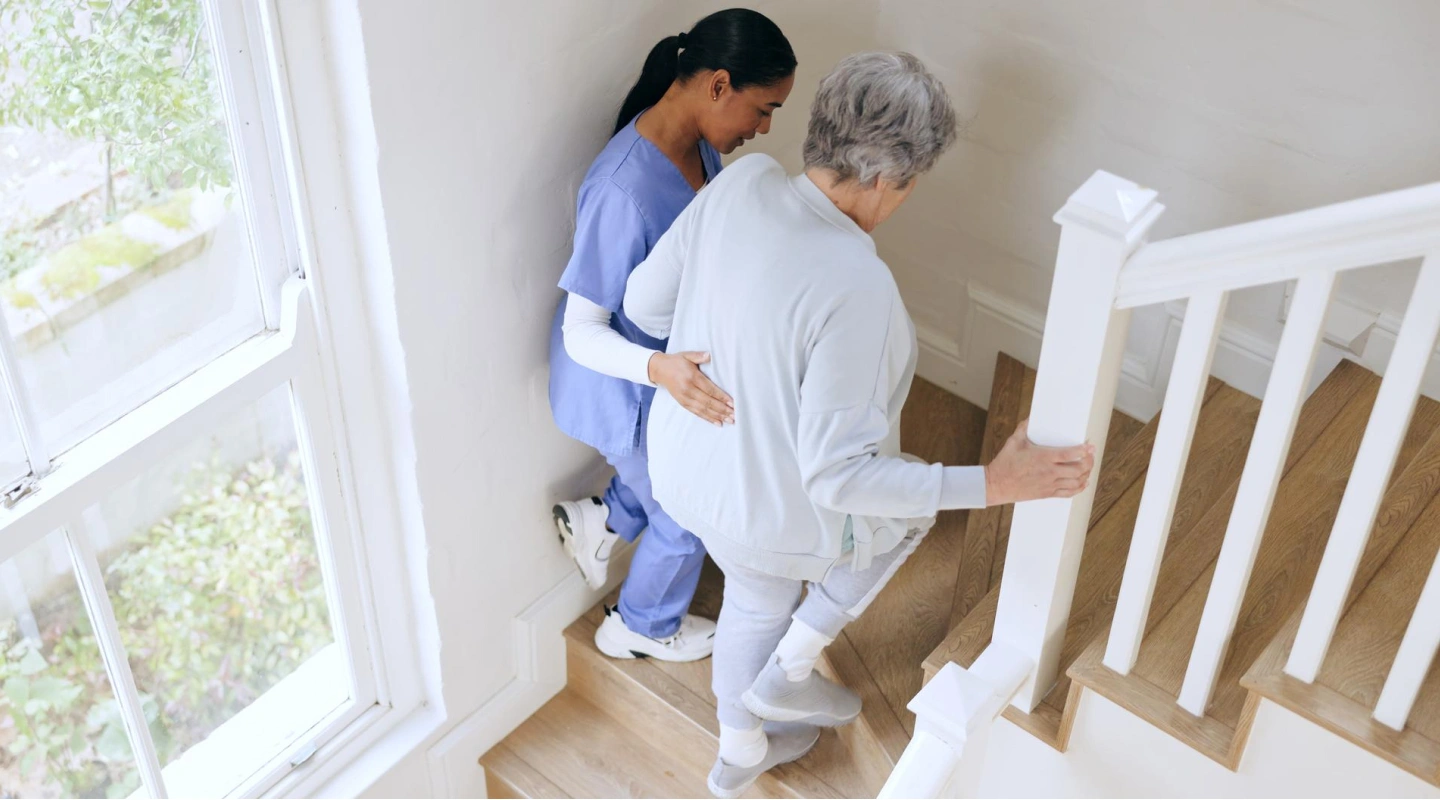
Gait rehabilitation: Re-learning to walk safely, improving walking speed and endurance, reducing falls risk.
Upper limb rehabilitation: Improving arm and hand function for daily tasks. Evidence-supported approaches include:
- Task-specific practice (repetitive practice of goal-directed movements)
- Mirror therapy
- Electrical stimulation (FES)
- CIMT (constraint-induced movement therapy) for appropriate patients
Balance and falls prevention: Balance training, reactive balance exercises, falls risk reduction in the home environment.
Spasticity management: In collaboration with the neurologist, physiotherapy alongside spasticity injections (Botox) improves functional outcomes.
Fatigue management: Graded activity programs that progressively increase activity without triggering post-stroke fatigue.
Occupational Therapy: Daily Living and Return to Life Roles
OT after stroke addresses functional independence in daily life:
Activities of daily living retraining: Relearning how to shower, dress, cook, and manage domestic tasks, using adapted techniques or adaptive equipment.
Cognitive rehabilitation: Attention, memory, executive function, and spatial awareness (all commonly affected after stroke) directly impact daily living; OT addresses these.
Home modification assessment: Identifying and prescribing modifications and equipment that support safe independence at home.
Driving assessment: Legal requirement before returning to driving; OT driving assessment with a specialist driving OT.
Return to work or leisure roles: Identifying and working toward meaningful roles and activities.
Speech Pathology: Communication and Swallowing
As covered in the post-stroke care guide, speech pathology addresses:
Aphasia rehabilitation: For people with language impairment. Evidence-based aphasia therapy should be intensive (frequent, high-repetition practice) particularly in the early months. New evidence for constraint-induced aphasia therapy (intensive aphasia practice) is emerging.
Dysarthria: Motor speech impairment affecting clarity of speech; addressed through articulation exercises and communication partner strategies.
Dysphagia: Swallowing assessment and management; diet modification recommendations.
Exercise Physiology: The Long-Term Investment
Exercise physiology is underutilised in stroke recovery but represents one of the most cost-effective long-term interventions.
Benefits of a supervised long-term exercise program post-stroke:
- Continued neuroplasticity and motor recovery
- Improved cardiovascular fitness (reducing secondary stroke risk)
- Reduced post-stroke fatigue
- Improved mood and mental health
- Management of weight, blood pressure, and diabetes
An exercise physiologist designs a program appropriate to the person’s current function, with graduated intensity and a mix of aerobic and resistance training. Community-based group exercise programs for people with neurological conditions provide both fitness and social benefits.
Medicare CDM plans (up to 5 sessions per year) and NDIS Capacity Building fund exercise physiology. Private payment is also available.
Psychological Recovery
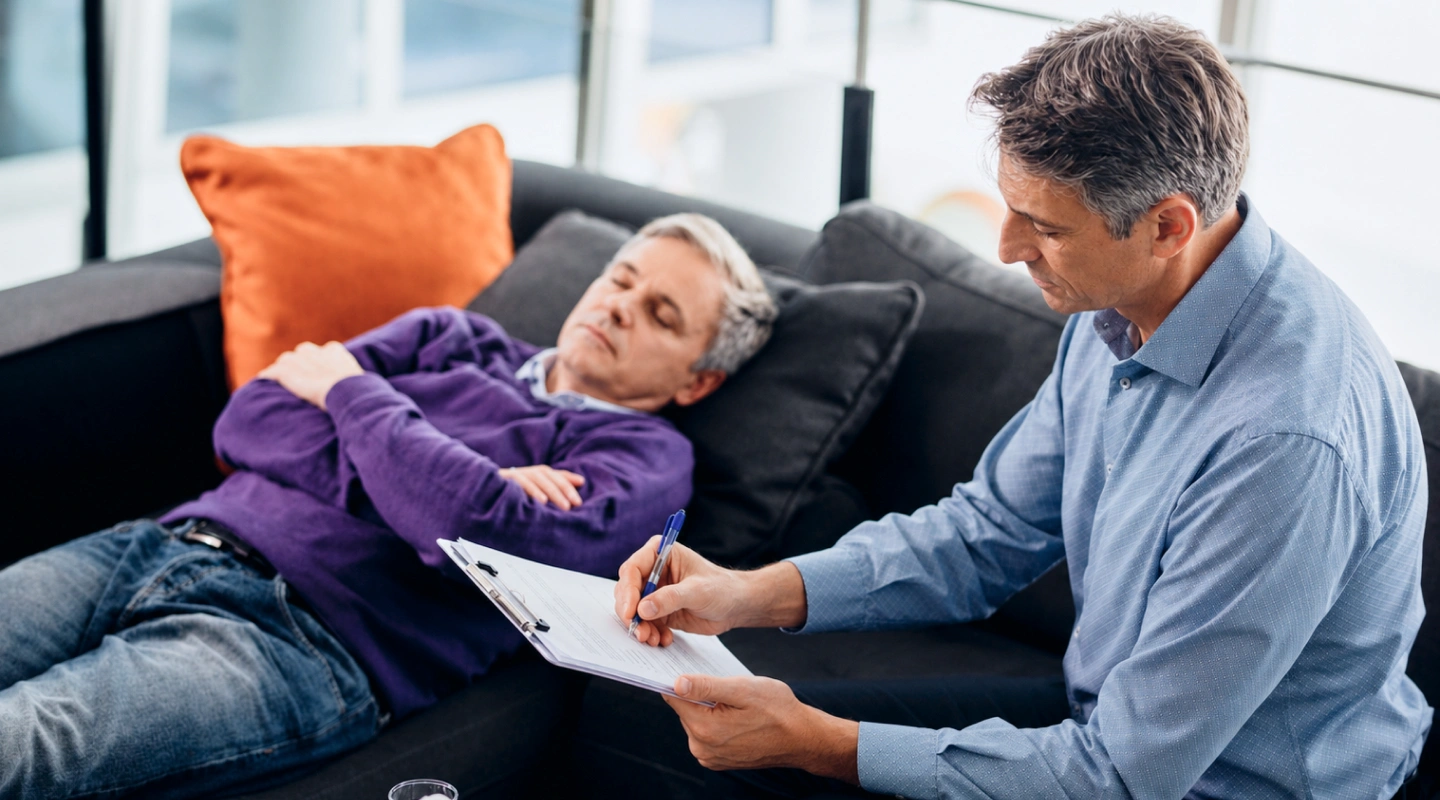
Post-stroke depression and anxiety are common and significantly worsen functional recovery if untreated. A psychologist via a GP Mental Health Care Plan (up to 10 sessions per year) provides evidence-based treatment.
Post-stroke emotional lability (sudden uncontrolled crying or laughing disproportionate to context) is neurological and often improves over time; education for family and support workers reduces distress about these episodes.
Peer support through Stroke Foundation’s EnableMe community provides connection with others who have had strokes; peer connection is associated with better psychological outcomes.
Long-Term Recovery Planning
Stroke recovery is a long-term process. A review structure maintains momentum:
- 3 months post-stroke: Full review of all providers; assessment of progress; plan adjustments
- 6 months post-stroke: Second major review; transition from intensive therapy to maintenance phase
- 12 months post-stroke: Annual review; long-term plan including ongoing exercise, maintenance therapy, secondary prevention monitoring
Key long-term questions:
- Is the person maintaining the gains made in rehabilitation?
- Are there new therapy goals to work toward?
- Is the secondary prevention plan (medication, blood pressure, lifestyle) being followed?
- Is exercise ongoing?
- Are there carer support and respite needs?
Key Resources
- Stroke Foundation Australia - StrokeLine (1800 787 653) and information on stroke services
- EnableMe (Stroke Foundation) - online peer community and recovery tools
- My Aged Care - home support funding for 65 and over (1800 200 422)
- NDIS - disability support funding for stroke survivors under 65
Connecting with Stroke Recovery Providers
Carevo connects stroke survivors to community nurses, physiotherapists, OTs, speech pathologists, exercise physiologists, and NDIS-registered daily support providers across Australia.
Support at Home on Carevo right now
Updated 2026-06-27Most-requested Support at Home services
Based on 938 aged care and Support at Home inquiries made through Carevo. See the full Support at Home Demand Report.
Need support at home?
Find the right provider for you or your loved ones through Carevo.
About the author
Back to Blog Customer Lead
Gemma is Carevo's Customer Lead. She spent several years working as a support worker before moving into concierge and partnerships roles, so she writes from the frontline of care.