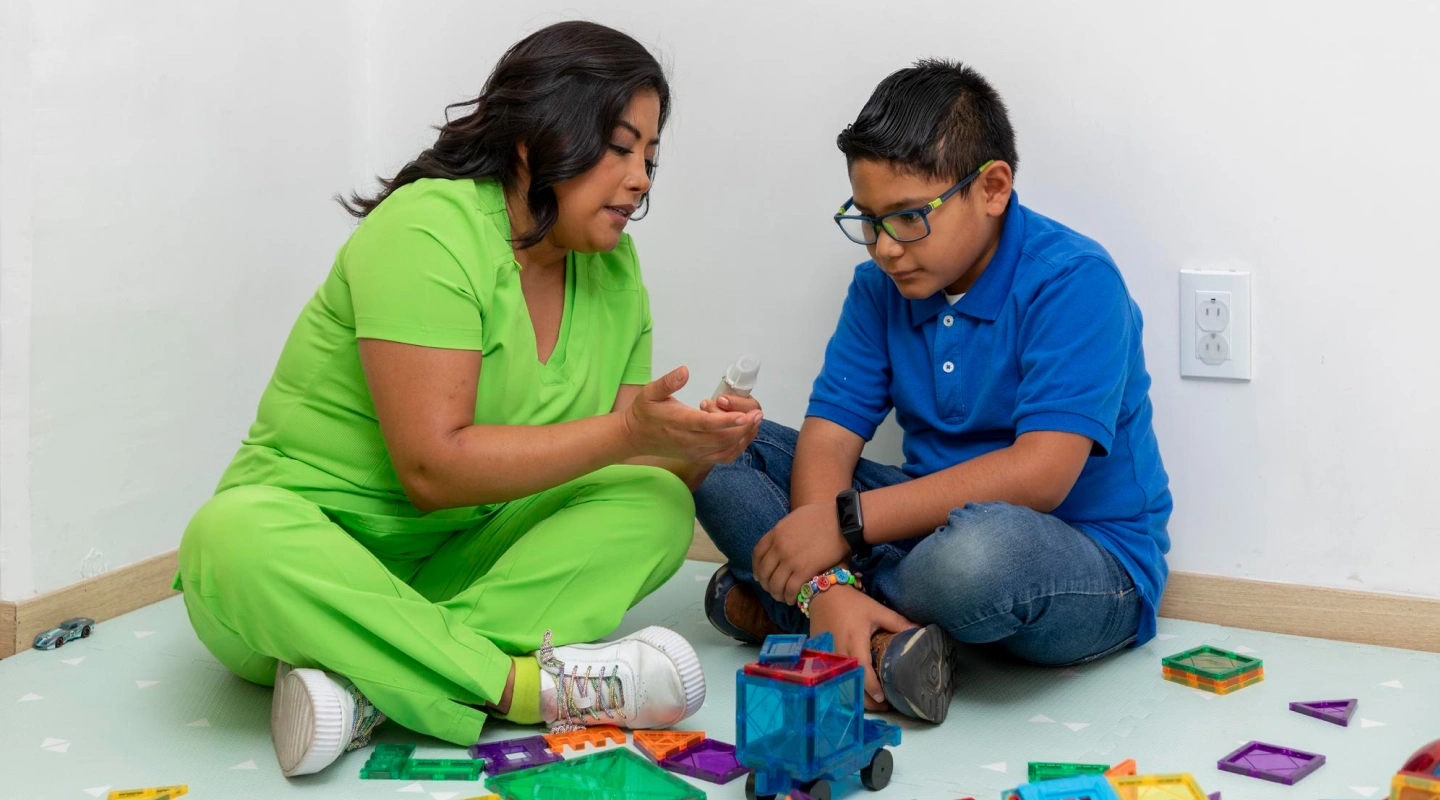
Williams Syndrome Family Guide: Learning Supports, Anxiety Management, and Independence-Building Providers
Andre Smith
Co-founder & CEO

Key Points
- Williams syndrome is caused by a deletion on chromosome 7 affecting approximately 25 to 27 genes; it causes intellectual disability with a characteristic profile of verbal strength and visual-spatial weakness
- Anxiety and noise sensitivity (hyperacusis) affect the majority of people with WS; anxiety management combines adapted CBT, environmental strategies, and medication if needed; hyperacusis requires ear protection in high-risk environments and advance preparation
- Cardiovascular disease is present in 75 to 80% of people with WS; annual echocardiogram, blood pressure monitoring, and cardiologist review are required; general anaesthesia requires pre-procedural cardiac assessment
- Hypersociability is a neurological feature, not a personality choice; it creates specific safety risks with strangers; explicit, repeated safety education in concrete scripts is required
- WS qualifies for NDIS under List A; plans should include speech pathology, OT, psychology, and support coordination given the range of needs
- Many adults with WS can work in supported or open employment; verbal strengths and social warmth suit customer, music, and care contexts; a job coach who understands WS is valuable
Williams Syndrome: Building Support Across the Lifespan
Williams syndrome is a condition that often surprises people unfamiliar with it: the person may be highly verbal, warm, and socially engaging in ways that can lead to underestimation of their support needs in other areas. The visual-spatial processing difficulties, anxiety, and cardiovascular health requirements are less visible than the social personality, but they are just as real and just as important to address.
Building effective support for WS requires understanding the full profile: the strengths alongside the difficulties, the medical monitoring requirements alongside the therapeutic needs, and the long-term independence goals that are very much achievable with the right support framework.
This guide covers the key elements of WS support across childhood and into adulthood: the cognitive profile and learning supports, anxiety and cardiovascular management, speech pathology, safety planning, and the NDIS framework.
The Cognitive Profile: Strengths and Challenges
Understanding the specific cognitive profile of WS is essential for designing effective support and avoiding common mismatches between expectations and capacity.
Areas of Relative Strength
Verbal ability: Vocabulary, conversational language, verbal reasoning, and narrative language are typically strong relative to overall IQ. Many people with WS have unusually rich, expressive language.
Facial recognition and emotional sensitivity: People with WS are often highly attuned to others’ emotions and facial expressions. They remember faces well and respond to emotional cues in ways that can seem sophisticated.
Musical sensitivity and memory: Musical pitch, rhythm, and memory for music are often significantly above what would be predicted by IQ. Many people with WS have perfect or near-perfect pitch and a deep emotional response to music.
Social engagement: The hypersociable personality means people with WS often excel in situations requiring warmth, friendliness, and genuine interest in others.
Areas of Significant Difficulty
Visual-spatial processing: This is the most consistent area of difficulty in WS. Consequences include:
- Difficulty with puzzles, construction tasks, and any task requiring assembly of parts into a whole
- Difficulty with drawing (people, houses, maps)
- Difficulty reading maps and navigating unfamiliar environments
- Difficulty understanding spatial relationships (left/right confusion, depth perception)
- Difficulty with tasks that typically rely on spatial intuition (some aspects of mathematics, particularly geometry and measurement)
Working memory: Short-term retention of information while performing another task is limited, affecting multi-step instruction following and learning new procedures.
Mathematics: Numerical reasoning and mathematical concepts are typically more difficult than would be predicted by verbal ability.
Executive function: Planning, organising, initiating, and shifting between tasks are affected.
The Verbal-Spatial Disconnect
The most important principle for anyone supporting or educating a person with WS is: do not estimate comprehension or capability from verbal fluency. A person with WS may use sophisticated vocabulary and engage in what appears to be complex conversation while having very limited understanding of multi-step instructions, spatial concepts, or abstract reasoning.
Overestimating capacity based on verbal presentation leads to:
- Setting tasks that are beyond the person’s actual understanding
- Interpreting failure as lack of effort rather than lack of capacity
- Missing the need for explicit teaching of skills that might be expected to be automatic
Learning Support in School
Early Intervention
Early intervention focuses on:
- Speech pathology for pragmatic language and narrative organisation
- OT for fine motor skills and visual-spatial processing support
- Physiotherapy if hypotonia or motor delay is present
- Parent training in supporting learning at home
School-Age Adjustments
For the cognitive profile:
- Break multi-step instructions into one step at a time, written as well as spoken
- Provide visual supports (visual schedules, picture sequences for multi-step tasks)
- Avoid tasks that rely primarily on visual-spatial processing without spatial scaffolding (maps, geometry without manipulatives, assembly tasks)
- Allow additional processing time
- Teach mathematical concepts through concrete materials rather than abstract reasoning
For anxiety:
- Predictable, structured routines with advance notice of any changes
- Quiet space available for sensory decompression
- Ear protection available for fire alarms and other unexpected loud sounds
- Teacher preparation for anxiety triggers (transitions, unexpected changes)
For hypersociability and safety:
- Explicit, repeated teaching of social boundaries with strangers
- Supervision in situations where the child may encounter adults they do not know
- Social skills group with peers who also have developmental needs (WS social approach can overwhelm neurotypical peers who do not reciprocate)
Communication with Teachers
A brief guide to WS cognitive profile provided to each new teacher prevents the most common mismatches. The Tourette Syndrome Association’s similar guides can serve as a template; the Williams Syndrome Association of Australia provides teacher resources.
Anxiety and Noise Sensitivity
Hyperacusis (Noise Sensitivity)
Hyperacusis in WS involves an unusual sensitivity and sometimes fearful response to specific sounds, most commonly:
- Thunder
- Balloons popping
- Fireworks
- Sirens
- Loud machinery
- Some musical instruments at high volume
Management:
- Ear protection: Noise-reducing ear muffs (widely available; musicians’ earplugs for moderate sound reduction) in high-risk environments
- Advance preparation: Warning the person before a loud sound occurs (before the fire alarm drill, before fireworks begin) significantly reduces the anxiety response
- Gradual desensitisation: A psychologist-guided programme of graded exposure to feared sounds at controllable volumes; this takes time and must not be rushed
- Avoidance where practical: Some events (certain concerts, sports events with fireworks) can simply be avoided
Anxiety Management
CBT adapted for intellectual disability (sometimes called CBT-ID) is the primary psychological treatment for anxiety in WS. Key adaptations:
- Simpler, more concrete language and concepts
- Shorter sessions
- More visual supports and worksheets
- Greater involvement of parents or support workers in generalising skills to daily life
- More sessions overall (skill acquisition takes longer)
A psychologist experienced in anxiety and intellectual disability delivers this treatment.
Medication (SSRI or SNRI) may be appropriate when anxiety significantly impairs daily functioning; this is prescribed by a psychiatrist or paediatrician with mental health experience.
Cardiovascular Health
All medical providers, including support workers in some contexts, must understand the cardiovascular implications of WS.
Monitoring
- Annual echocardiogram (more frequent if SVAS is significant)
- Blood pressure at every clinical contact from childhood
- Annual ECG
- Annual cardiologist review
Exercise
Most people with mild WS cardiovascular features can exercise without restriction. People with significant SVAS or hypertension may have exercise limitations; the cardiologist provides specific guidance. Support workers facilitating exercise with a person with WS should be aware of whether any exercise restrictions are in place.
Anaesthesia Risk
General anaesthesia carries elevated risk for people with significant SVAS (due to the haemodynamic changes during anaesthesia). Before any procedure requiring general anaesthesia:
- Inform the anaesthetist of the WS diagnosis and the cardiac history
- Pre-procedural echocardiogram and cardiology clearance if cardiac status is significant
- Ensure the cardiac history is documented in the medical record accessible to the treating team
Independence Building
The goal of support for WS across the lifespan is maximum achievable independence. This looks different for each person depending on the degree of intellectual disability and the specific functional profile.
Skills That Support Independence
Daily living skills: OT-supported skill building in personal care, meal preparation, household management, and money management. Using concrete, visual, step-by-step instruction methods aligned with the WS cognitive profile.
Community navigation: Building skills for navigating familiar community routes, using public transport, and accessing community services. A support worker accompanies initially and reduces support as competence builds.
Online and financial safety: Given the hypersociability and vulnerability to being taken advantage of, explicit and repeated education about online safety, financial management, and recognising when others may not have good intentions.
Self-advocacy: Teaching the person to identify their own needs, communicate them, and seek help when needed.
Supported Employment
See the FAQ for detail on employment pathways. The key principle is that employment for people with WS is a realistic and valuable goal; the right role matched to the WS cognitive and personality profile, with appropriate job coaching, produces sustainable employment outcomes.
The Provider Team
| Provider | Role | Funding |
|---|---|---|
| Cardiologist | Cardiovascular monitoring, exercise guidance | Medicare |
| Paediatrician / GP | Overall health management, referrals | Medicare |
| Psychologist | Anxiety management, CBT-ID, safety education | NDIS, Medicare MHP |
| Speech pathologist | Pragmatic language, narrative, literacy support | NDIS, Medicare CDM |
| Occupational therapist | Visual-spatial support, daily living skills, fine motor | NDIS, Medicare CDM |
| Physiotherapist | Hypotonia management, gross motor, exercise program | NDIS, Medicare CDM |
| Behaviour support practitioner | If behavioural challenges require PBS plan | NDIS Capacity Building |
| Job coach (DES) | Employment support and workplace coaching | DES (government-funded) |
| Support coordinator | NDIS complexity management, team coordination | NDIS Capacity Building |
| Support workers | Daily living, community access, safety supervision | NDIS Core |
Key Resources
- Williams Syndrome Association of Australia - peer support, information, and resources for families and providers
- Williams Syndrome Association (USA) - comprehensive research and clinical information
- NDIS - plan access and support information
- Disability Employment Services - employment support for adults with WS
- Raising Children Network - evidence-based developmental information for families
Connecting with Williams Syndrome Support Providers
Carevo connects families living with Williams syndrome to NDIS-registered speech pathologists, OTs, and specialist support providers across Australia.
Find the right provider through Carevo
Answer a few quick questions and get matched with providers who fit your needs. Free, no obligation.
Need Support Workers?
Who is the care for?
Takes 30 seconds. Free, no obligation.
Co-founder & CEO
Andre is the co-founder and CEO of Carevo. He holds a Bachelor of Commerce, majoring in Marketing, and a Bachelor of Arts from UNSW Sydney, where his majors were International Relations, Politics, Information Systems, and Media and Communications, graduating in 2014, and went through the UNSW 10x Founders accelerator in 2023.