Falls Prevention Home Modifications for Older Australians (Room-by-Room)

Gemma Foxton
Customer Lead
Falls Prevention Home Modifications: Key Points
- The bathroom and toilet are the highest-risk areas in the home for older people. Grab rails, non-slip surfaces, and appropriate equipment (shower chair, raised toilet seat) address the majority of bathroom fall risk.
- Lighting is consistently underestimated as a falls prevention measure. Older eyes need significantly more light than younger eyes to see safely. Improving lighting in hallways, stairs, and bathrooms is a high-impact, low-cost change.
- Loose rugs and mats cause more falls than any other single home hazard. Removing them or securing them is the simplest modification a family can make without professional involvement.
- An occupational therapist home assessment is the most reliable way to identify which specific modifications will reduce risk for a particular person in their particular home.
- NDIS and aged care funding can cover home modifications where they are recommended by an OT and linked to a disability or assessed care need.
Falls in Older Australians: The Scale of the Problem
Falls are the leading cause of injury-related hospitalisation and death in older Australians. Approximately one in three Australians aged 65 and over falls each year. Of those who fall, many will fall again within the following year.
The consequences are severe. Falls cause fractures, head injuries, and in older people with reduced bone density, hip fractures that carry significant mortality risk. Fear of falling, even without an actual fall, reduces activity and social participation, which accelerates decline.
The home environment contributes to fall risk in ways that are often fixable. Most falls happen in rooms the person uses daily: the bathroom, the bedroom, the kitchen, the hallway. Most of the environmental factors involved can be modified.
This guide addresses each major area of the home with specific modifications ranked by evidence and practicality.
Before Starting: Occupational Therapist Assessment
Before undertaking home modifications, an occupational therapist home assessment identifies which changes will have the greatest impact for the specific person in their specific home.
OT assessment for falls prevention includes:
- Review of the person’s medical history, medications, and functional capacity.
- Walk-through of the home to identify environmental hazards.
- Observation of the person performing tasks in the home to identify where risk arises.
- Specific written recommendations for modifications, equipment, and behaviour changes.
For NDIS or aged care-funded modifications, an OT report is required before approval can be granted. For privately funded modifications, the assessment is still valuable in ensuring money is spent on changes that will actually reduce risk.
Contact a community OT, an aged care provider with OT services, or a disability services organisation. An OT can usually be organised within one to two weeks.
Room-by-Room Modifications
Bathroom and shower
The bathroom is the highest-fall-risk area in the home for older people. Wet, slippery surfaces, the physical effort of bathing, and the combination of heat and reduced blood pressure in older people make the bathroom disproportionately dangerous.
Highest priority modifications:
Grab rails are the single most important bathroom modification. Rails should be installed beside the shower entry, inside the shower at a usable height, beside the toilet, and at the bath if applicable. Grab rails must be installed into wall studs or with appropriate fixings. They must be able to support a person leaning on them or catching a near-fall.
Non-slip shower and bath floor surfaces. Non-slip mats within the shower and bath, non-slip strips or coatings on tiles, and a handheld showerhead that allows seated bathing all reduce the risk of slips on wet surfaces.
Shower chair or shower stool. Standing to shower requires significant balance and stamina. A shower chair or sturdy shower stool allows the person to bathe seated, removing the standing balance risk. Chairs with arms and backs provide more stability than simple stools.
Handheld showerhead. A handheld showerhead on a slide rail allows the shower to be used effectively from a seated position and gives the person control over where the water goes.
Raised toilet seat. Getting up from a low toilet seat is a fall risk for people with reduced lower limb strength or hip problems. A raised toilet seat reduces the depth of the sit-to-stand movement. Toilet frame armrests (freestanding rails beside the toilet) also assist with this transfer.
Contrasting colours. If bathroom surfaces are similar in colour (all white or all pale), visual contrast helps people with reduced vision identify where one surface ends and another begins. High-contrast toilet seats, coloured bath strips, and coloured grab rails are low-cost additions that help.
Bedroom
Bed height. A bed that is too low or too high is a fall risk during the getting-in and getting-out transfers. The ideal bed height allows the person to sit on the edge with feet flat on the floor and knees at or near 90 degrees. Bed risers can raise a low bed. A lower-height hospital-style bed frame can replace a high one.
Bed rail. A half-length bed rail on one or both sides of the bed assists with repositioning and getting out of bed. Unlike full bed rails, half-length rails do not create an entrapment risk and are the type recommended for older people.
Bedside lighting. Night-time trips to the bathroom account for a significant proportion of falls. A bedside lamp, motion-activated nightlight, or illuminated light switch within arm’s reach of the bed allows the person to see before standing.
Clear path to the door and bathroom. Remove furniture, objects, or cords from the path between the bed and the door. A person getting up at night in low light should be able to walk this path without navigating obstacles.
Non-slip floor surface. If the bedroom has polished floorboards or tiles, a non-slip rug (secured at edges) or rubber-backed mat beside the bed reduces the risk of slipping when first standing from sleep.
Hallways and stairs
Lighting. Hallways, particularly those used at night, should have adequate and easily accessible lighting. Motion-activated lights are useful for night-time trips so the person does not need to find a switch. Illuminated light switches in hallways provide orientation in the dark.
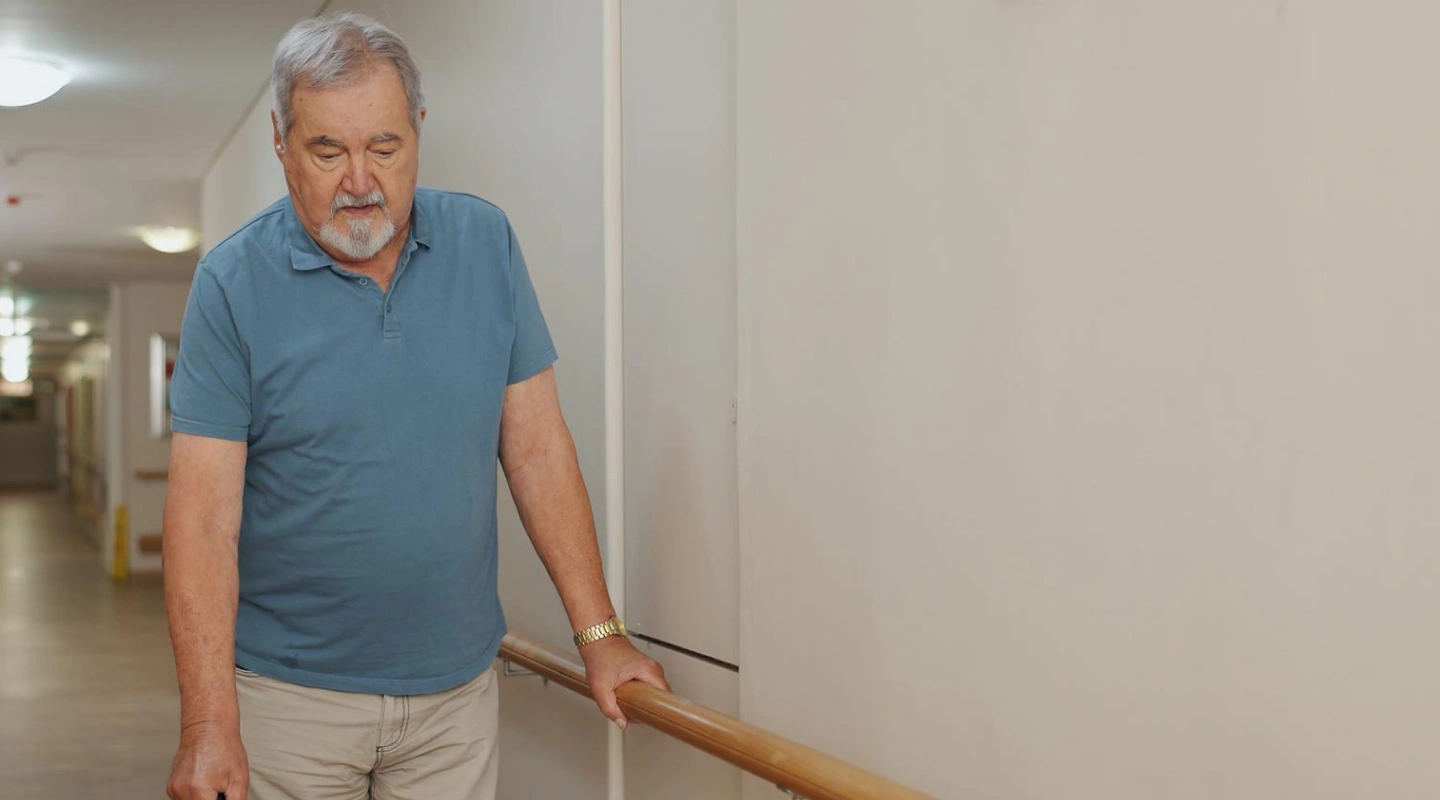
Handrails on both sides of stairs. Stairs are a significant fall risk. Handrails should run the full length of the staircase and be at a height and width that the person can grip securely. Where there is only a rail on one side, adding a rail to the other side is a straightforward modification.
Clear of clutter. Hallways used as storage spaces, with bags, boxes, or furniture partially blocking the path, are hazardous. Clear hallways of all non-essential items.
Non-slip stair treads. Non-slip strips or carpet on stair treads reduce the risk of slipping on stairs, particularly for those with polished surfaces.
Remove raised thresholds. Raised thresholds between rooms or between indoor and outdoor areas are a trip hazard. Where possible, these should be removed or ramped. For low thresholds, bright-coloured tape that creates visual contrast can at least make the edge visible.
Living areas
Remove or secure loose rugs and mats. This is the single most impactful change in the living area. Loose rugs are the most common trip hazard in Australian homes. Remove rugs from high-traffic areas entirely, or secure all edges with double-sided tape or non-slip backing.
Furniture arrangement. Furniture that is too close together creates a navigation hazard. Furniture with sharp corners at hip or head height is a risk in a fall. Review the living room layout with a view to creating a clear path from entry points to the seating area and to the hallway.
Chair height. As with the bed, a chair that is too low makes the sit-to-stand transfer more difficult and risky. Firm-cushioned chairs with armrests that the person can push up from are better for people with reduced leg strength. Chair raises can increase the height of an existing favourite chair.
Cord management. Electrical cords that run across walking paths are trip hazards. Secure cords along walls or behind furniture, or use a cord cover.
Kitchen
Non-slip mat. A non-slip mat in front of the sink and stove reduces the risk of slipping on spilled water.
Stable stepladder or steps. If the person needs to reach overhead storage, a stable two-step ladder with a handle is far safer than a stool or chair. Reaching overhead also affects balance; items used daily should be moved to accessible heights.
Lever taps. Lever taps are easier to operate than round knobs for people with reduced grip strength and reduce the effort required at the sink.
Good lighting. Kitchen task lighting should illuminate benchtops clearly. Overhead lights alone are often insufficient for reading labels, measuring medications, or preparing food safely.
Outdoor areas
Even surfaces. Cracked pavement, uneven concrete, and garden paths that have shifted over time are all fall hazards. Inspect the path from the car park or street to the front door and address any uneven sections.
Non-slip surfaces on steps and ramps. Outdoor steps that are smooth or slippery when wet should have non-slip treads installed. Ramps should have a non-slip surface coating.
Handrails at entry points. A handrail at the front door step and the back door step assists with entry and exit, particularly when carrying items or in low light.
Outdoor lighting. Motion-activated outdoor lighting ensures the path to the house and the entry is visible after dark.
Remove obstacles. Garden hoses, tools, potted plants, or furniture left on paths are trip hazards. Establish a practice of keeping outdoor paths clear.
Funding Home Modifications
NDIS funding
For NDIS participants, home modifications are funded under Capital Supports. Modifications must be recommended by an occupational therapist and linked to the functional impact of the participant’s disability.
Low-cost modifications under $1,500 can be approved without a formal quote. Modifications above $1,500 require an OT assessment report and a quote from a qualified home modification provider. For significant modifications, the NDIS may also require two quotes.
Support at Home funding
For aged care participants, the Support at Home program funds home modifications that are necessary to meet assessed care needs. An OT assessment is required. The modification must be specifically related to the care need and should not be a general home improvement.
The Commonwealth Home Support Programme (CHSP) also provides some home modification support for people with lower-level needs who are not yet receiving Support at Home funding.
Local council programs
Many local councils have handyperson services or home modification programs for older residents. These are often low-cost or subsidised and can address simpler modifications such as grab rail installation, fixing loose carpets, and improving outdoor lighting. Contact the local council or search through My Aged Care.
Related Articles and Resources
- Medication Review in Aged Care: When to Request One and Why - Addressing the medication contribution to fall risk alongside environmental modifications
- Transitioning From Hospital to Home Care: 14-Day Family Plan - Home safety assessment in the post-discharge period
- NDIS Assistive Technology Trials: How to Build Evidence Before Purchase - How AT assessment relates to home modification assessment
Key External Resources
- Falls prevention (Department of Health and Ageing) - National falls prevention guidance for older Australians
- Stay on Your Feet program (various state governments) - Evidence-based falls prevention resources for older people
- Home modification resources (Housing and Community Research) - Australian guidance on home modification assessment and delivery
- Occupational Therapy Australia - Find an OT - Locate a community OT for a home falls prevention assessment
Carevo connects families with home care providers experienced in falls prevention and home modification coordination. Get matched with the right provider who can help you arrange an OT assessment and implement the right modifications for your family member.
Frequently Asked Questions
What modifications most effectively reduce fall risk? Grab rails in the bathroom and toilet, removal of loose rugs, improved lighting, and non-slip surfaces in wet areas have the strongest evidence. An OT assessment identifies which specific changes are most relevant for a particular person.
Does the NDIS fund home modifications? Yes, through Capital Supports, where the modification is recommended by an OT and linked to the functional impact of a disability. Low-cost modifications under $1,500 do not require a formal quote.
Does aged care funding cover home modifications? Yes. The Support at Home program funds modifications related to assessed care needs, with OT assessment required. The CHSP may also support modifications for people with lower-level needs.
When is an OT assessment needed? For any NDIS or aged care-funded modification. Also valuable for privately funded modifications to ensure money is spent on changes that will genuinely reduce risk.
Can grab rails be installed without a tradesperson? No. Grab rails must be installed into wall studs or with appropriate fixings to bear the load of someone using them in a near-fall. Professional installation is required for both safety and funding compliance.
What if the older person refuses modifications? Explore the reasons behind the refusal. Frame changes around specific incidents rather than general decline. Involve the person in choosing style and placement. Use the OT as a neutral professional voice. If safety is immediately compromised, involve the GP or relevant health professionals in the conversation.
Find the right provider through Carevo
Answer a few quick questions and get matched with providers who fit your needs. Free, no obligation.
Need Home Care Packages?
Who is the care for?
Takes 30 seconds. Free, no obligation.
Customer Lead
Gemma is Carevo's Customer Lead. She spent several years working as a support worker before moving into concierge and partnerships roles, so she writes from the frontline of care.