
Support at Home Classification 1 (former HCP Level 1) 2026

Andre Smith
Co-founder & CEO
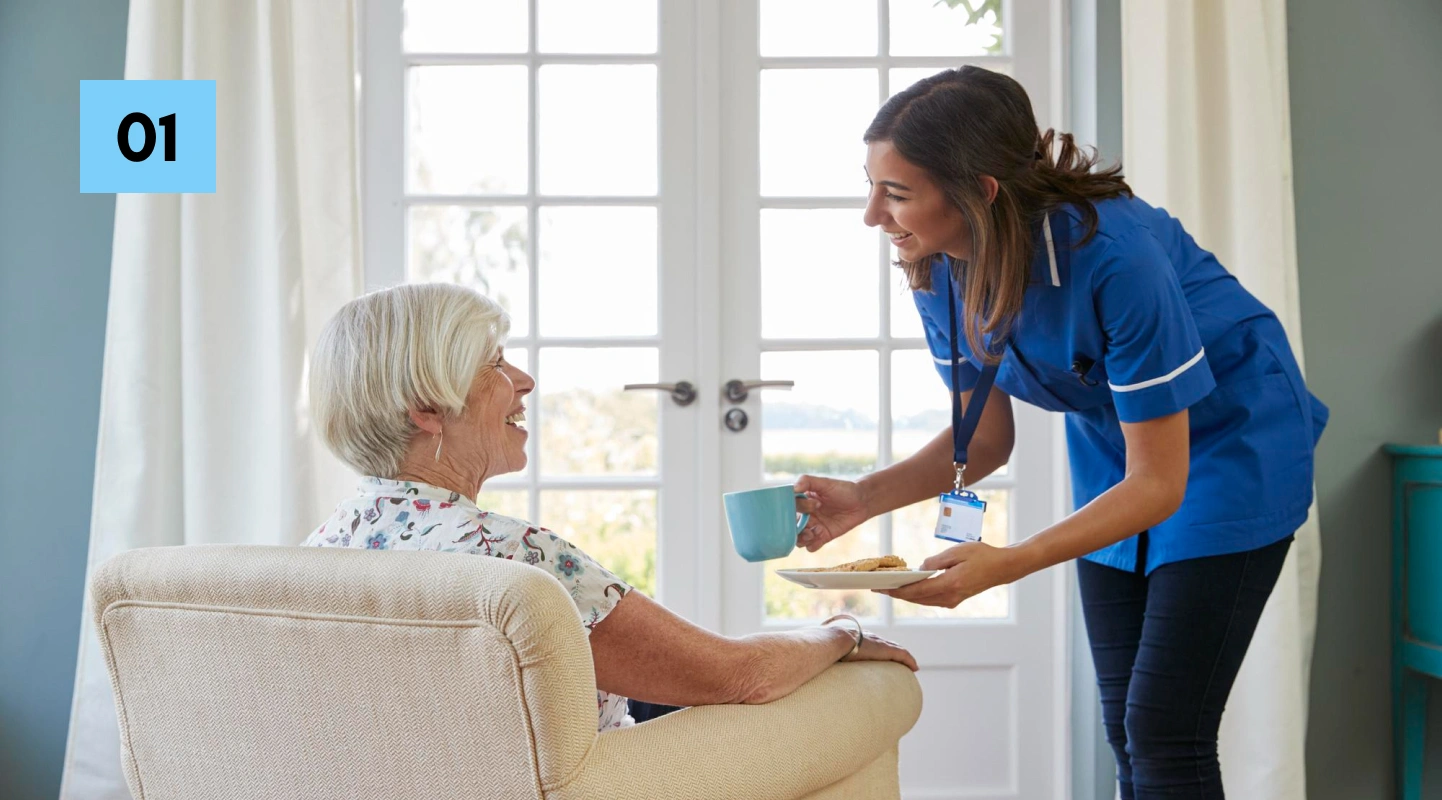
Support at Home Classification 1: approximately $10,731/year (June 2026) for basic support needs, the closest equivalent to the former Level 1 Home Care Package. Covers light housework, transport, social support, and basic personal care. There is no basic daily fee. Call My Aged Care on 1800 200 422 to apply.
Key points
- Support at Home Classification 1 provides approximately $10,731 per year in government funding, the entry-level classification
- Designed for people who need basic help to stay independent at home
- Covers light housework, transport, social support, and basic personal care
- There is no basic daily fee. Contributions are service-based, with a lifetime cap of around $130,000
- You need an assessment under the Single Assessment System through My Aged Care to qualify
History: Before 1 November 2025, this entry level was the Level 1 Home Care Package, which provided about $10,271 per year under the old four-level system. Support at Home replaced Home Care Packages on that date, and the closest current equivalent is Classification 1.
What is Support at Home Classification 1?
Classification 1 is the entry point into Australia’s Support at Home system. It is designed for older Australians who are mostly independent but need a small amount of regular help to stay safely in their own home. It is the closest equivalent to what was the Level 1 Home Care Package before 1 November 2025.
Think of it as a safety net. You can manage most of your daily life, but there are certain tasks that have become harder. Maybe keeping the house clean takes more energy than it used to. Maybe driving to the doctor is no longer safe. Maybe you just need someone to check in on you regularly.
Classification 1 gives you funded access to basic services that address these gaps, without the cost of paying privately for everything.
How much funding do you get?
Classification 1 provides approximately $10,731 per year in government funding (figure current as of June 2026). This amount goes to your chosen provider, who uses it to coordinate and deliver your services.
Under Support at Home, 10% of your budget is deducted for care management. The remaining 90% is available for direct services. That is more predictable than the old Home Care Package system, where administration and care management fees varied widely between providers.
Confirm the current Classification 1 budget at health.gov.au and myagedcare.gov.au.
History: Under the former Level 1 Home Care Package (before 1 November 2025), funding was about $10,271 per year and providers could charge administration and care management fees of anywhere from 15% to 40%, which left far less for actual care. The standardised 10% care management deduction under Support at Home is designed to address that.
What services does Classification 1 cover?
Classification 1 covers a range of basic support services. You will not get everything on this list; your care plan is tailored to your specific needs.
Domestic assistance
- Light housework (vacuuming, mopping, dusting)
- Laundry and ironing
- Bed making and linen changes
- Basic cleaning of kitchen and bathroom
Transport
- Rides to medical and allied health appointments
- Transport to social activities
- Help getting to and from the shops
Social support
- Regular companionship visits
- Outings to community activities
- Phone check-ins
- Help staying connected with friends and family
Garden and home maintenance
- Basic garden upkeep (mowing, weeding)
- Minor home maintenance tasks
- Changing light bulbs, smoke alarm batteries
Meal support
- Simple meal preparation
- Help with grocery shopping
- Meals on Wheels coordination
Basic personal care (limited)
- Medication reminders
- Light assistance with grooming
- Supervision with bathing if needed
What Classification 1 does not typically stretch to:
- Regular nursing care or complex clinical services
- Frequent allied health (physiotherapy, podiatry)
- Significant home modifications
- High-cost assistive technology or equipment
- Overnight care
If you need these services regularly, you likely require a higher classification such as Classification 2 or 3. See former Level 2 explained for the next step up.
How many hours per fortnight?
With approximately $10,731 per year, after the 10% care management deduction, you can expect a small amount of support each fortnight at the entry level.
The exact number of hours depends on:
- Your provider’s hourly rates (typically $50 to $70 per hour for basic support)
- The mix of services you use (some cost more than others)
A typical fortnightly schedule at this level might look like:
- 1.5 hours of domestic assistance (cleaning, laundry)
- 1 hour of transport to a medical appointment
- 0.5 hours of social support
Concentrating your funding on the tasks that matter most makes the budget go further.
Who is Classification 1 for?
Classification 1 suits people who:
- Are generally independent but slowing down
- Need help with one or two specific tasks (like housework or transport)
- Want regular check-ins for safety and peace of mind
- Are recovering from a minor health event and need temporary support
- Live alone and could use social connection
Classification 1 is often the first step. Many people start here and move to higher classifications as their needs change. It is common to be at the entry level for a year or two before requesting reassessment.
If you are already struggling with personal care (showering, dressing, toileting), managing medications, or dealing with a chronic health condition, Classification 1 probably will not be enough. Talk to your assessor about your real needs.
How to apply for Classification 1
The process is the same for all Support at Home classifications:
- Call My Aged Care on 1800 200 422 or visit myagedcare.gov.au
- Complete the screening (15 to 20 minutes on the phone)
- Have your assessment at home under the Single Assessment System (about 1 hour, using the Integrated Assessment Tool)
- Receive your approval confirming Classification 1
- Choose a provider when a place is released (you have 56 days, with a possible 28-day extension)
- Start services after signing your service agreement
Once approved, you are placed in the national priority system. While waiting for a place, you may be eligible for services through the Commonwealth Home Support Programme (CHSP).
For a detailed walkthrough of the assessment process, read our Support at Home eligibility guide.
Classification 1 vs higher classifications
| Feature | Classification 1 | Classification 2-3 | Classification 4-6 | Classification 7-8 |
|---|---|---|---|---|
| Annual budget (approx) | $10,731 | $16,034 - $21,966 | $29,696 - $48,114 | $58,148 - $78,106 |
| Personal care | Limited | Yes | Yes | Extensive |
| Nursing care | No | Basic | Yes | Complex |
| Allied health | No | Basic | Yes | Yes |
| Home modifications | No | Minor | Yes | Extensive |
If Classification 1 is not enough for your needs, see our complete Support at Home guide for a full comparison of all eight classifications.
From Level 1 to Support at Home
Support at Home replaced Home Care Packages on 1 November 2025, the same day the new Aged Care Act 2024 commenced. What used to be the Level 1 Home Care Package is now covered by Support at Home Classification 1, the entry-level classification for basic care needs.
If you are applying now, you enter the Support at Home system. The services and general approach remain similar, but the assessment now runs under the Single Assessment System using the Integrated Assessment Tool, the basic daily fee is gone, and contributions are service-based.
If you held a Level 1 package before 1 November 2025, you transitioned across and the government has guaranteed you are “no worse off”.
For more on what changed, read our Support at Home program guide.
Making the most of Classification 1
With limited funding, getting the most value from your Classification 1 budget matters. Here are practical tips:
Combine funded and unfunded support. Use your funding for tasks you cannot do yourself, and lean on community programs, volunteer services, or family help for other things.
Be specific in your care plan. Do not spread your hours too thin. Focus your limited funding on the one or two things that make the biggest difference to your safety and quality of life.
Compare providers. Although care management is a standardised 10% deduction, providers still set their own service prices. Compare hourly rates so more of your budget buys care.
Request reassessment when you need it. If your needs increase, do not wait. Contact My Aged Care to request a new assessment. You can continue receiving your current services while waiting.
Frequently asked questions
How much funding does Classification 1 provide?
Approximately $10,731 per year (June 2026). Under Support at Home, 10% is deducted for care management, leaving 90% for direct services. The former Level 1 Home Care Package provided about $10,271 before 1 November 2025.
How many hours of care do you get?
It depends on the services you use and your provider’s rates. Basic support services like cleaning and transport cost around $50 to $70 per hour, so the entry-level budget buys a modest amount each fortnight.
Can I move to a higher classification?
Yes. Contact My Aged Care to request a reassessment. If your needs have increased, you may be approved for a higher classification. You continue receiving your current services while waiting for a place to be released.
Do I have to pay anything?
There is no basic daily fee under Support at Home. Clinical care is free for everyone. Full pensioners pay around 5% toward independence services and 17.5% toward everyday living services, with self-funded retirees paying more. A lifetime contribution cap of around $130,000 applies.
How long is the wait?
Once approved, you are placed in the national priority system. When a place is released you have 56 days to choose a provider, with a possible 28-day extension. While waiting, you can access basic support through the Commonwealth Home Support Programme.
What is the difference between Classification 1 and CHSP?
The Commonwealth Home Support Programme provides individual, entry-level services (like 2 hours of cleaning per week). Support at Home Classification 1 provides a coordinated, funded set of multiple services managed by a single provider. CHSP services are simpler and less flexible.
Resources
- My Aged Care - register and apply for home care
- Aged Care Quality and Safety Commission - check provider quality
- Department of Health: Support at Home - official program information
- Services Australia: aged care - means assessment and contribution information
Find a Classification 1 provider
The right provider can mean more of your budget going to actual care. Carevo connects you with aged care providers so you can compare service prices and offerings side by side.
Get matched with the right provider or call 1800 953 253 to find the right support in your area.
Find the right provider through Carevo
Answer a few quick questions and get matched with providers who fit your needs. Free, no obligation.
Need Home Care Packages?
Who is the care for?
Takes 30 seconds. Free, no obligation.
Co-founder & CEO · Updated
Andre is the co-founder and CEO of Carevo. He holds a Bachelor of Commerce, majoring in Marketing, and a Bachelor of Arts from UNSW Sydney, where his majors were International Relations, Politics, Information Systems, and Media and Communications, graduating in 2014, and went through the UNSW 10x Founders accelerator in 2023.