NDIS Capital Supports: AT & Modifications Guide 2026

Andre Smith
Co-founder & CEO
NDIS Capital Supports fund higher-cost assistive technology, home modifications, and vehicle modifications that help you live more independently. This budget category covers one-off purchases over $1,500, specialist equipment, and structural changes to your home or vehicle.
Unlike Core Supports (day-to-day assistance) or Capacity Building (skills development), Capital Supports are for permanent or long-term solutions that reduce ongoing support needs.
This guide explains what qualifies as Capital Supports, how to access funding, the quote and assessment process, and how to navigate approval timelines.
What are NDIS Capital Supports?
Capital Supports are a separate funding category within your NDIS plan for higher-cost items and modifications.
Capital Supports fund:
- Assistive technology over $1,500 (wheelchairs, communication devices, hearing aids)
- Home modifications (ramps, bathroom modifications, ceiling hoists)
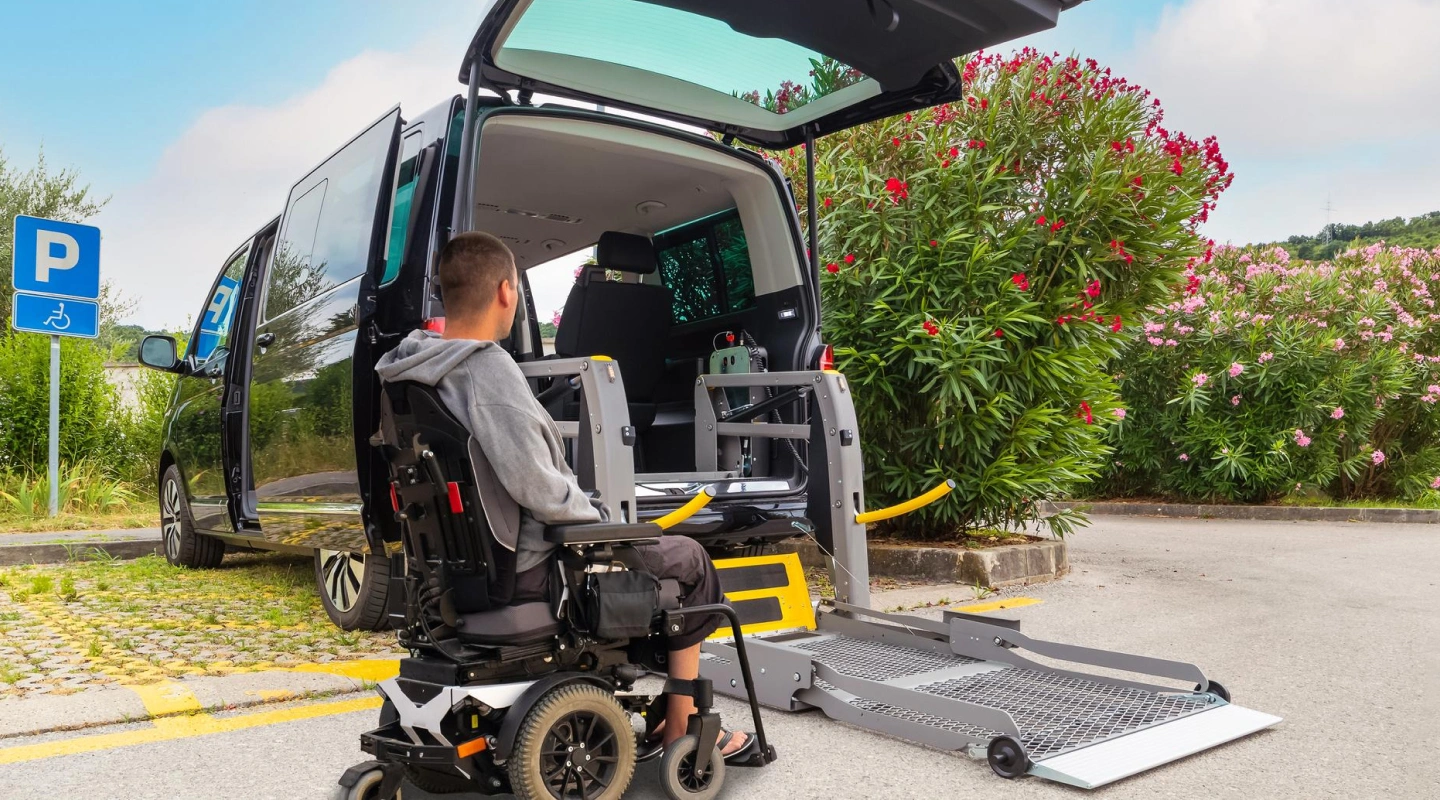
- Vehicle modifications (wheelchair lifts, hand controls, modified seating)
- Specialist Disability Accommodation (SDA) initial setup costs
- Custom or complex equipment requiring professional fitting or installation
What Capital Supports DO NOT fund:
- Everyday items unrelated to your disability (furniture, TVs, standard appliances)
- Modifications that increase property value beyond disability needs
- Items covered by other funding sources (health system, education, employer responsibilities)
- Repairs and maintenance for existing equipment (funded under Core Supports consumables)
Assistive Technology: Low, Mid & High Cost Categories
The NDIS categorizes assistive technology by cost and risk level.
Low Cost AT (Under $1,500)
Characteristics:
- No quotes required
- No OT assessment needed
- Purchase immediately
- Claim after purchase (or invoice plan manager)
- Low risk items available in stores
Examples:
- Shower chairs ($200-800)
- Walking frames ($150-400)
- Grab rails ($50-200)
- Reachers and grabbers ($20-60)
- Non-slip mats ($30-80)
- Basic communication apps ($50-500)
Process: Buy the item, keep receipts, claim from NDIS or invoice your plan manager. No pre-approval needed.
Mid Cost AT ($1,500 - $15,000)
Characteristics:
- Written quotes required (usually 2-3 quotes)
- OT or specialist assessment recommended
- No NDIA approval needed before purchase
- More complex or customized equipment
Examples:
- Manual wheelchairs with customization ($2,000-8,000)
- Basic communication devices ($2,000-10,000)
- Hearing aids ($3,000-12,000 per pair)
- Adjustable beds ($3,000-8,000)
- Portable ramps ($2,000-6,000)
- Standing frames ($4,000-10,000)
Process:
- Get OT assessment and recommendation
- Obtain 2-3 written quotes from suppliers
- Submit quotes to plan manager or NDIS
- Purchase once quotes are approved
- Submit invoice for payment
High Cost AT (Over $15,000)
Characteristics:
- Detailed quotes and assessments required
- NDIA approval required BEFORE purchase
- Trial period often required
- Specialist assessor involvement
- Longer approval timeframes (2-6 months)
Examples:
- Powered wheelchairs ($25,000-60,000)
- Complex communication devices ($15,000-40,000)
- Environmental control systems ($20,000-50,000)
- Ceiling hoists and tracking systems ($18,000-45,000)
- Custom orthoses and prosthetics ($20,000-80,000)
- Specialized vehicle seating systems ($18,000-35,000)
Process:
- Comprehensive specialist assessment
- Trial period (if available)
- Detailed quotes with specifications
- Submit to NDIA for approval
- Wait for NDIA decision (can take 2-3 months)
- Once approved, purchase equipment
- Installation and setup
- Follow-up and adjustments
Home Modifications: What NDIS Will Fund
Home modifications make your home accessible and help you live more independently.
Types of Home Modifications Funded
Basic modifications (under $20,000):
- Ramps and handrails
- Grab rails in bathroom and toilet
- Lever taps and door handles
- Widening doorways
- Non-slip flooring
- Accessible light switches and power points
- Bathroom modifications (roll-in shower, raised toilet)
Complex modifications ($20,000+):
- Major bathroom renovations (accessible shower, sink, toilet)
- Kitchen modifications (lowered benches, accessible storage)
- Bedroom modifications (ceiling hoist tracks)
- Structural changes (removing walls, widening hallways)
- Accessible entrances and pathways
- Lift or elevator installation
Home Modifications Process
Step 1: Occupational Therapy Assessment
An OT assesses your home and functional needs:
- Current accessibility barriers
- Daily living challenges
- Future needs and goals
- Modification recommendations
Cost: $300-800 for initial home assessment (funded under Capacity Building).
Step 2: Builder or Access Consultant Quote
Based on the OT report, a builder or access consultant provides:
- Detailed quote with specifications
- Building plans and diagrams
- Compliance with building codes
- Timeline for completion
You may need:
- Multiple quotes (NDIA often requires 2-3)
- Engineering reports for structural changes
- Council permits and approvals
- Landlord approval (if renting)
Step 3: NDIA Approval
Submit to NDIA:
- OT assessment report
- Builder quotes
- Building plans
- Evidence of reasonable and necessary criteria
NDIA review timeframe: 4-12 weeks for complex modifications.
Step 4: Construction & Completion
Once approved:
- Builder commences work
- Progress inspections
- Final completion and handover
- Post-modification OT review
Renting vs Owning: Key Differences
If you rent:
- NDIA will fund modifications IF landlord approves
- Landlord must agree in writing
- Modifications may need to be removable
- NDIA may fund costs to restore property at end of lease
- Portable options preferred (portable ramps, temporary grab rails)
If you own:
- Easier approval process
- Permanent modifications allowed
- Property value increase considerations
- NDIA won’t fund modifications that purely increase market value
If you live in public housing:
- Coordination with housing provider required
- Some modifications may be housing provider’s responsibility
- Clear agreement needed on who funds what
Vehicle Modifications for Accessibility
Vehicle modifications help you drive or travel safely as a passenger.
Driver Modifications
For drivers with disability:
- Hand controls for accelerator and brake ($2,500-8,000)
- Left foot accelerator ($1,500-4,000)
- Steering aids (spinner knobs, reduced-effort steering) ($800-5,000)
- Pedal extensions or modifications ($1,200-3,500)
- Accessible parking brake systems ($1,000-3,000)
- Wheelchair storage systems ($3,000-8,000)
Passenger Modifications
For wheelchair users as passengers:
- Wheelchair lifts or hoists ($8,000-25,000)
- Ramps (portable or permanent) ($2,000-10,000)
- Modified seating and restraints ($4,000-15,000)
- Lowered floors ($15,000-40,000)
- Swivel seats ($3,000-8,000)
Vehicle Modification Process
Step 1: Driving Assessment (if driver)
Conducted by occupational therapist or driving assessor:
- Functional capacity to drive
- Recommended vehicle modifications
- Training requirements
- Licensing implications
Cost: $500-1,500 (funded under Capacity Building or Capital).
Step 2: Vehicle Modification Quotes
Specialist vehicle modifier provides:
- Detailed quote with specifications
- Compliance with Australian standards
- Installation timeline
- Warranty and ongoing maintenance
Step 3: NDIA Approval & Installation
Submit quotes and assessment to NDIA.
Approval timeframe: 4-8 weeks for mid-cost modifications, 2-4 months for complex modifications.
Once approved, modification provider installs equipment.
Step 4: Training & Follow-up
After installation:
- Driver training on new controls (funded separately)
- Safety check and certification
- Ongoing adjustments as needed
What NDIS Won’t Fund
NDIS will NOT fund:
- The vehicle itself (unless part of complex modification where no suitable alternative exists)
- Standard vehicle features (GPS, reversing cameras, tinted windows)
- Luxury or comfort upgrades
- Modifications for recreational purposes only
- Repairs and maintenance after warranty expires (claim under consumables)
How to Apply for Capital Supports
Is Capital Supports in Your Plan?
Check your NDIS plan document:
- Look for “Capital Supports” budget category
- Check the allocated amount
- Review any specific items pre-approved
If you DON’T have Capital Supports in your current plan:
- Request a plan review
- Provide evidence of need (OT report, medical evidence)
- Explain how capital supports will increase independence
Requesting Capital Supports at Planning Meeting
Prepare evidence:
- OT or specialist assessment
- Quotes for recommended items
- Current challenges and goals
- How equipment/modifications will help you achieve goals
Be specific:
- Don’t just say “I need equipment”
- Explain exact items needed, why, and how they help
- Link to your NDIS goals
Example: “I need a powered wheelchair ($35,000) to access my community independently. Current manual wheelchair causes shoulder pain and limits my ability to travel more than 200m. OT assessment confirms powered wheelchair will allow me to attend university, access public transport, and participate in community activities (Goal 2 and Goal 5 in my plan).”
Capital Supports vs Core Supports Consumables
Many people confuse Capital Supports with Core Supports consumables. Here’s the difference:
| Category | Capital Supports | Core Supports (Consumables) |
|---|---|---|
| Purpose | One-off, higher-cost purchases | Ongoing, everyday items |
| Cost | Usually over $1,500 | Usually under $1,500 |
| Examples | Powered wheelchair, home ramp, vehicle hoist | Continence aids, batteries, wheelchair repairs |
| Approval | Requires quotes and assessments | Purchase immediately, claim after |
| Flexibility | Separate budget, cannot move to Core | Can use for various consumable items |
Wheelchair purchase vs wheelchair repairs:
- Buying a new wheelchair: Capital Supports ($2,000-$60,000 depending on type)
- Repairing existing wheelchair: Core Supports Consumables ($100-800 per repair)
- Wheelchair cushion replacement: Core Supports Consumables ($200-1,500)
Common Capital Support Items and Approval Timelines
| Item | Cost Range | Assessment Required | Quotes Needed | Approval Time |
|---|---|---|---|---|
| Manual wheelchair (basic) | $1,200-2,500 | OT recommended | 2-3 | 2-4 weeks |
| Manual wheelchair (custom) | $3,000-8,000 | OT required | 2-3 | 4-6 weeks |
| Powered wheelchair | $25,000-60,000 | Specialist + trial | 2-3 detailed | 2-4 months |
| Communication device (mid) | $3,000-10,000 | Speech pathologist | 2-3 | 4-8 weeks |
| Communication device (high) | $15,000-40,000 | Specialist + trial | 2-3 detailed | 3-6 months |
| Hearing aids (pair) | $3,000-12,000 | Audiologist | 2-3 | 3-6 weeks |
| Basic home ramp | $3,000-8,000 | OT + builder | 2-3 | 6-10 weeks |
| Bathroom modification | $12,000-35,000 | OT + builder | 2-3 | 2-4 months |
| Ceiling hoist system | $18,000-45,000 | OT + engineer | 2-3 | 3-6 months |
| Vehicle hand controls | $2,500-8,000 | Driving OT | 2-3 | 4-8 weeks |
| Vehicle wheelchair lift | $10,000-25,000 | OT + modifier | 2-3 | 2-4 months |
Tips for Faster Approval
1. Get professional assessments early
Don’t wait until your plan review to get an OT assessment. Do it 2-3 months before your review so you have detailed reports and quotes ready.
2. Provide comprehensive evidence
NDIA wants to see:
- Clear functional need (what you can’t do without this item)
- How it relates to your goals
- Why this specific item is needed (not a cheaper alternative)
- Quotes from registered providers
3. Link to NDIS goals
Every capital support request should clearly link to one or more goals in your plan.
Example goals:
- “Increase community participation by accessing local shops independently”
- “Maintain employment by having accessible transport”
- “Reduce reliance on paid supports by improving home accessibility”
4. Choose registered NDIS providers
While you can use unregistered providers, registered providers:
- Understand NDIS processes
- Provide compliant quotes
- Have experience with NDIA requirements
- May offer payment plans or wait for NDIS approval
5. Trial before purchasing (high-cost items)
For expensive equipment:
- Ask for a trial period
- Some suppliers offer “rent to buy”
- Trials demonstrate the item works for you
- NDIA more likely to approve if trial was successful
6. Keep detailed records
Document everything:
- Assessment reports
- Quotes (dated and detailed)
- Communication with NDIA
- Supplier invoices
- Installation photos and reports
What to Do if Capital Supports Request is Denied
Step 1: Request written reasons
NDIA must provide written reasons for any decision. Ask for detailed explanation of why your request was denied.
Step 2: Check if you can resubmit with more evidence
Common denial reasons:
- Insufficient evidence of need
- Item not reasonable and necessary
- Cheaper alternative available
- Not related to your disability
Can you address these issues?
- Get more detailed OT assessment
- Provide medical evidence
- Explain why cheaper alternatives won’t work
- Link more clearly to your goals
Step 3: Request internal review
You have 3 months from the decision date to request an internal review.
Internal review is:
- Free
- Conducted by different NDIA staff
- Usually takes 60 days
- Can overturn the original decision
Step 4: Administrative Review Tribunal (ART)
If internal review still denies your request, you can appeal to the ART.
ART process:
- Independent review
- Legal representation allowed (free advocacy services available)
- Longer timeframe (3-12 months)
- Final decision (unless appealed to Federal Court)
March 2026 Federal Court ruling strengthens your rights:
In a recent case (Lee Eastham v NDIA), the Federal Court overturned NDIA’s denial of a mobility scooter, ordering the agency to fund the equipment. This precedent strengthens participants’ rights to appeal assistive technology denials.
Maintenance and Replacement of Capital Items
Who pays for repairs and maintenance?
During warranty period:
- Supplier responsible for repairs
- NDIS may fund repairs if not covered by warranty
After warranty expires:
- Repairs and maintenance funded under Core Supports (Consumables)
- Major repairs may require new quotes
- Keep receipts for all repairs
When can you replace capital items?
NDIS will fund replacement when:
- Item is broken beyond repair
- Item no longer meets your needs (functional capacity has changed)
- Item has reached end of expected lifespan
Expected lifespans:
- Manual wheelchairs: 5-7 years
- Powered wheelchairs: 5-10 years
- Communication devices: 5-7 years
- Hearing aids: 5-7 years
- Home modifications: 10-20+ years (depends on modification)
To request replacement:
- Provide evidence item is no longer functional or suitable
- New OT assessment if needs have changed
- Quotes for replacement item
- Explain why repair is not cost-effective
State and Territory Differences
Home modifications and council approvals:
Each state/territory has different building codes and approval processes:
New South Wales:
- Council approval (Development Application) required for most modifications over $5,000
- Complying Development Certificate may be faster option
- Strata approval needed for units/apartments
Victoria:
- Building permit required for structural changes
- Bushfire zone restrictions may apply
- Owner’s corporation approval for apartments
Queensland:
- Development approval for most modifications
- Building certifier inspection required
- Body corporate approval for units
South Australia:
- Development approval through local council
- Planning consent may be required
- Strata corporation approval for apartments
Western Australia:
- Building permit for structural modifications
- Development approval may be required
- Strata company approval for units
Tasmania:
- Planning permit for certain modifications
- Building permit for structural work
- Body corporate approval for units
Northern Territory:
- Development approval through local council
- Building permit required
- Community title approval for units
Australian Capital Territory:
- Development approval for major modifications
- Building approval required
- Owners corporation approval for apartments
Frequently Asked Questions
Can I upgrade my capital item beyond NDIS funding?
Yes. If you want features beyond what NDIS considers reasonable and necessary, you can pay the difference yourself.
Example: NDIS approves $30,000 for a powered wheelchair with standard features. You want premium seating and advanced controls costing $40,000 total. You can pay the extra $10,000.
What if I move house after getting home modifications?
If you move:
- Permanent modifications stay with the property
- You may be able to claim new modifications at the new property
- Portable modifications (portable ramps, stair lifts) can be moved
- NDIA may fund removal and reinstallation of portable items
Can I use Capital Supports for Smart Home technology?
Yes, if it’s directly related to your disability and helps you live independently.
Funded smart home tech:
- Environmental control systems (lights, doors, temperature via switches or voice control)
- Medical alert systems
- Automated medication dispensers
- Smart locks for accessibility
NOT funded:
- Standard home automation for convenience
- Entertainment systems
- Smart appliances not related to disability
Do I need to return capital items if I leave the NDIS?
No. Once purchased, capital items belong to you. If you leave NDIS or your plan ends, you keep all equipment and modifications.
Can I sell or give away NDIS-funded capital items?
Generally no, unless:
- Item no longer meets your needs
- You’re replacing with more suitable equipment
- You’re returning item as part of trade-in for replacement
NDIS-funded items are purchased to meet your specific disability needs, not for resale.
Where to Get Help
Capital Support Specialists:
- Occupational therapists: Find via Occupational Therapy Australia (https://www.otaus.com.au)
- Assistive Technology suppliers: Find registered providers via NDIS provider finder
- Home modification builders: Look for builders experienced with NDIS and accessibility standards
- Vehicle modification specialists: Search for ARATA-accredited modifiers (Automotive Rehabilitation and Assistive Technology Association)
Free advocacy and support:
- Disability advocacy organizations: Check your state-based disability advocacy service
- National Disability Advocacy Program: 1800 818 338
- Your LAC or Support Coordinator: Can help navigate capital support requests
NDIS Contact:
- NDIS phone: 1800 800 110
- NDIS website: ndis.gov.au
- NDIS app: myplace portal for plan details
Key Takeaways
Capital Supports are for one-off, higher-cost items that help you live more independently:
- Assistive technology over $1,500
- Home modifications (ramps, bathroom changes, hoists)
- Vehicle modifications (lifts, hand controls)
Process varies by cost:
- Low cost AT (under $1,500): Buy immediately, no quotes needed
- Mid cost AT ($1,500-$15,000): Get quotes, submit, purchase
- High cost AT (over $15,000): Assessment, quotes, NDIA approval, then purchase
Plan ahead:
- Get OT assessments 2-3 months before plan review
- Gather quotes and evidence early
- Link all requests to your NDIS goals
If denied:
- Request written reasons
- Consider internal review (free, 3-month deadline)
- Seek advocacy support
Capital Supports can transform your independence and quality of life. Take time to understand the process, gather strong evidence, and work with experienced professionals to get the supports you need.
Find the right provider through Carevo
Answer a few quick questions and get matched with providers who fit your needs. Free, no obligation.
Need Plan Management?
Who is the care for?
Takes 30 seconds. Free, no obligation.
Co-founder & CEO · Updated
Andre is the co-founder and CEO of Carevo. He holds a Bachelor of Commerce, majoring in Marketing, and a Bachelor of Arts from UNSW Sydney, where his majors were International Relations, Politics, Information Systems, and Media and Communications, graduating in 2014, and went through the UNSW 10x Founders accelerator in 2023.