Post-Stroke Care at Home: 90-Day Provider Roadmap for Recovery and Risk Reduction

Gemma Foxton
Customer Lead

Key Points
- The 90-day post-stroke window is a period of heightened neuroplasticity; early, intensive, consistent rehabilitation across motor, speech, cognition, and swallowing domains leads to better long-term outcomes
- Funding pathway depends on age: NDIS for under 65; My Aged Care (Support at Home) for 65 and over; Medicare funds allied health and psychology for all
- Dysphagia is present in approximately 50% of stroke survivors immediately post-stroke; swallowing assessment and diet modification by a speech pathologist is a safety priority before introducing food or fluids at home
- Secondary stroke prevention (medication, blood pressure, cholesterol, atrial fibrillation management) is the GP and neurologist’s responsibility; it is the single most important risk reduction measure
- Aphasia does not indicate reduced intelligence; support workers must receive communication partner training from the speech pathologist to interact effectively with aphasia
- Stroke recovery continues beyond 90 days and beyond 6 months; maintaining rehabilitation momentum through long-term allied health and exercise is associated with continued recovery
The Post-Stroke Home Journey
Post-stroke care is one of the most time-sensitive areas in rehabilitation medicine. The first three months after a stroke define much of what is possible in long-term recovery: the brain’s capacity for reorganisation and healing is greatest in this window, and the intensity of rehabilitation during this period significantly affects how much function the person regains.
Coming home from hospital after a stroke can be both a relief and a shock. The hospital provided round-the-clock monitoring, therapy, and support; at home, the person and their family are often managing significant new disabilities with limited support in place. The 90-day roadmap in this guide is designed to help families and stroke survivors understand what providers should be involved, when, and what they should be doing, so that the post-discharge period maximises recovery rather than loses momentum.
The Funding Pathway
Under 65: NDIS
Stroke causing permanent or substantially permanent functional impairment qualifies for NDIS. For people who were not already NDIS participants, the discharge period is a critical time to initiate access:
- Hospital social worker: Initiate the NDIS access referral as early as possible during the hospital admission; waiting until discharge means a gap in funded support
- NDIS access request: Requires neurologist documentation confirming the stroke and its functional impacts
- Urgent plan request: For urgent discharge situations, an interim NDIS plan can be requested to provide some supports while the full plan is developed
NDIS funds: physiotherapy, OT, speech pathology, community nursing, support workers, psychology, and assistive technology for stroke survivors.
65 and Over: My Aged Care
For people 65 and over, My Aged Care is the entry point for home support. The hospital ACAT team initiates this assessment before discharge. The Support at Home program (from July 2025) provides flexible home support funding covering nursing, allied health, personal care, domestic assistance, and community access.
Medicare (All Ages)
Medicare complements NDIS and aged care funding:
- GP Chronic Disease Management plan: 5 allied health sessions per year (physiotherapy, OT, speech pathology, exercise physiology)
- GP Mental Health Care Plan: 10 psychology sessions per year (post-stroke depression and anxiety are common and treatable)
- GP visits: Ongoing medical management, secondary prevention, specialist referrals
The 90-Day Provider Roadmap
Days 0 to 14: Immediate Home Stabilisation
Priority 1: Safety
Before or immediately after the person arrives home:
- OT home safety assessment: Fall hazards, bathroom safety, bedroom access, equipment installation (shower chair, toilet rails, ramps if needed)
- Equipment in place: Walking frame, shower chair, raised toilet seat, and any other prescribed equipment should be in place on day of discharge
- Medication plan: All post-stroke medications reviewed, dispensed, and a clear administration schedule documented
Priority 2: Swallowing and Nutrition
If dysphagia was identified in hospital:
- Discharge summary should include current diet texture and fluid consistency recommendations (IDDSI framework)
- Community follow-up with a speech pathologist for ongoing swallowing monitoring and management
- Support workers and family carers must know the prescribed diet texture and fluid consistency and follow it for every meal
Priority 3: Community Nursing
For people with: wound care needs, catheter management, complex medication, or nursing monitoring needs. Community nursing in the immediate post-discharge period provides clinical oversight and family/carer support.
Priority 4: Support Workers in Place
Personal care support worker rostered for showering, dressing, and any other personal care needs identified. The first week at home is often the most disorienting; consistent support reduces distress.
Days 14 to 42: Intensive Rehabilitation Phase
This is the most neuroplasticity-rich period. Rehabilitation should be:
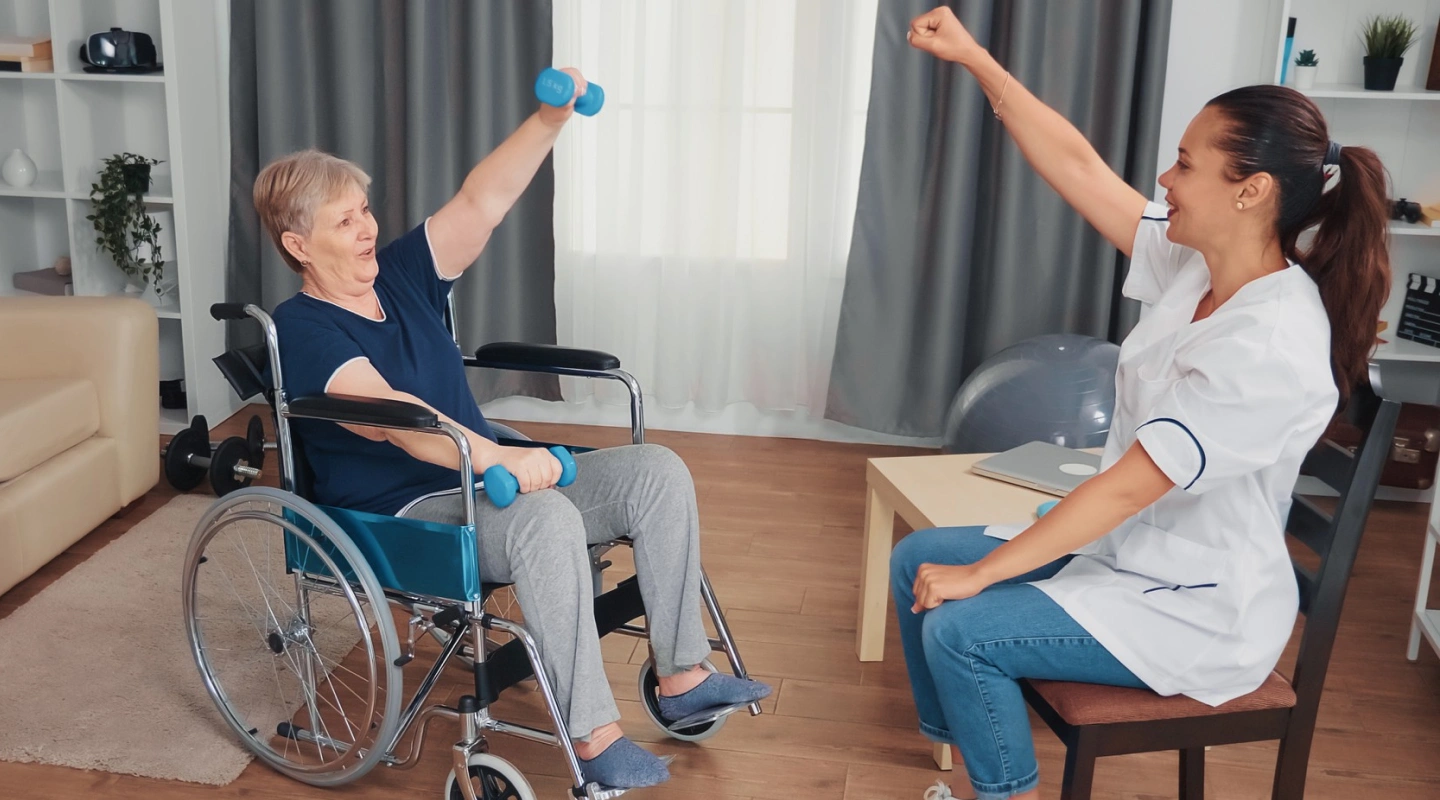
- Intensive: High-repetition practice of targeted movements, speech, and functional activities
- Consistent: Same therapists where possible; therapy every weekday or as frequently as the person can tolerate
- Goal-directed: Goals set collaboratively with the stroke survivor and regularly reviewed
Physiotherapy: Motor rehabilitation, strength, balance, gait retraining, falls prevention, upper limb functional rehabilitation.
Occupational Therapy:
- Functional task retraining in the home environment (cooking, dressing, transfers)
- Cognitive rehabilitation (attention, memory, executive function)
- Fatigue management strategies
- Upper limb task-specific training
Speech Pathology:
- Aphasia rehabilitation: intensive language practice, supported conversation
- Dysphagia: reassessment and diet modification review
- Dysarthria: speech intelligibility strategies
Psychology:
- Post-stroke depression is common (affecting 30 to 50% of stroke survivors); it worsens functional outcomes and quality of life and is treatable
- Adjustment support for the person and family
- Anxiety management
Secondary Prevention (GP and Neurologist):
- GP review within 2 weeks of discharge to confirm secondary prevention medication is in place and tolerated
- Blood pressure monitoring (target values depend on stroke type)
- Neurologist review at 4 to 6 weeks
Days 42 to 90: Consolidation and Community Reintegration
As acute-phase rehabilitation intensity reduces, the focus shifts to:
Exercise and fitness: An exercise physiologist designs a longer-term exercise program for the stroke survivor to maintain and extend gains from intensive rehabilitation. Regular aerobic exercise supports neuroplasticity and cardiovascular health.
Community reintegration: Re-engaging with activities outside the home. The OT and support worker support the person to return to previous activities or discover new ones suited to current function.
Driving assessment: If the person was driving before the stroke, a formal OT driving assessment is required before returning to driving. This is a legal requirement and a safety matter.
Communication adaptations: For people with aphasia, communication aids (apps, boards), smart technology with accessibility features, and communication partner training for support workers.
Carer support: Family carers, who often provide significant unpaid support post-stroke, should have their own carer assessment and access to respite.
What Support Workers Need to Know
Support workers working with stroke survivors immediately post-discharge should understand:
Fatigue: Post-stroke fatigue is extremely common and does not reflect poor motivation; the brain is working extremely hard to reorganise. Scheduling activities with adequate rest is important.
Aphasia communication: As described above. Never assume limited speech means limited understanding.
Emotional lability: Post-stroke emotional lability (sudden tears or laughter that seem disproportionate to the situation) is a neurological feature of some strokes, not emotional instability. It is upsetting for the person and families but improves over time.
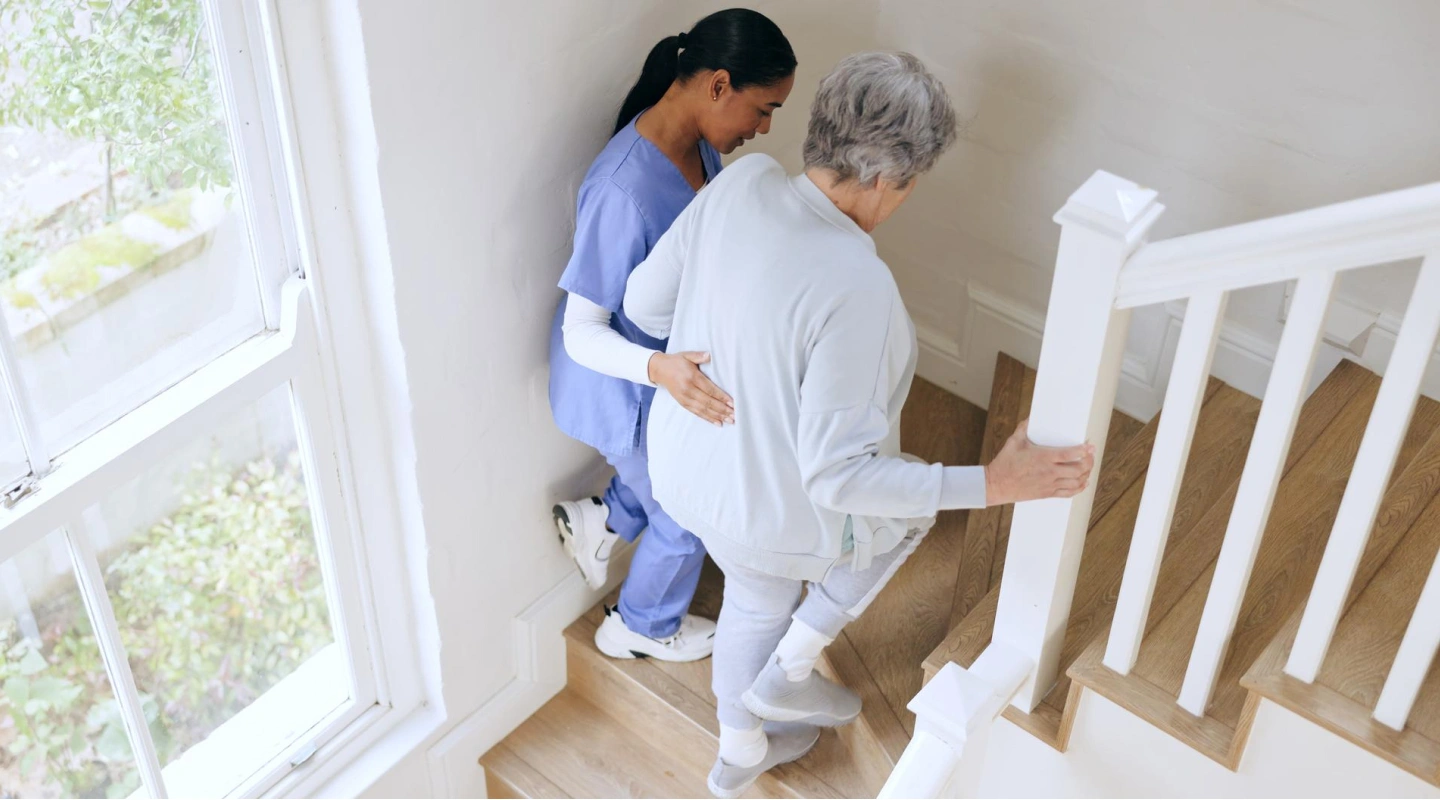
Falls prevention: Falls risk is significantly elevated post-stroke due to weakness, balance impairment, and reduced reaction times. Know the person’s fall prevention plan; do not rush transfers or mobility activities.
Secondary prevention medication: Antiplatelet or anticoagulant medication, antihypertensives, and statins must not be missed. Medication management is a safety priority.
Warning signs of second stroke (FAST): Face drooping, Arm weakness, Speech difficulty, Time to call 000. Any sudden new neurological symptom is an emergency.
Long-Term Recovery: Beyond 90 Days
Recovery from stroke continues well beyond the 90-day neuroplasticity window. Maintaining rehabilitation:
- Exercise: Regular aerobic and resistance exercise is associated with continued neuroplasticity and functional gains; exercise also reduces secondary stroke risk
- Therapy: As NDIS or aged care funds allow, ongoing therapy (particularly speech pathology for aphasia and OT for hand function) continues to produce gains
- Peer support: Stroke Foundation’s StrokeLine (1800 787 653) and EnableMe peer communities connect stroke survivors; peer connection improves psychological outcomes and provides practical advice
Key Resources
- Stroke Foundation Australia - StrokeLine (1800 787 653), recovery resources, and provider information
- EnableMe (Stroke Foundation) - stroke recovery community, tools, and peer support
- My Aged Care - home support funding for 65 and over (1800 200 422)
- NDIS stroke information - NDIS access for stroke survivors under 65
Connecting with Post-Stroke Support Providers
Carevo connects stroke survivors to physiotherapists, speech pathologists, OTs, community nurses, and NDIS-registered daily support providers across Australia.
Support at Home on Carevo right now
Updated 2026-06-27Most-requested Support at Home services
Based on 938 aged care and Support at Home inquiries made through Carevo. See the full Support at Home Demand Report.
Need support at home?
Find the right provider for you or your loved ones through Carevo.
About the author
Back to Blog Customer Lead
Gemma is Carevo's Customer Lead. She spent several years working as a support worker before moving into concierge and partnerships roles, so she writes from the frontline of care.