Cerebral Palsy Through Adulthood: Updating Supports, Equipment, and Provider Mix Over Time

Andre Smith
Co-founder & CEO

Key Points
- Cerebral palsy does not progress neurologically, but secondary musculoskeletal effects accumulate across adulthood, changing support and equipment needs over time; regular review is essential
- Adults with CP commonly experience increased fatigue, joint pain, and loss of previously maintained function (walking, transfers) from their 30s and 40s; this is not deterioration of the condition but secondary effects of decades of abnormal movement patterns
- Spasticity management is an evolving clinical priority in adulthood; physiotherapy, OT, and periodic botulinum toxin injections are the most common approach; intrathecal baclofen is an option for severe widespread spasticity
- Equipment prescribed in childhood or early adulthood is rarely still optimal; OT and physiotherapy reassessment every 1 to 3 years ensures equipment matches current needs
- School-to-adult transition planning should begin at least two years before leaving school and must include updated functional assessments, SIL assessment if relevant, and equipment review
- Pain is a significant and underrecognised feature of adult CP; support plans should include pain management components
Cerebral Palsy in Adulthood
Cerebral palsy is a lifelong condition, and the support needs of an adult with CP are substantially different from those of a child or teenager. The condition itself is non-progressive, meaning the original brain injury does not worsen. But the body changes. Secondary musculoskeletal effects accumulate over decades of living with abnormal muscle tone, movement patterns, and joint loading. The support configuration that worked at 18 is unlikely to still be optimal at 35.
Adults with CP in Australia are navigating NDIS systems designed primarily with static needs in mind, managing the challenge of ageing with a condition where ageing effects arrive earlier and more rapidly than for the general population, and often facing the significant life transition of moving out of the family home.
This guide covers what changes in adulthood for people with CP, how to anticipate and plan for these changes, the equipment reassessment process, spasticity management, SIL, and building a provider mix that serves adult life rather than a childhood model.
What Changes in Adulthood
Secondary Musculoskeletal Effects
The most clinically significant changes for adults with CP are secondary effects on the musculoskeletal system. Years of abnormal muscle tone, spasticity, and atypical movement patterns accumulate:
Joint deterioration: Hip and knee pain and early arthritis are common in adults with CP, particularly those with spasticity affecting the lower limbs. The hips are particularly vulnerable; hip displacement and dysplasia, if not adequately managed in childhood, lead to significant pain and functional limitation in adulthood.
Contractures: Persistent spasticity without adequate management leads to contractures, where muscles and soft tissues shorten and restrict joint movement. Contractures cause pain, limit function, and complicate personal care.
Scoliosis progression: For people with moderate to severe CP, scoliosis (spinal curvature) often progresses during the adult years, affecting seating, posture, and respiratory function.
Walking function decline: Adults with CP who walk independently often experience walking becoming more effortful and eventually unsustainable as a primary mobility method as musculoskeletal changes accumulate. The transition to more significant walking aid use or wheelchair use typically occurs in the 30s to 50s for this group.
Fatigue
Fatigue is one of the most commonly reported changes in adults with CP. The effort required to move with abnormal muscle tone and coordination across a full day accumulates across decades. Many adults with CP describe needing substantially more rest by their 30s and 40s than they needed in their 20s.
Support planning must account for realistic energy levels. A working week schedule appropriate at 25 may not be appropriate at 40. Building rest time into the daily routine and adjusting community participation expectations to realistic energy levels is part of effective adult support planning.
Pain
Pain becomes a more significant feature of daily life for many adults with CP. It should not be accepted as inevitable and untreated; it requires active management. See the pain management section below.
Equipment Reassessment
Equipment prescribed in childhood, adolescence, or early adulthood is rarely still optimal for a 35 or 45-year-old with CP. Life contexts change (school to workplace to community), functional needs change, and technology advances.
When to Reassess
A proactive approach to equipment review means not waiting until the equipment fails or until function has deteriorated so significantly that urgent replacement is needed. Triggers for equipment review:
- Annual NDIS plan review (routine review of all equipment)
- Any significant change in function (loss of walking, increased spasticity, deterioration of seating tolerance)
- Equipment that is consistently not being used (often a sign it no longer meets needs)
- Change in living situation (moving to SIL or new accommodation requires review of all equipment in the new context)
- Major life change (new work environment, new community activities)
The Equipment Reassessment Process
- OT assessment: Comprehensive functional assessment documenting current abilities, limitations, daily tasks, and living context
- Physiotherapy input: For mobility equipment and postural management; assesses current mobility, transfer needs, and spasticity impact
- AT trials: Trialling appropriate equipment options (wheelchair trial, seating system trial, technology trial) before prescription
- Prescription and NDIS Capital funding: Equipment over $1,500 typically requires AT prescription and NDIS Capital Supports funding; the OT submits the AT report
Common equipment transitions in adulthood:
| Previous equipment | Common adult upgrade | Driver |
|---|---|---|
| Forearm crutches | 4-wheel walker or wheelchair | Fatigue, balance decline |
| Manual wheelchair | Power wheelchair | Upper limb fatigue or function |
| Basic seating system | Complex postural seating | Increased trunk support needs |
| Basic AAC device | Advanced communication system | Expanded vocabulary and contexts |
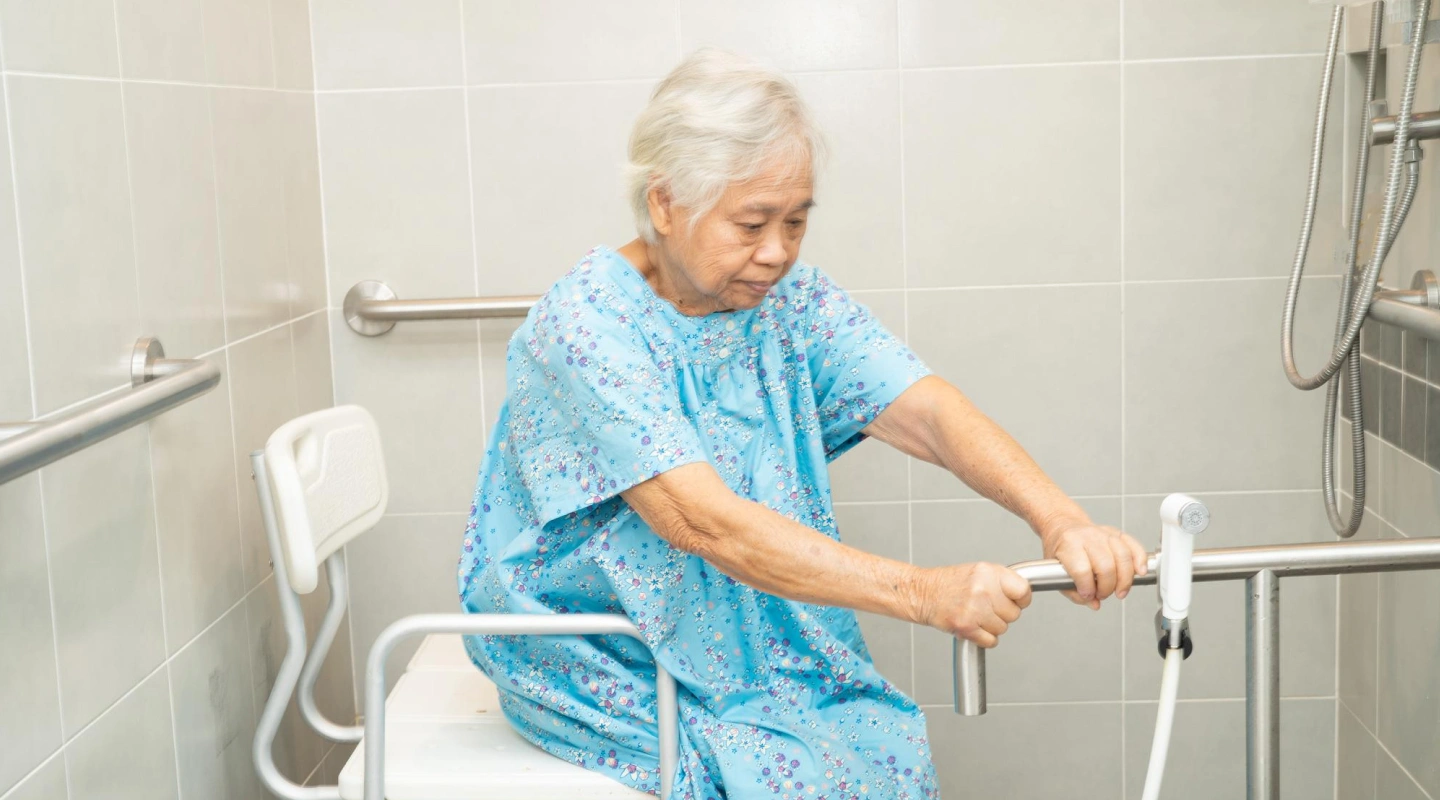
| Standard bathroom equipment | Hoist system, shower trolley | Increased personal care needs |
Spasticity Management in Adulthood
Spasticity management is an ongoing clinical priority throughout adulthood for many people with CP. The goals are to reduce pain, maintain range of motion, prevent contracture progression, and improve function and quality of life.
Physiotherapy and OT (Foundation Tier)
Regular physiotherapy and OT maintain the foundation of spasticity management:
- Stretching and range of motion exercises: Daily or regular stretching of spastic muscle groups maintains length and reduces contracture risk
- Positioning: OT-prescribed positioning strategies for sitting, resting, and sleeping maintain optimal alignment and reduce spasticity
- Splinting: OT-prescribed hand or foot splints worn at rest maintain joint position and muscle length
- Hydrotherapy: Warm water reduces spasticity and facilitates movement; many adults with CP find hydrotherapy significantly relieves both spasticity and pain
Botulinum Toxin Injections
Botulinum toxin (Botox) injections into specific overactive muscles temporarily reduce spasticity in those muscles by blocking the nerve signal. This is currently the most widely used focal spasticity treatment for adults with CP in Australia.
- Administered by a rehabilitation physician or neurologist
- Effects last 3 to 6 months; treatment is repeated
- Most effective for focal spasticity (specific muscles in specific limbs)
- Works best when combined with physiotherapy during the period of reduced tone (the physiotherapy can achieve more when spasticity is reduced)
- NDIS funds the physiotherapy component; botulinum toxin is MBS-funded
Intrathecal Baclofen Therapy (ITB)
For adults with severe, widespread spasticity inadequately controlled by oral medications and injections, intrathecal baclofen therapy delivers baclofen directly into the spinal fluid via a surgically implanted pump. This provides much higher drug concentration at the target site with much lower systemic dosage than oral baclofen, reducing side effects.
- Surgical implantation and ongoing maintenance by a neurosurgical and rehabilitation team
- Requires NDIS funding for maintenance aspects and physiotherapy during the adjustment period
- Appropriate for a minority of adults with CP with severe lower limb spasticity
Supported Independent Living
For adults with CP who are moving out of the family home, SIL provides the support infrastructure for independent living.
Planning for SIL
The transition from family home to SIL is one of the most significant transitions in an adult’s life with CP. Planning should begin well in advance:
- Determine support needs: An OT and physiotherapy assessment documents 24-hour support needs; this informs the SIL quote
- Identify preferred living arrangement: Shared supported accommodation with housemates, or independent living with drop-in support
- SIL provider selection: Research SIL providers in the preferred area; visit accommodation options; speak with current residents if possible
- NDIS SIL funding request: The NDIS requires a SIL quote from the proposed provider and evidence that SIL is the right model
- Home equipment setup: Before moving in, ensure the accommodation has appropriate equipment (hospital bed, hoist, accessible bathroom, AAC setup)
Choosing a SIL Provider
Questions to ask SIL providers:
- What is the ratio of support workers to residents?
- How are support workers matched to residents (shared interests, compatible communication)?
- What is the training process for new support workers, including CP-specific training?
- How is the communication system (AAC) used and supported by all staff?
- What is the on-call arrangement overnight?
- What processes exist for addressing concerns about support quality?
Building the Adult Provider Team
The provider mix for an adult with CP differs from the childhood provider mix. Key differences:
- Less focus on development and capacity building; more focus on maintaining function and managing secondary effects
- Rehabilitation physician (not a paediatrician or paediatric team) leads medical management
- OT and physiotherapy review becomes less frequent (often annual rather than monthly) but remains essential
- Support workers carry a larger proportion of daily life support
- SIL providers and support coordinators play a larger coordination role
| Provider | Role | Frequency | Funding |
|---|---|---|---|
| Rehabilitation physician | Medical management, spasticity, referrals | 6-12 monthly | Medicare |
| OT | Equipment, home modification, daily living | Annual or as needed | NDIS Capacity Building |
| Physiotherapist | Spasticity, range of motion, hydrotherapy, exercise | 3-6 monthly minimum | NDIS Capacity Building |
| Speech pathologist | AAC, communication, swallowing if relevant | As needed | NDIS Capacity Building |
| Pain specialist | Complex pain management | As needed | Medicare |
| Support coordinator | NDIS plan management, provider coordination | Ongoing | NDIS Capacity Building |
| SIL provider | Daily support workers, accommodation | Daily | NDIS Core |
Key Resources
- Cerebral Palsy Alliance - NDIS support coordination, assistive technology, allied health, and research
- Scope Australia - communication, employment, and community support for people with CP
- NDIS - SIL funding, equipment, and plan review information
- Cerebral Palsy Support Network - peer support for adults with CP across Australia
Connecting with Cerebral Palsy Support Providers
Carevo connects adults with cerebral palsy to NDIS-registered physiotherapists, OTs, speech pathologists, and daily support providers across Australia.
Need support at home?
Find the right provider for you or your loved ones through Carevo.
About the author
Back to Blog Co-founder & CEO
Andre is the co-founder and CEO of Carevo. He holds a Bachelor of Commerce, majoring in Marketing, and a Bachelor of Arts from UNSW Sydney, where his majors were International Relations, Politics, Information Systems, and Media and Communications, graduating in 2014, and went through the UNSW 10x Founders accelerator in 2023.