Hearing Impairment Support Plan: Audiology, AT, and Community Access
Gemma Foxton
Customer Lead
Key Points
- People over 26 with permanent hearing loss of 65 dB or more in the better ear may be eligible for NDIS; those with profound loss (90 dB+) qualify automatically; people under 26 are primarily supported through Hearing Australia’s Hearing Services Program
- The Hearing Services Program (HSP) and NDIS are complementary: HSP funds basic hearing services and devices for eligible Australians, while NDIS covers additional supports not available through HSP and supports people with severe to profound loss over 26
- NDIS typically funds hearing aids at $4,000 to $8,000 per pair; cochlear implant surgery and devices are public health system funded, with NDIS covering post-implant therapy, mapping, upgrades, and accessories at around $10,000 to $20,000 per year
- FM remote microphone systems, alerting devices, hearing loop accessories, and captioning technology are all potentially fundable through NDIS Capital Supports
- Deaf Connect, Expression Australia, and Hearing Australia are the primary specialist providers across Australia for hearing-specific support, Auslan skills, and AT training
Who the NDIS Pathway Is For
Hearing loss in Australia is managed across two overlapping funding systems. Understanding which applies to your situation is the first step before building a support plan.
The Australian Government Hearing Services Program (HSP) is the primary pathway for most Australians with hearing loss. It is managed by the Department of Health and provides subsidised hearing assessments and devices through Hearing Australia (the sole Community Service Obligation provider) and a network of accredited private hearing service providers. HSP is available to Australian citizens and permanent residents who hold a pensioner concession card, are a partner of a pensioner concession card holder, are an eligible Department of Veterans’ Affairs client, or meet other eligibility criteria. For children under 26 and Aboriginal and Torres Strait Islander Australians over 50, HSP covers specialist services and remote area services through Hearing Australia exclusively.
The NDIS becomes the primary funding pathway for adults over 26 with severe to profound hearing loss (65 dB or more in the better ear) who are not adequately supported by HSP, and for funding assistive technology, community access supports, and support workers that HSP does not cover. Both programs can be accessed simultaneously, provided the same support is not claimed from both.
If you are under 26, start with Hearing Australia. If you are over 26 with significant hearing loss and need more than hearing aids, the NDIS pathway deserves investigation.
The Audiology Role in Your Support Plan
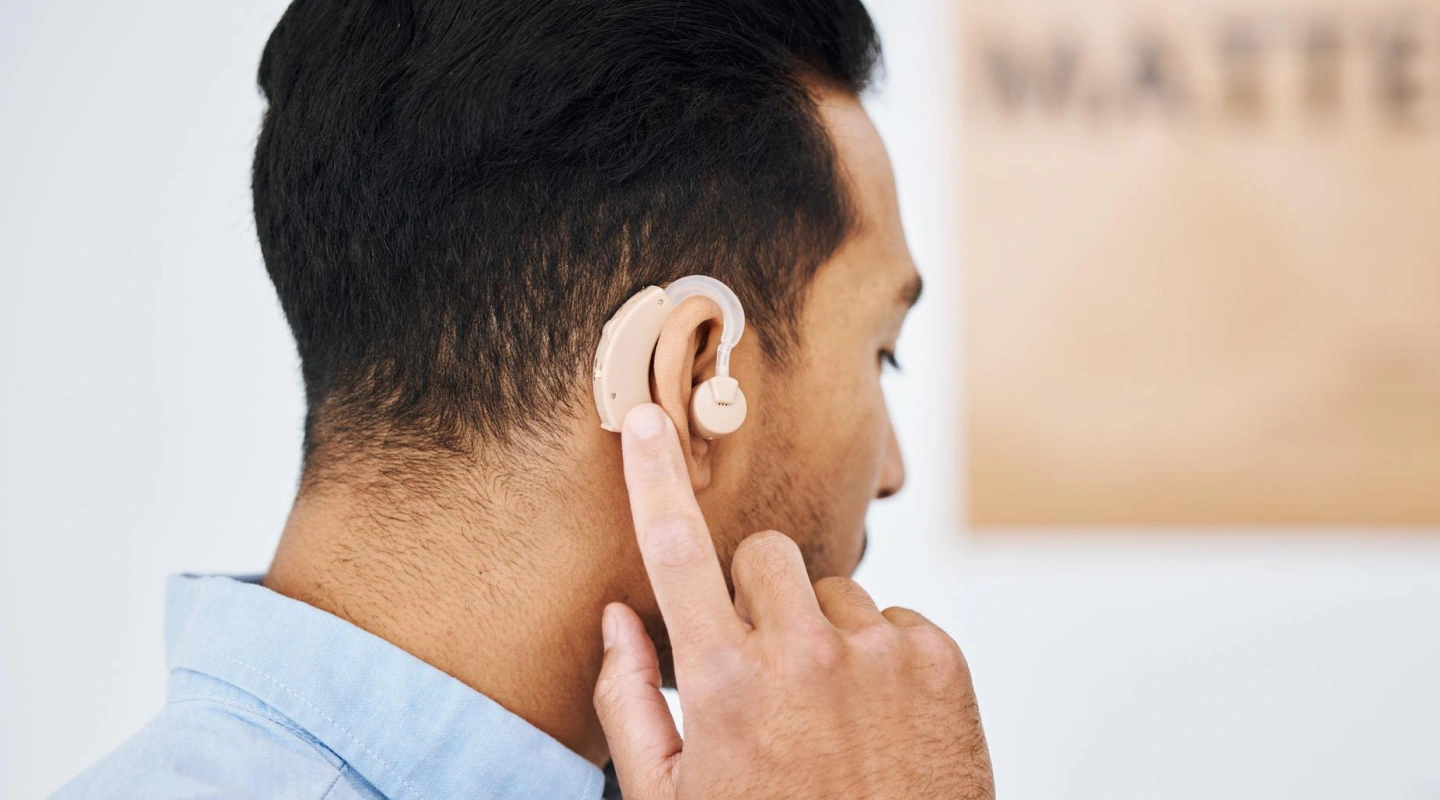
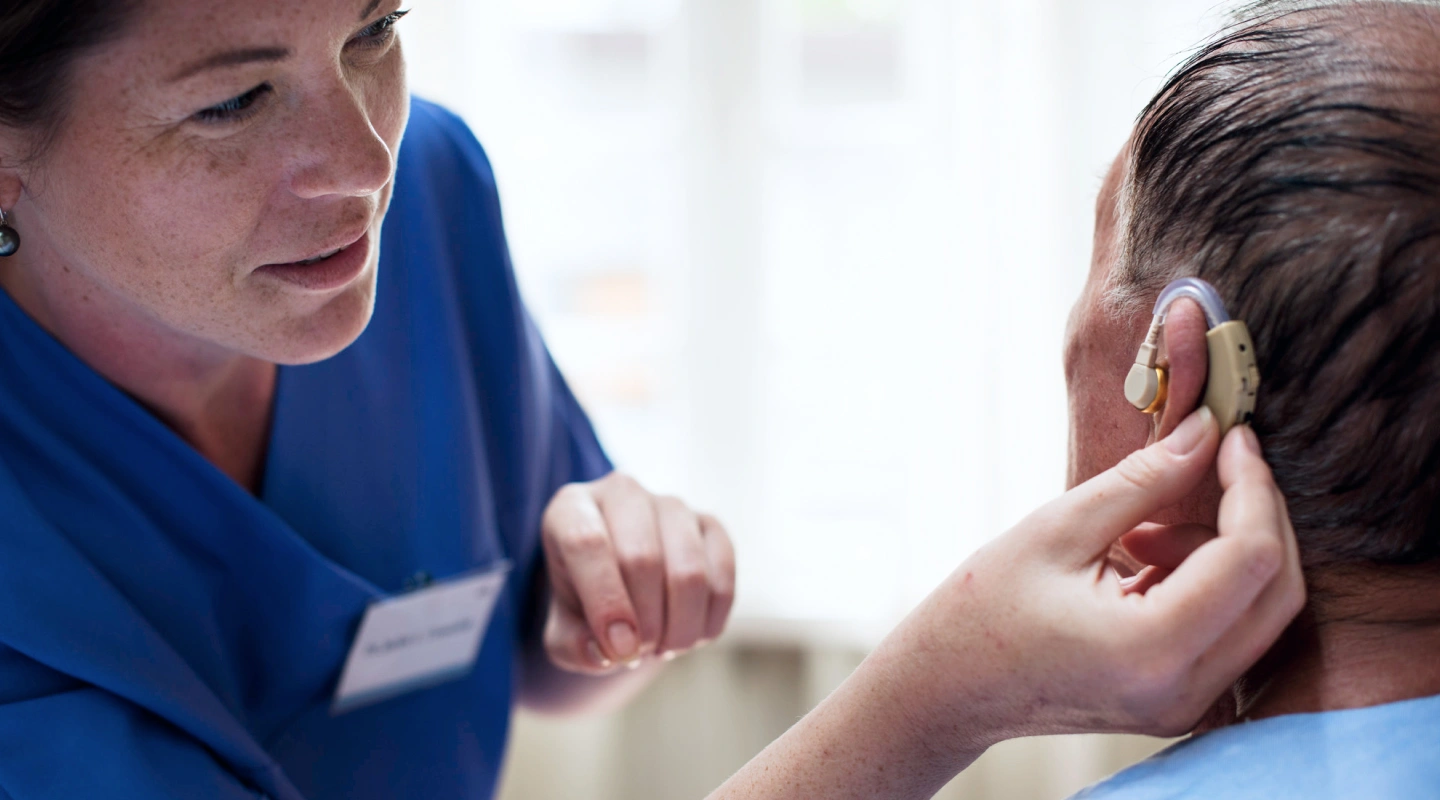
An audiologist is a registered health professional who assesses hearing, fits and programs hearing aids and cochlear implant sound processors, and provides auditory rehabilitation. Under NDIS, audiology is funded at $193.99 per hour (2026-27 rate) and covers:
- Comprehensive hearing assessment and audiogram interpretation
- Hearing aid selection, fitting, and programming
- Cochlear implant mapping (programming the sound processor to optimise hearing)
- Auditory rehabilitation training (learning to interpret sound with amplification or implant)
- Assistive listening device assessment, recommendation, and training
- Annual hearing reviews and aid adjustments
What audiology does not cover under NDIS: Diagnostic hearing tests conducted to support an NDIS access application are not NDIS-funded. These attract a Medicare rebate or are covered by the Hearing Services Program. Clarify with your audiologist which pathway covers the assessment before the appointment.
When selecting an audiologist for NDIS, confirm they are a registered NDIS provider (or can claim under your plan), have experience with the type and degree of hearing loss you have, and can provide reports that clearly link recommendations to functional goals in your plan.
Hearing Australia is the largest hearing services provider in Australia and an NDIS-registered provider. They serve both HSP clients and NDIS participants. Private audiology practices can also be registered NDIS providers; the NDIS provider finder allows you to search for registered audiologists in your area.
Hearing Aids: What NDIS Funds
Hearing aids are the most commonly funded assistive device for hearing impairment under NDIS. Key funding facts:
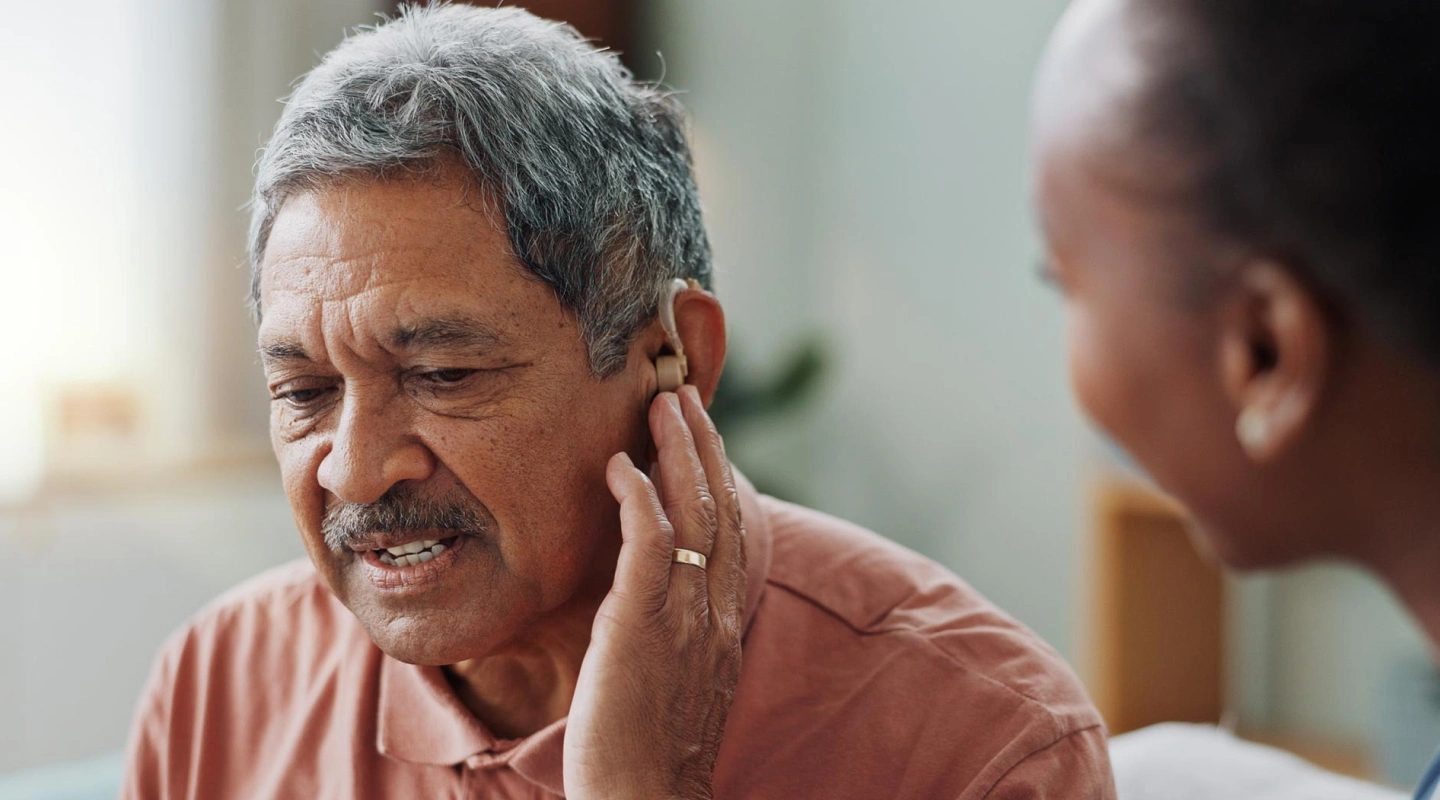
- NDIS typically funds hearing aids valued between $4,000 and $8,000 per pair as Capital Supports
- The audiologist conducts the functional assessment and prescription; their report justifies the AT recommendation
- Higher-cost premium devices (above $8,000) may require stronger justification that the additional features are necessary for the participant’s specific goals
- Hearing aid accessories (batteries, cleaning kits, dehumidifiers) are low-cost consumables that can be purchased from the Capital Supports budget without prior NDIA approval where the total cost is under $1,500 annually
If you are currently accessing hearing aids through HSP, NDIS cannot fund the same device. However, NDIS can fund upgrades, additional features, or accessories beyond what HSP provides.
Cochlear Implants: The NDIS Role After Surgery
Cochlear implant surgery and the implant device itself are funded by the public health system, not NDIS. What NDIS covers after implantation is the ongoing support needed to maximise the implant’s benefit:
Post-implant audiology: Mapping sessions (programming the sound processor to the person’s hearing nerve), annual reassessments, and troubleshooting. Funded at the standard audiology rate.
Auditory-verbal therapy: For children and some adults, structured therapy to develop listening and spoken language skills using the cochlear implant. Funded under Capacity Building.
Sound processor upgrades: As technology improves, processor upgrades may be funded through Capital Supports. NDIS typically allocates $10,000 to $20,000 per year for cochlear implant users to cover therapy, mapping, accessories, and planned upgrades.
Accessories and connectivity: Remote microphones, Bluetooth streamers, and accessories that enhance the sound processor’s function in specific environments (classroom, workplace, noisy social settings) are funded as AT. Items under $1,500 can be purchased without prior approval.
Contact Cochlear (cochlear.com.au) for funding guidance specific to their device. The NDIS funding pathway for cochlear implant users is well-established; Hearing Australia and major cochlear implant centres can assist with plan documentation.
Assistive Technology: Beyond the Hearing Aid
Hearing aids and cochlear implants address the core sensory impairment. Assistive technology for hearing loss addresses the specific situations where these devices alone are not sufficient.
FM Remote Microphone Systems
FM systems (also called remote microphone systems) transmit sound wirelessly from a microphone near the speaker directly to the hearing aid or cochlear implant processor. They are particularly useful in:
- Classrooms or group settings with background noise
- Work environments with open plan layouts
- Restaurants and social settings
- Vehicle travel where the speaker is at a distance
Cost: $1,500 to $5,000 per system. An AT assessor (audiologist) recommendation and NDIA approval are required before purchase.
Alerting Devices
Alerting devices replace auditory alerts with visual or tactile signals. Common items:
- Vibrating alarm clocks (under the pillow or on the wrist)
- Visual or vibrating doorbells and smoke alarms
- Baby monitor adapters with visual or vibrating alerts
- Phone and message alert systems
Most alerting devices are under $800 and qualify as low-cost AT, purchasable without prior NDIA approval once recommended by an AT assessor.
Hearing Loop Accessories
Hearing loops (induction loops) transmit audio directly to the telecoil (T-coil) built into most hearing aids and cochlear implant processors. Loops are installed in public venues (cinemas, theatres, churches, pharmacies) under building standards but vary in quality. Portable loop devices and telecoil accessories allow hearing aid users to access loop signals more effectively in venues where the fixed loop is poor quality.
Captioning Technology
Real-time captioning provides text output of spoken audio. Options include:
- Captioning apps on smartphones using automatic speech recognition (Otter.ai, Live Transcribe) for one-to-one or small group conversations
- CART (Communication Access Realtime Translation) captioning by a professional captionist for formal meetings, lectures, or medical appointments
- Captioned telephone services (CaptionCall) for phone conversations
Professional CART captioning is typically funded for specific NDIS-related activities. Smartphone captioning apps are low-cost or free tools that an AT specialist can assist with setting up.
Bluetooth Streaming and Telecoil Neckloops
Modern hearing aids and cochlear implant processors support Bluetooth streaming directly from smartphones, tablets, and televisions. For hearing aids without built-in Bluetooth, a telecoil neckloop (typically under $150) can enable wireless audio streaming from Bluetooth devices. These are low-cost AT items purchasable without prior approval.
Auracast is an emerging wireless audio technology that allows audio from public venues to be broadcast to compatible hearing devices. It is beginning to appear in Australian venues and hearing device manufacturers are incorporating compatibility into newer devices.
For a broader overview of low-cost AT options, see our guide on low-cost assistive technology under NDIS.
Community Access Supports
Hearing loss does not only affect in-home daily living. Community participation, social connection, and safety in public environments all require specific support.
Support Workers with Auslan and Deaf Awareness
For Deaf Australians who use Auslan as their primary language, support workers who are Auslan-proficient are not a luxury; they are a functional necessity. Key organisations:
- Deaf Connect: Australia’s largest whole-of-life deaf support organisation, operating across Queensland, New South Wales, South Australia, Victoria, Western Australia, and the Northern Territory. Employs support workers with Auslan skills and Deaf cultural competency.
- Expression Australia: National deaf services organisation providing Auslan-trained support workers, Auslan interpreter services, and Auslan training programs for hearing support workers.
When choosing a general NDIS provider for community access support, ask whether their support workers have Deaf awareness training and what the organisation’s policy is when a participant primarily communicates in Auslan.
Communication Support for Daily Life
Beyond formal support worker hours, communication access in daily community life requires strategies and sometimes technology:
- Auslan interpreting: For medical appointments, NDIS planning meetings, legal matters, and formal activities. The National Auslan Booking Service through Expression Australia funds interpreting for medical appointments. NDIS may fund interpreting for other activities directly related to NDIS goals.
- Communication strategy training: An audiologist or hearing rehabilitation specialist can train the participant and their key communication partners in effective communication strategies suited to the person’s hearing level and device use.
- Advocacy in inaccessible environments: Support workers can advocate for reasonable adjustments (turning on captions, moving to a quieter space, requesting written information) in situations where the environment creates unnecessary access barriers.
Safety in the Community
Specific safety considerations for people with hearing loss in the community:
- Road and traffic awareness when auditory cues (traffic sounds, emergency vehicle sirens) are reduced
- Emergency information in public spaces: ensuring the person can access fire alarm and emergency announcements through visual or vibrating alerts
- Technology-based safety: smartphone emergency alert systems, GPS location sharing for participants who may need support
Building the Support Plan: A Practical Sequence
Step 1: Clarify the funding pathway
Determine whether the person is primarily covered by HSP or NDIS (or both) before engaging providers. A GP or audiologist can help identify the right pathway based on age, hearing level, and concession card status.
Step 2: Audiologist assessment and hearing aid fitting
The audiologist is the anchor provider for hearing impairment. Book this first. The assessment produces the functional evidence needed for the NDIS plan and the AT prescription for hearing aids or cochlear implant accessories.
Step 3: AT needs assessment
Once hearing aids are in place, identify the situations where additional AT is needed. The audiologist or an AT specialist can assess need for FM systems, alerting devices, and captioning solutions. This assessment produces the AT recommendations needed for NDIA approval of higher-cost items.
Step 4: Community access and support workers
Identify whether communication barriers in daily community life require support worker hours, Auslan interpreting, or capacity building. Engage a Support Coordinator or Local Area Coordinator to help identify providers with relevant Auslan or Deaf awareness skills.
Step 5: Review annually
Hearing loss can progress. Annual audiology reviews should assess whether hearing aid programming needs adjustment, whether new AT is warranted, and whether community access supports remain sufficient.
Frequently Asked Questions
Does hearing loss qualify for NDIS?
Adults over 26 with permanent hearing loss of 65 dB or more in the better ear may qualify. Profound loss (90 dB+) qualifies automatically. People under 26 are primarily supported through Hearing Australia’s Hearing Services Program.
What is the difference between the Hearing Services Program and NDIS?
HSP funds hearing assessments and devices for eligible Australians, primarily those with mild to moderate loss who hold a concession card. NDIS covers people over 26 with severe to profound loss not adequately supported by HSP, and funds AT, community access, and support workers that HSP does not cover. Both can be accessed simultaneously.
Does NDIS fund hearing aids?
Yes, at $4,000 to $8,000 per pair for eligible participants, as Capital Supports following an audiologist assessment and prescription.
What assistive technology does NDIS fund beyond hearing aids?
FM remote microphone systems, alerting devices, captioning technology, hearing loop accessories, and Bluetooth streaming devices. Low-cost items under $1,500 can be purchased without prior approval. Higher-cost items require AT assessor recommendation and NDIA approval.
What does an audiologist do in an NDIS support plan?
Hearing assessment, hearing aid fitting and programming, cochlear implant mapping, auditory rehabilitation, and AT prescription. Funded at $193.99 per hour. Diagnostic assessments for NDIS access applications are not NDIS-funded; they attract Medicare rebates.
Can support workers assist people with hearing loss?
Yes. Effective support workers understand the person’s preferred communication method, face them when speaking, and can assist with hearing aids and FM systems. Deaf Connect and Expression Australia offer support workers with Auslan skills.
What community access supports does NDIS fund?
Community participation under Core Supports: attending social activities, appointments, and public transport. Auslan interpreting for activities directly related to NDIS goals. Communication strategy development.
Are Auslan interpreting services funded by NDIS?
NDIS can fund Auslan interpreting for activities related to the participant’s daily life and goals. The National Auslan Booking Service through Expression Australia separately funds medical appointment interpreting. A support coordinator can help identify which program covers which activity.
Key Resources
- Hearing Australia (HSP services, NDIS hearing services, audiology nationwide)
- Australian Government Hearing Services Program (eligibility and accessing HSP)
- Deaf Connect (Auslan support workers, whole-of-life deaf services)
- Expression Australia (Auslan interpreting, AT training, support workers)
- NDIS Hearing Supports overview (NDIS official guidance)
Carevo connects people with hearing loss to audiologists, AT providers, and NDIS-registered support workers across Australia. Get matched with the right provider to build your hearing impairment support plan.
Find the right provider through Carevo
Answer a few quick questions and get matched with providers who fit your needs. Free, no obligation.
Need Support Workers?
Who is the care for?
Takes 30 seconds. Free, no obligation.
Customer Lead
Gemma is Carevo's Customer Lead. She spent several years working as a support worker before moving into concierge and partnerships roles, so she writes from the frontline of care.