NDIS Hearing Services: Aids & Funding Guide 2026
Andre Smith
Co-founder & CEO
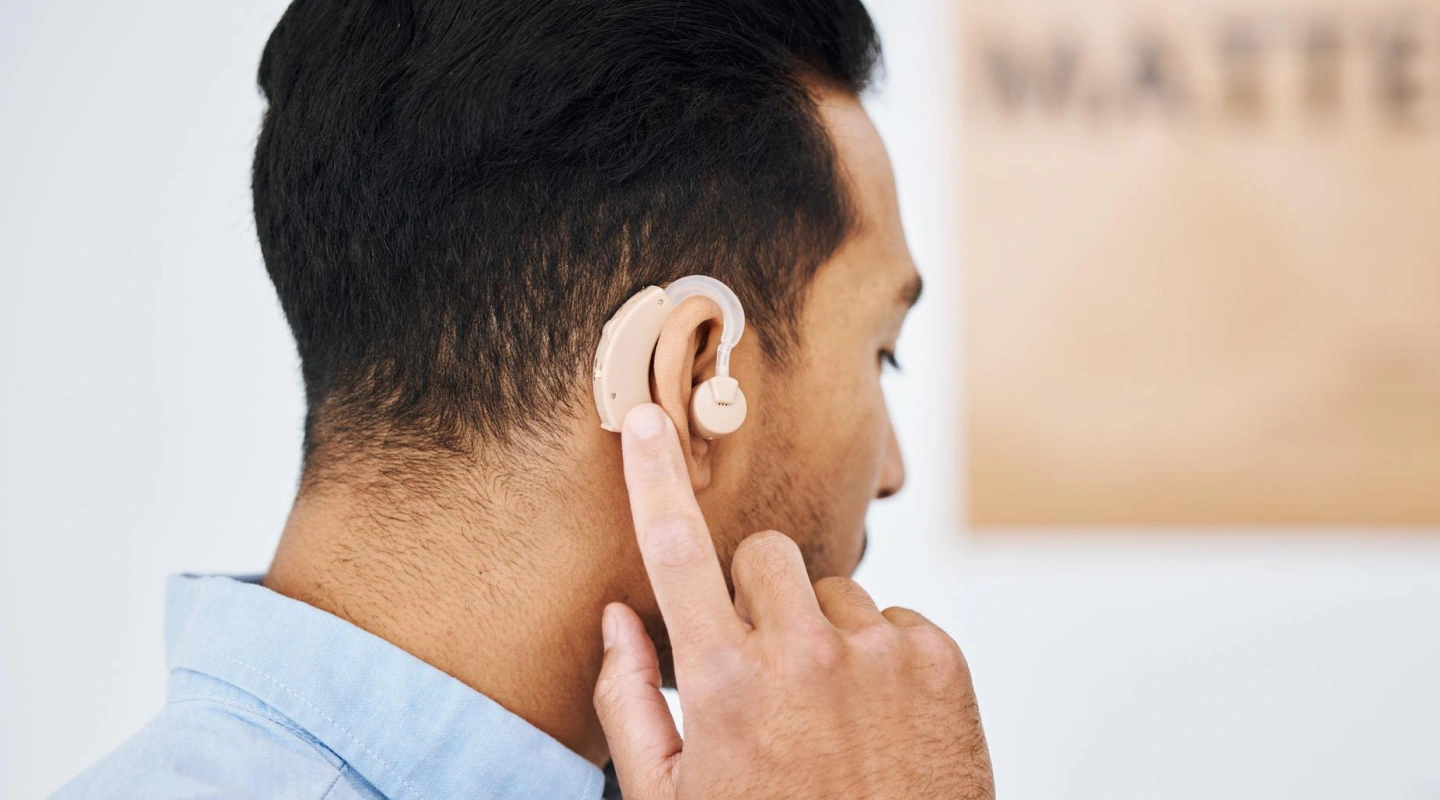
NDIS funds hearing aids, audiology services, and assistive listening technology for participants with hearing loss as a primary or secondary disability. Hearing aids cost $2,000-$12,000 depending on technology, with NDIS typically funding $4,000-$8,000 per pair. Audiology services are charged at $193.99/hour, held from 2025-26. If you are eligible for the Hearing Services Program (HSP), it is the primary funder for basic hearing services, and NDIS funds additional supports beyond HSP.
Unbundling from 1 July 2026: Under the 2026-27 pricing arrangements, audiology provider travel, non-face-to-face work, and NDIA-requested reports are billed as separate line items rather than folded into the session rate. Audiology travel is charged at 50% of the service rate (around $97/hour). Check quotes and invoices for these separate charges.
NDIS Hearing Services at a Glance (2026)
| Detail | Information |
|---|---|
| Hearing Aids Cost | $2,000-$12,000 per pair (NDIS funds reasonable level) |
| Typical NDIS Allocation | $4,000-$8,000 per pair for mid-range technology |
| Audiology Rate | $193.99/hour (NDIS price guide 2026-27) |
| Initial Hearing Assessment | $194-$388 (1-2 hours) |
| Hearing Aid Fitting | $194-$582 (1-3 hours programming and fitting) |
| Budget Categories | Capital Supports (hearing aids, FM systems), Capacity Building (audiology), Core Supports (batteries, maintenance) |
| Primary Funder | Hearing Services Program (HSP) if eligible (under 26, pensioner, DVA card) |
| NDIS Role | Additional reasonable and necessary supports beyond HSP |
| Replacement Timeframe | Every 5 years typical (earlier if clinically justified) |
What NDIS Hearing Supports Cover:
- Hearing aids and upgrades beyond HSP funding
- Audiology assessments, hearing tests, and rehabilitation
- Hearing aid fitting, programming, and adjustments
- Cochlear implant rehabilitation (not device or surgery)
- Assistive listening devices (FM systems, alerting devices, loop systems)
- Hearing aid accessories (batteries, dehumidifiers, cases)
- Auditory-verbal therapy and speech pathology
- Communication strategies training
Understanding NDIS and Hearing Services Program (HSP)
What is the Hearing Services Program?
The Hearing Services Program (HSP) is a Commonwealth-funded program providing free hearing services to eligible Australians.
HSP Eligibility (Automatic Qualification):
- Children and young adults under 26 years
- Pensioners (Age Pension, Disability Support Pension, Carer Payment)
- DVA Gold Card holders (Department of Veterans’ Affairs)
- Commonwealth Seniors Health Card holders (in some circumstances)
What HSP Covers:
- Free comprehensive hearing assessments
- Free hearing aids (up to 2 devices)
- Ongoing hearing aid maintenance and repairs (5-year warranty)
- Batteries and accessories
- Annual hearing checks and adjustments
- Replacement hearing aids after 5 years (if clinically required)
HSP Providers:
- Australian Hearing (government provider)
- Private HSP-contracted audiologists
Cost to Participant: FREE (fully government-funded)
NDIS vs Hearing Services Program: Key Differences
| Aspect | Hearing Services Program (HSP) | NDIS Hearing Supports |
|---|---|---|
| Eligibility | Under 26, pensioners, DVA card holders | NDIS participants with hearing-related support needs |
| Cost to Participant | FREE | Funded from NDIS plan |
| Hearing Aids Covered | Standard to mid-range technology | Any reasonable and necessary technology (including upgrades) |
| Annual Funding Cap | No cap (ongoing support) | Based on NDIS plan allocation |
| Replacement Timeline | 5 years (clinical justification) | As clinically required and reasonable |
| Additional Supports | Hearing aids, batteries, basic audiology | Assistive tech, advanced audiology, therapy, workplace modifications |
| Primary Funder | HSP if eligible | NDIS only if not eligible for HSP OR for supports beyond HSP scope |
When NDIS Funds Hearing Supports
NDIS funds hearing supports in two scenarios:
Scenario 1: Participant NOT Eligible for HSP
If you are between 26-64 years old and not a pensioner or DVA card holder:
- NDIS is the primary funder for all hearing services
- NDIS funds hearing aids, audiology, and assistive technology
- Full hearing aid cost covered (within reasonable and necessary framework)
Scenario 2: HSP Eligible but Requires Additional Supports
If you are eligible for HSP but need more than HSP provides:
NDIS may fund:
- Hearing aid upgrades: Advanced technology beyond HSP standard devices
- Bilateral hearing aids: If HSP only approves one device but two are clinically needed
- Specialist assistive technology: FM systems, alerting devices, workplace modifications
- Additional audiology: Beyond HSP basic services (e.g., auditory processing assessments)
- Therapy services: Auditory-verbal therapy, speech pathology for hearing loss
- Cochlear implant rehabilitation: Post-surgery audiology and therapy (implant device funded by health system)
Important Principle: If you are HSP-eligible, you must access HSP first. NDIS funds only the gap between HSP supports and your assessed reasonable and necessary needs.
Example: A 10-year-old with autism and hearing loss:
- HSP funds: Basic bilateral hearing aids (~$3,000 value)
- NDIS funds: Upgraded child-friendly hearing aids with Bluetooth streaming for school ($6,000), FM system for classroom ($2,500), auditory-verbal therapy ($194/hour x 20 sessions = $3,880)
- Total NDIS hearing allocation: ~$12,000 for upgrades and additional supports beyond HSP
What Hearing Services Does NDIS Fund?
Audiology Services
Comprehensive hearing assessments and ongoing audiology care are funded under Capacity Building (Improved Daily Living).
Initial Hearing Assessment
Comprehensive diagnostic hearing evaluation:
- Pure tone audiometry: Hearing thresholds across frequencies
- Speech audiometry: Word recognition and speech understanding
- Tympanometry: Middle ear function testing
- Otoacoustic emissions (OAE): Inner ear hair cell function
- Auditory brainstem response (ABR): For young children or complex cases
Assessment Duration: 1-2 hours Cost: $194-$388 (1-2 hours at NDIS rate $193.99/hour) Outcome: Diagnostic report with hearing aid recommendations
Hearing Aid Fitting and Programming
Initial fitting process:
- Hearing aid selection based on hearing loss and lifestyle
- Custom ear mold impressions (if required)
- Hearing aid programming to audiogram
- Real-ear measurement (verification fitting is correct)
- Orientation to hearing aid use and care
Fitting Duration: 1-3 hours over 2-3 appointments Cost: $194-$582 (1-3 hours)
Ongoing Audiology Maintenance
Regular adjustments and support:
- Fine-tuning hearing aid settings
- Addressing sound quality concerns
- Troubleshooting and repairs
- Annual hearing checks
- Replacement ear molds (children)
Frequency: Every 3-6 months initially, then annually Cost: $193.99/hour per session
Hearing Aids and Devices
Hearing aids are funded under Capital Supports (Assistive Technology).
Types of Hearing Aids Funded by NDIS
Behind-the-Ear (BTE) Hearing Aids:
- Description: Sits behind the ear with tube to custom ear mold or dome
- Best for: Moderate to profound hearing loss, children (durable and easy to handle)
- Cost: $2,000-$6,000 per device ($4,000-$12,000 per pair)
- Features: Powerful amplification, long battery life, telecoil, Bluetooth connectivity
Receiver-in-Canal (RIC) Hearing Aids:
- Description: Small behind-the-ear unit with receiver in the ear canal
- Best for: Mild to severe hearing loss, adults preferring discreet option
- Cost: $2,500-$7,000 per device ($5,000-$14,000 per pair)
- Features: Natural sound quality, rechargeable options, wireless connectivity
In-the-Ear (ITE) and In-the-Canal (ITC) Hearing Aids:
- Description: Custom-molded devices fitting in the ear
- Best for: Adults with dexterity to handle small devices, cosmetic preference
- Cost: $2,000-$5,000 per device
- Features: Custom fit, less visible, suitable for mild to moderate hearing loss
Cochlear Implant Speech Processors:
- Device and surgery: Funded through public health system (NOT NDIS)
- Replacement processors: May be NDIS-funded after 7-10 years
- Accessories and upgrades: NDIS may fund if reasonable and necessary
Hearing Aid Technology Levels
NDIS typically funds mid-range hearing aid technology ($4,000-$8,000 per pair).
| Technology Level | Features | Cost (Per Pair) | NDIS Funding Likelihood |
|---|---|---|---|
| Basic | Manual volume, limited programs, basic noise reduction | $2,000-$4,000 | Funded if sufficient for needs |
| Mid-Range | Automatic adjustment, multiple programs, directional microphones, noise reduction | $4,000-$8,000 | Standard NDIS funding |
| Advanced | Adaptive AI processing, Bluetooth streaming, rechargeable, smartphone app control | $8,000-$12,000 | Funded if clinical justification |
| Premium | Top-tier processing, advanced connectivity, binaural processing | $12,000+ | Requires independent assessment, rarely funded |
Clinical Justification for Advanced Technology:
- Complex listening environments (workplace, education)
- Bilateral severe-profound hearing loss requiring sophisticated processing
- Cochlear implant users requiring compatible technology
- Young children requiring robust, child-friendly features
Assistive Listening Devices
Hearing-related assistive technology funded under Capital Supports.
FM and DM Systems (Classroom and Workplace)
What they do:
- Teacher or speaker wears microphone transmitter
- Sound transmitted directly to child’s hearing aids or receiver
- Reduces background noise and distance listening challenges
Common Systems:
- Roger system (Phonak): Wireless microphone system compatible with most hearing aids
- Mini Mic: Personal wireless microphone for one-to-one conversations
- Dynamic SoundField: Classroom amplification system
Cost: $1,500-$5,000 depending on system complexity
NDIS Funding: Funded under Capital Supports if required for education or workplace participation.
Alerting Devices
What they do:
- Visual or vibrating alerts for sounds (doorbell, alarm, baby crying, phone ringing)
- Enhances safety and independence for deaf and hard-of-hearing individuals
Common Devices:
- Vibrating alarm clocks: $100-$300
- Doorbell flashers: $150-$400
- Baby cry alerting systems: $200-$600
- Smoke alarm vibrating pads: $300-$800
Cost: $200-$800 per device
NDIS Funding: Funded under Capital Supports if reasonable and necessary for daily living safety.
Loop Systems
What they do:
- Transmit sound directly to hearing aids with telecoil (T-coil)
- Used in homes, churches, theaters, meeting rooms
Common Systems:
- Personal loop: For TV or phone conversations ($200-$600)
- Room loop: Installed in living room or bedroom ($500-$2,000)
- Portable loop: For meetings or travel ($300-$800)
Cost: $200-$2,000 depending on installation complexity
NDIS Funding: Funded under Capital Supports for home use.
Captioned Telephones and Communication Devices
What they do:
- Display real-time captions during phone conversations
- Allow deaf and hard-of-hearing individuals to use telephone independently
Common Devices:
- CapTel phones: Landline with built-in captioning ($300-$800)
- Smartphone captioning apps: Google Live Transcribe, Ava (free or subscription-based)
- Video relay services: Auslan interpreting via video call
Cost: $300-$800 for captioned phones
NDIS Funding: Funded under Capital Supports if required for communication independence.
Speech Pathology and Auditory-Verbal Therapy
For children with hearing loss, speech and language development support is critical.
Auditory-Verbal Therapy (AVT)
What it is:
- Specialized therapy teaching children with hearing loss to listen and speak using hearing aids or cochlear implants
- Parent-focused approach (teaching parents to be primary language facilitators)
- Play-based, developmental, and naturalistic
Who provides it:
- Certified auditory-verbal therapists (speech pathologists or audiologists with AVT certification)
Typical Frequency: Weekly sessions for young children (birth to 6 years)
Cost: $193.99/hour (same as speech pathology NDIS rate)
NDIS Funding: Funded under Capacity Building (Improved Daily Living)
Typical Allocation: $8,000-$15,000 annually for intensive early intervention
Speech Pathology for Hearing Loss
Speech pathology addresses:
- Speech sound production (articulation affected by hearing loss)
- Language development (delayed receptive and expressive language)
- Literacy support (reading and writing challenges related to hearing loss)
- Social communication skills
Typical Frequency: Weekly to fortnightly depending on needs
Cost: $193.99/hour
NDIS Funding: Funded under Capacity Building (Improved Daily Living)
Hearing Aid Accessories and Consumables
Ongoing costs for hearing aid maintenance funded under Core Supports (Consumables).
Common Consumables:
- Hearing aid batteries: $15-$40 per pack (lasts 1-2 months)
- Annual cost: $200-$600 depending on battery size and usage
- Rechargeable hearing aids eliminate battery costs
- Dehumidifiers and drying kits: $50-$150 (replaces annually)
- Cleaning tools and wax filters: $30-$80 per kit
- Custom ear molds (children): $150-$300 per mold (replaced every 6-12 months for growing children)
- Hearing aid cases and cords: $20-$60
NDIS Funding: Funded from Core Supports (Consumables) budget. Low-cost consumables (under $1,500 annually) can be purchased without NDIS pre-approval.
How to Access NDIS Hearing Services
Step 1: Determine If You Are Eligible for Hearing Services Program First
Before accessing NDIS hearing funding, check HSP eligibility:
You ARE eligible for HSP if:
- Under 26 years old (automatic eligibility)
- Receive Age Pension, Disability Support Pension, or Carer Payment
- Hold DVA Gold Card
- Hold Commonwealth Seniors Health Card (some circumstances)
If you are HSP-eligible:
- Access HSP first through Australian Hearing or HSP-contracted private audiologist
- Obtain hearing aids and basic services through HSP (free)
- If you need additional supports beyond HSP, request NDIS funding for the gap
If you are NOT HSP-eligible:
- NDIS is your primary funder for all hearing services
- Proceed directly to NDIS-funded audiology
Step 2: Include Hearing Goals in NDIS Plan
Hearing-related goals for NDIS planning meeting:
Example Goals:
- “Access audiology services to obtain hearing aids for improved communication”
- “Use assistive listening technology to participate in education and workplace”
- “Develop speech and language skills through auditory-verbal therapy”
- “Maintain hearing aid equipment for daily use and independence”
Supporting Evidence:
- Audiologist or ENT specialist report documenting hearing loss
- Functional capacity assessment showing communication impact
- School or workplace reports describing hearing-related challenges
- Previous hearing aid usage and outcomes
Step 3: Obtain Audiology Assessment
Find an NDIS-registered or private audiologist:
How to Find Audiologists:
- Australian Hearing: Government provider (HSP and NDIS)
- Private audiologists: Many accept NDIS funding (check Audiology Australia directory)
- NDIS Provider Finder: Search “Hearing Services” + your location
Initial Hearing Assessment Includes:
- Comprehensive diagnostic hearing evaluation
- Hearing aid recommendations (type, technology level, features)
- Functional impact assessment (how hearing loss affects daily living)
- Quote for recommended hearing aids and assistive technology
Assessment Cost: $194-$388 (1-2 hours)
Outcome: Audiology report with hearing aid prescription and quotes for NDIS submission.
Step 4: Submit Quotes for Hearing Aids (Over $1,500)
NDIS quote requirements for hearing aids:
Low-Cost Hearing Aids (Under $1,500)
- No pre-approval needed
- Purchase with Capital Supports budget using invoice
- Submit receipts for reimbursement (if self-managed)
Note: It is rare to find quality hearing aids under $1,500. Most NDIS participants require mid-range devices ($4,000-$8,000).
Mid-Cost Hearing Aids ($1,500-$15,000)
- Assessment report required: Audiology report with hearing loss documentation and hearing aid justification
- Three quotes required: Obtain quotes from 3 different providers or justify single supplier
- Submit through NDIS portal: Upload assessment report and quotes
- NDIS review and approval: Typically 2-6 weeks for decision
Approval Likelihood: High for mid-range devices if clinically justified.
High-Cost Hearing Aids (Over $15,000)
- Independent assessment may be required: NDIS may request independent audiology review
- Clinical justification essential: Must demonstrate why high-cost technology is necessary
- Approval timeline: 6-12 weeks
Approval Likelihood: Moderate to low unless complex clinical needs justify premium technology.
Step 5: Purchase and Fit Hearing Aids
Once NDIS approves funding:
- Purchase hearing aids from chosen provider
- Schedule fitting appointments (typically 2-3 appointments over 2-4 weeks)
- Hearing aid programming to audiogram and personal preferences
- Real-ear measurement to verify correct amplification
- Hearing aid orientation training on use, care, and troubleshooting
Fitting Cost: $194-$582 (1-3 hours at NDIS rate)
Warranty and Support:
- Hearing aids typically include 3-5 year manufacturer warranty
- Ongoing adjustments and troubleshooting covered by NDIS audiology funding
- Battery and accessories covered by Core Supports (Consumables)
Step 6: Ongoing Audiology and Maintenance
Regular audiology appointments:
First 3 Months (Initial Adjustment Period):
- Frequency: Every 2-4 weeks for fine-tuning
- Purpose: Adjust settings, address comfort issues, optimize sound quality
- Cost: $193.99/hour per visit
Ongoing Maintenance:
- Frequency: Every 6-12 months
- Purpose: Annual hearing check, hearing aid adjustments, troubleshooting
- Cost: $193.99/hour per visit
Replacement Hearing Aids:
- Timeline: Every 5 years (typical lifespan)
- Earlier replacement: If hearing loss changes significantly or device fails
- Process: Repeat audiology assessment and NDIS quote process
Cochlear Implants and NDIS Support
What NDIS Does NOT Fund for Cochlear Implants
Important: The cochlear implant device and surgery are NOT NDIS-funded. These are funded through the public health system.
Public Health System Funds:
- Cochlear implant device (internal and external components)
- Cochlear implant surgery and hospital costs
- Initial device mapping and activation (first 3-6 months)
- Replacement devices after 7-10 years (if clinically required)
How to Access Cochlear Implants:
- Referral from ENT specialist or audiologist
- Cochlear implant candidacy assessment (public hospital cochlear implant program)
- Surgery wait times vary (6-24 months depending on state and hospital)
What NDIS DOES Fund for Cochlear Implant Users
Once you have a cochlear implant, NDIS funds ongoing rehabilitation and supports:
Post-Implant Audiology Services
Cochlear implant mapping (programming):
- Frequency: Every 3-6 months initially, then annually
- Purpose: Adjust implant settings for optimal hearing
- Cost: $194-$388 per session (1-2 hours)
Troubleshooting and device checks:
- Frequency: As needed for technical issues
- Cost: $193.99/hour
Auditory-Verbal Therapy and Rehabilitation
Intensive therapy for children with cochlear implants:
- Purpose: Develop listening and spoken language skills using the implant
- Frequency: Weekly sessions for first 2-3 years post-activation
- Cost: $193.99/hour
- Typical NDIS allocation: $8,000-$15,000 annually for intensive AVT
Speech Pathology
Ongoing speech and language support:
- Purpose: Address articulation, language development, literacy
- Frequency: Weekly to fortnightly
- Cost: $193.99/hour
Cochlear Implant Accessories
NDIS may fund:
- FM system: Roger or similar wireless microphone system compatible with implant ($2,000-$4,000)
- Backup processors: If original processor fails and replacement not covered by warranty
- Batteries and charging accessories: Rechargeable batteries, chargers, dry kits
- Waterproof covers: For swimming or bathing
Typical NDIS allocation for cochlear implant user: $10,000-$20,000 annually (therapy, mapping, accessories).
Frequently Asked Questions About NDIS Hearing Services
Does NDIS fund hearing aids?
Yes, NDIS funds hearing aids if they are reasonable and necessary for your disability-related hearing support needs. Hearing aids cost $2,000-$12,000 depending on technology level. NDIS typically funds mid-range devices ($4,000-$8,000 per pair). High-end hearing aids may require independent assessment. NDIS funding is additional to Hearing Services Program (HSP) for eligible participants.
What is the difference between NDIS and Hearing Services Program (HSP)?
Hearing Services Program (HSP) provides free basic hearing services for Australian citizens under 26, pensioners, and DVA card holders. NDIS funds additional reasonable and necessary hearing supports beyond HSP. If eligible for both, HSP is the primary funder for standard hearing aids and services. NDIS funds: upgraded hearing aids, specialist assistive technology, audiology beyond HSP scope, and hearing-related capacity building.
What NDIS hearing services are available?
NDIS hearing services include: audiology assessments and hearing tests, hearing aid fitting and programming, cochlear implant rehabilitation and mapping, auditory-verbal therapy, assistive listening devices (FM systems, loop systems, alerting devices), hearing aid accessories (batteries, cleaning kits, dehumidifiers), communication supports (Auslan interpreting may be separate), and hearing conservation programs.
How much do NDIS audiology services cost?
NDIS audiology services cost $193.99 per hour under the 2026-27 price guide. Initial hearing assessment: $194-$388 (1-2 hours). Hearing aid fitting and programming: $194-$582 (1-3 hours). Cochlear implant mapping: $194-$388 per session. Auditory-verbal therapy: $193.99 per hour. Services are charged to Capacity Building (Improved Daily Living) budget.
What assistive technology for hearing loss does NDIS fund?
NDIS funds hearing-related assistive technology including: FM and DM systems for classroom/workplace ($1,500-$5,000), vibrating alarm clocks and alerting devices ($200-$800), telecoil loop systems for home ($500-$2,000), captioned telephones ($300-$800), TV listening systems ($400-$1,500), hearing aid accessories (batteries, cases, dehumidifiers), and smartphone assistive apps and Bluetooth streamers ($200-$600).
Can I get cochlear implant support through NDIS?
NDIS does NOT fund the cochlear implant device or surgery (funded through public health system). NDIS funds post-implant supports including: audiology mapping and programming sessions, auditory-verbal therapy and rehabilitation, speech pathology for language development, assistive listening technology compatible with implant, and battery and equipment maintenance costs. Typical allocation: $4,000-$12,000 annually for post-implant rehabilitation.
How do I get hearing aids through NDIS?
To get hearing aids through NDIS: (1) check if you qualify for Hearing Services Program first (under 26, pensioner, DVA card), (2) if HSP eligible, get standard hearing aids through HSP, (3) if you need upgrades beyond HSP, request NDIS funding, (4) if not HSP eligible, NDIS can fund full hearing aid cost, (5) obtain audiology assessment and hearing aid prescription, (6) submit quotes to NDIS for approval (over $1,500), (7) purchase hearing aids once approved.
Does NDIS fund hearing aid batteries?
Yes, NDIS funds hearing aid batteries and maintenance supplies under Consumables budget (Core Supports). Typical battery costs: $200-$600 annually depending on battery type and usage. Rechargeable hearing aids reduce ongoing battery costs. Submit invoices or use quote process for bulk battery purchases. Low-cost batteries (under $1,500 annually) can be purchased without NDIS pre-approval using Core Supports budget.
What is the NDIS Capital Supports budget for hearing aids?
Hearing aids are funded under Capital Supports (Assistive Technology) budget. Low-cost hearing aids (under $1,500) require quotes only. Mid-cost ($1,500-$15,000) require audiology assessment report and quotes. High-cost (over $15,000) may require independent assessment. Typical NDIS hearing aid allocations: $4,000-$8,000 for standard pair, $8,000-$12,000 for advanced technology with accessories.
Can I claim Auslan interpreting on NDIS?
Auslan interpreting is generally NOT funded by NDIS for everyday communication needs (work, education, healthcare). NDIS may fund Auslan interpreting for: NDIS planning meetings, NDIS-funded therapy sessions (if required for communication), disability-specific situations where interpreter is reasonable and necessary. Work and education interpreting funded through: Deaf Australia services, education system supports, employer workplace adjustments, not NDIS.
Key Resources for NDIS Hearing Services
Official NDIS Information:
- NDIS Hearing Supports: ndis.gov.au/hearing-supports
- NDIS Pricing Arrangements 2026-27: ndis.gov.au/providers/pricing-arrangements
Hearing Services Program:
- Australian Hearing: hearing.com.au
- Hearing Services Program Information: health.gov.au/hearing-services
Professional Associations:
- Audiology Australia: audiology.asn.au
- Find an Audiologist: Audiology Australia Directory
Carevo Services:
- Find NDIS Hearing Services in Sydney and Melbourne
- NDIS Assistive Technology Guide
- NDIS Capital Supports Explained
Need help accessing hearing services? Carevo connects NDIS participants with in-home audiologists who provide hearing assessments, hearing aid fitting, and hearing support equipment including assistive listening devices and alerting systems. Call 1800 953 253 for assistance finding hearing services in your local area.
Find the right provider through Carevo
Answer a few quick questions and get matched with providers who fit your needs. Free, no obligation.
Need Plan Management?
Who is the care for?
Takes 30 seconds. Free, no obligation.
Co-founder & CEO · Updated
Andre is the co-founder and CEO of Carevo. He holds a Bachelor of Commerce, majoring in Marketing, and a Bachelor of Arts from UNSW Sydney, where his majors were International Relations, Politics, Information Systems, and Media and Communications, graduating in 2014, and went through the UNSW 10x Founders accelerator in 2023.